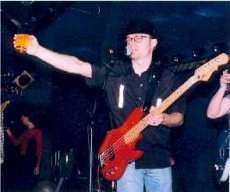
I'm #4. I try to play as close as possible to the original...but I'm also a Singer so, I may have to simplify some parts while singing.

TalkBass has been independent since 1998. Add your voice.
Create a free account to reply to discussions, view embedded media, and browse with fewer display ads.
Join free Log in
Want zero display ads or expanded classifieds tools? Compare plans.

I had an idea for a thread here this weekend after watching a local band doing the usual range of covers.
are you the
1. Bassist that generally sticks very closely to the original records?
2. Bassist that adds in constant flourishes in every turnaround - stuff not on the recordings after seemingly every 8 measures in a standard song, wildly going up and down the fret board as if you were playing a sort of lead guitar?
3. Bassist who stays down in the mix, and keeps it simple and in the pocket, no matter what the bassist on the original is doing? Eg, I can dumb-down a song, and by keeping my tone heavy on the bottom-end, "nobody will know the difference."
4. Bassist some combination of the above, depending on the song and/or band circumstance?
Why did I post this? I got a inquiry off FB from a local band who was seeking to replace their bassist and told me they were looking for someone who doesn't "overplay the songs". Who "leaves spaces" during transitions.
And then I go see this guy in this band - very super-talented, but literally adding stuff all over the place not in the song. Seemingly every turn-around and transition he was adding stuff -- fancy picking. Slapping. going way way down the fret board to play super high note transitions.
So thoughts on this? I have to say - while he was impressive and talented, after a while I found it hard to listen to. Annoying. Like the guy was just showing off instead of hanging back, and as the one band said, "leaves spaces in the songs." is it a frustrated guitarist doing that? Someone who is simply bored with the songs and can't help himself? Wants to make sure everyone knows he's playing? Or or or?
as one article said, "WHY THE BAND IS FRUSTRATED WITH YOU
The main reason everyone else in the band gets frustrated with you is simple: you’re too busy trying to come up with more interesting things to play and are losing sight of what it means to be a bass player. Anything too fancy that you play will distract from your primary job. Guitar is cool, isn’t it? They get to play fancy fast stuff and they get all the attention. The keyboard player has all sorts of crazy sounds, and nothing is quite as cool as the drums. Each instrument plays a specific role in the band, including you. Your job is to be the bridge between the drums and everyone else in the band. Drums are, by their nature, rhythmic. They don’t provide much in the harmonic department. (Drummers, I know, I know, you guys tune your drums. You know what I mean though.) Everyone else’s duties in the band are primarily harmonic. Sure, there are rhythms that they play, but nothing as rhythmic as drums. Your job is to be the bridge between these two, the glue that holds them together. By locking in with the drummer, you are providing some harmonic structure to the rhythms he’s laying down. This unifies the whole band and makes it sound like you’re actually playing together. Once you embrace your role as the glue, the bridge between the two halves of the band, you’ll find yourself thinking differently, playing differently, and the whole band sounding tighter."
Eg, bassist, restrain thyself.
Doug Pinnick from King’s X sees it this way: “If the bass player can’t find the groove, it’s because he’s thinking ‘guitar.’ Guitarist-bass players tend to overplay and have no concept of the true reason we play bass. The bass dictates the groove and the feel.” Phil Chen, bassist for Jeff Beck, Rod Stewart and countless others says, “Bass is a foundation instrument, like the foundation of a house.” Chen advises players to “replicate the low frequency of the bass drum.” Ellefson sums it up this way, “It’s called a bass, not a treble, so please play it like one.”
as for me? I think I'm more #1, and occasionally, just occasionally, I add in some transition that I may have found on some live version. but I rarely make stuff up and add in my own transition bits. I'm more the pocket guy who tries to stick as close the original (or live) recording of the well known song. Not saying one is better than the other - some bands want the super-fancy bassist, throwing in little runs all over the place, to fill in the gaps. Some bands want you to LEAVE the gaps and stick to the original.
One man's "over-player" is another man's "talented, beautifully melodic and creative bass player who is adding significantly to the dynamics, melody and complexity of the tune."
thoughts?

Seriously? I can see that being a personal mantra but...

I had an idea for a thread here this weekend after watching a local band doing the usual range of covers.
are you the
1. Bassist that generally sticks very closely to the original records?
2. Bassist that adds in constant flourishes in every turnaround - stuff not on the recordings after seemingly every 8 measures in a standard song, wildly going up and down the fret board as if you were playing a sort of lead guitar?
3. Bassist who stays down in the mix, and keeps it simple and in the pocket, no matter what the bassist on the original is doing? Eg, I can dumb-down a song, and by keeping my tone heavy on the bottom-end, "nobody will know the difference."
4. Bassist some combination of the above, depending on the song and/or band circumstance?
Why did I post this? I got a inquiry off FB from a local band who was seeking to replace their bassist and told me they were looking for someone who doesn't "overplay the songs". Who "leaves spaces" during transitions.
And then I go see this guy in this band - very super-talented, but literally adding stuff all over the place not in the song. Seemingly every turn-around and transition he was adding stuff -- fancy picking. Slapping. going way way down the fret board to play super high note transitions.
So thoughts on this? I have to say - while he was impressive and talented, after a while I found it hard to listen to. Annoying. Like the guy was just showing off instead of hanging back, and as the one band said, "leaves spaces in the songs." is it a frustrated guitarist doing that? Someone who is simply bored with the songs and can't help himself? Wants to make sure everyone knows he's playing? Or or or?
as one article said, "WHY THE BAND IS FRUSTRATED WITH YOU
The main reason everyone else in the band gets frustrated with you is simple: you’re too busy trying to come up with more interesting things to play and are losing sight of what it means to be a bass player. Anything too fancy that you play will distract from your primary job. Guitar is cool, isn’t it? They get to play fancy fast stuff and they get all the attention. The keyboard player has all sorts of crazy sounds, and nothing is quite as cool as the drums. Each instrument plays a specific role in the band, including you. Your job is to be the bridge between the drums and everyone else in the band. Drums are, by their nature, rhythmic. They don’t provide much in the harmonic department. (Drummers, I know, I know, you guys tune your drums. You know what I mean though.) Everyone else’s duties in the band are primarily harmonic. Sure, there are rhythms that they play, but nothing as rhythmic as drums. Your job is to be the bridge between these two, the glue that holds them together. By locking in with the drummer, you are providing some harmonic structure to the rhythms he’s laying down. This unifies the whole band and makes it sound like you’re actually playing together. Once you embrace your role as the glue, the bridge between the two halves of the band, you’ll find yourself thinking differently, playing differently, and the whole band sounding tighter."
Eg, bassist, restrain thyself.
Doug Pinnick from King’s X sees it this way: “If the bass player can’t find the groove, it’s because he’s thinking ‘guitar.’ Guitarist-bass players tend to overplay and have no concept of the true reason we play bass. The bass dictates the groove and the feel.” Phil Chen, bassist for Jeff Beck, Rod Stewart and countless others says, “Bass is a foundation instrument, like the foundation of a house.” Chen advises players to “replicate the low frequency of the bass drum.” Ellefson sums it up this way, “It’s called a bass, not a treble, so please play it like one.”
as for me? I think I'm more #1, and occasionally, just occasionally, I add in some transition that I may have found on some live version. but I rarely make stuff up and add in my own transition bits. I'm more the pocket guy who tries to stick as close the original (or live) recording of the well known song. Not saying one is better than the other - some bands want the super-fancy bassist, throwing in little runs all over the place, to fill in the gaps. Some bands want you to LEAVE the gaps and stick to the original.
One man's "over-player" is another man's "talented, beautifully melodic and creative bass player who is adding significantly to the dynamics, melody and complexity of the tune."
thoughts?


"And you may ask yourself, "How do I play this?"and the days go by, let the water hold me down...
I've sometimes been considered to be overly busy. Eventually, I find different people to play with - people who appreciate what I can do. Don't get me wrong, I'm not an amazing player, soloist or lead bassist. However, I'm also not going to just hold down roots all night either. I'll add a little here and there as appropriate, but I mostly drive the song forward.
Honestly, there are some people out there who would be better off playing along with preprogramed tracks than with people. They want what they want and they don't want anyone else's input or creativity.
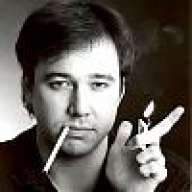

“Friends come and go, enemies accumulate.” — Somebody anonymous but very wiseAnd I remain silent. I have enough enemies.
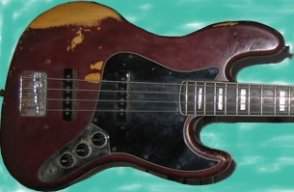
They do play elsewhere in the measure. They just do it in addition to the ONE!Always play on the one always struck me as oversimplistic... and just plain wrong.
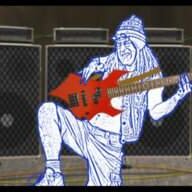 I mellowed out after 1 of my buddies in another (well-respected) band kept telling me he liked my playing, but he didn't want to hear all the notes I could play at the same time! He wasn't rude about it, but kept dropping kernels of wisdom.
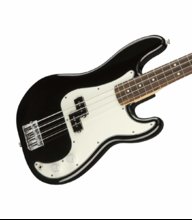

I had an idea for a thread here this weekend after watching a local band doing the usual range of covers.
are you the
1. Bassist that generally sticks very closely to the original records?
2. Bassist that adds in constant flourishes in every turnaround - stuff not on the recordings after seemingly every 8 measures in a standard song, wildly going up and down the fret board as if you were playing a sort of lead guitar?
3. Bassist who stays down in the mix, and keeps it simple and in the pocket, no matter what the bassist on the original is doing? Eg, I can dumb-down a song, and by keeping my tone heavy on the bottom-end, "nobody will know the difference."
4. Bassist some combination of the above, depending on the song and/or band circumstance?
Why did I post this? I got a inquiry off FB from a local band who was seeking to replace their bassist and told me they were looking for someone who doesn't "overplay the songs". Who "leaves spaces" during transitions.
And then I go see this guy in this band - very super-talented, but literally adding stuff all over the place not in the song. Seemingly every turn-around and transition he was adding stuff -- fancy picking. Slapping. going way way down the fret board to play super high note transitions.
So thoughts on this? I have to say - while he was impressive and talented, after a while I found it hard to listen to. Annoying. Like the guy was just showing off instead of hanging back, and as the one band said, "leaves spaces in the songs." is it a frustrated guitarist doing that? Someone who is simply bored with the songs and can't help himself? Wants to make sure everyone knows he's playing? Or or or?
as one article said, "WHY THE BAND IS FRUSTRATED WITH YOU
The main reason everyone else in the band gets frustrated with you is simple: you’re too busy trying to come up with more interesting things to play and are losing sight of what it means to be a bass player. Anything too fancy that you play will distract from your primary job. Guitar is cool, isn’t it? They get to play fancy fast stuff and they get all the attention. The keyboard player has all sorts of crazy sounds, and nothing is quite as cool as the drums. Each instrument plays a specific role in the band, including you. Your job is to be the bridge between the drums and everyone else in the band. Drums are, by their nature, rhythmic. They don’t provide much in the harmonic department. (Drummers, I know, I know, you guys tune your drums. You know what I mean though.) Everyone else’s duties in the band are primarily harmonic. Sure, there are rhythms that they play, but nothing as rhythmic as drums. Your job is to be the bridge between these two, the glue that holds them together. By locking in with the drummer, you are providing some harmonic structure to the rhythms he’s laying down. This unifies the whole band and makes it sound like you’re actually playing together. Once you embrace your role as the glue, the bridge between the two halves of the band, you’ll find yourself thinking differently, playing differently, and the whole band sounding tighter."
Eg, bassist, restrain thyself.
Doug Pinnick from King’s X sees it this way: “If the bass player can’t find the groove, it’s because he’s thinking ‘guitar.’ Guitarist-bass players tend to overplay and have no concept of the true reason we play bass. The bass dictates the groove and the feel.” Phil Chen, bassist for Jeff Beck, Rod Stewart and countless others says, “Bass is a foundation instrument, like the foundation of a house.” Chen advises players to “replicate the low frequency of the bass drum.” Ellefson sums it up this way, “It’s called a bass, not a treble, so please play it like one.”
as for me? I think I'm more #1, and occasionally, just occasionally, I add in some transition that I may have found on some live version. but I rarely make stuff up and add in my own transition bits. I'm more the pocket guy who tries to stick as close the original (or live) recording of the well known song. Not saying one is better than the other - some bands want the super-fancy bassist, throwing in little runs all over the place, to fill in the gaps. Some bands want you to LEAVE the gaps and stick to the original.
One man's "over-player" is another man's "talented, beautifully melodic and creative bass player who is adding significantly to the dynamics, melody and complexity of the tune."
thoughts?