• TalkBass has been independent since 1998. Add your voice.
    Create a free account to reply to discussions, view embedded media, and browse with fewer display ads.
    Join freeLog in
    Want zero display ads or expanded classifieds tools? Compare plans.

Threshold of pain, Thunder!

I run heavy equipment for a living. That stuff is loud, screaming diesels all day long. hearing protection is a must imho. I once worked with a guy that said "...if it's to loud I will just turn up my radio..." I asked him if he hears that "Rushing Wind" noise at night? Said THAT is hearing loss. The next day he asked for ear plugs and two days latter had ear muffs with a radio. I never saw him without protection again.

Everything said before me is true. I wouldn't stay for a band that hurts my ears, period. Just my .02
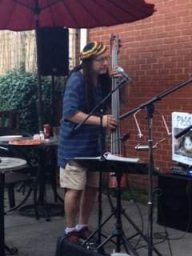
 
I saw the Steep Canyon Rangers last weekend. Sound was so clean and clear you could easily whisper to the person next to you and hear them clearly. I told the sound engineer it was the best sound I'd ever heard in my life. pretty big venue, holds about 400.

My point is no music should be played that loud. Louder certainly does not make anything better.
 
Last edited:
The problem with amateur sound people is that they fall into the trap ... it's been empirically proven that people tend to perceive the louder of two recordings as sounding "better". So they keep pumping up the slider, when they should be pulling the other sliders DOWN. A lot of players do the same thing, instead of everyone turning down, they just crank their own amp to 11.
 
  • Like
Reactions: Coolhandjjl
@flameworker — Get some health insurance (ACA, Mom's or whatever) and have a real hearing test. Now.
Most health insurance in the U.S. doesn't cover hearing aids. Not even sure it covers a test unless you go to a doctor. I know from experience
When I started playing, big amps were 50 watts. No body knew anything about amplified music causing hearing problems. In addition to playing music I was also flight crew in noisy old recip engine planes and you had to have a headset on to hear anyone if you were aft of the wing roots. I worked on aircraft carrier flight decks, and participated in shooting sports. My hearing is pretty bad and the tenitis never stops.
 
Hearing damage is caused by the combination of SPL, Frequency and Duration. Bass is the least likely to cause damage, but over time, it will. You can find detailed information about this on the OSHA web site.
https://www.osha.gov/SLTC/noisehearingconservation/
http://www.dangerousdecibels.org/virtualexhibit/6measuringsound.html
http://www.dangerousdecibels.org/education/information-center/faq/

In addition, some interesting studies on ultra loud bass have found that it causes internal damage to your body. The Army has researched this as a potential weapon.

Playing that loud is just crazy. Hearing compression sets in and everyone only hears it as if you were playing much less loud anyway, so turn it down!

BTW - My company has provided noise measurement service, and I have found that the mic in my iPhone is extremely accurate - nearly the same as an expensive digital mic I use clear up to 130 dB.

I have tinnitus (it sucks) and so that it doesn't get worse I wear ear plugs for every gig for protection from drum hits. I also wear them on the plane - makes a huge difference, espcially on an 8-14 hour flight.
 
Not intending to threadjack with this, but I'm unclear about something that's been mentioned a couple times.

(And +1 to all the warnings about damage to hearing from exposure to high SPL. It's easy for musicians to rack up a lot of hours over the threshold of long-term damage. I've worn whatever plugs were available through my entire playing career--the new ACS Pros are great, IME--and I'm daggoned glad I did.)

My question has to do with which sound level scale, the A scale or the C scale, is best for accurately getting a sense of SPL in a band context. I have an inexpensive meter (+1 to that recommendation, above) which does both. So, which should I use to measure live music?

"C" weighting.

DBscale.jpg
 
  • Like
Reactions: Ewo and Klondike
I use IEM's. I've mentioned in other posts that I often leave them in between sets, because the stupid DJ has the house system cranked up playing the Wobble, Cupid Shuffle or other hip-hop dance song.
When I take the IEM's out, it's like OMG !!!! it's too freaking loud!

The problem is that one's ears adjust to the relative SPL levels (while the damage occurs) so most are not even aware of it happening - until the damage is done. It's due to the FM (Fletcher-Munson) effect.
PROTECT YOUR EARS !!!
 
You're right. What were the rest of us thinking ???

Yeah, that's nice. Real good then. Well, alrighty, yeah eh, uh huh.

**************

There's some good info on the effects of alcohol, here.

"...A medical research paper recently published in the Journal of Ear Nose and Throat Disorders shows that, 'Alcohol specifically blunts lower frequencies affecting the mostly 1000 Hz, which is the most crucial frequency for speech discrimination.' Remember, 1000Hz and lower is toward the fundamental frequencies of the bass."

"...In males, high end hearing loss is even more pronounced, but the major hearing loss is in the key frequencies of the upright bass and bass guitar.

"Now check this, lady bassists - for some reason unknown to science, females actually are more affected by alcohol and hearing loss in the bass frequencies! Playing in a Runaways or Hole tribute act? If you’re playing bass à la Melissa auf der Mar, easy on the hooch. You’ll be even more tempted to blow out eardrums than your male counterparts - and nobody knows why this is."


So in addition to the Fletcher-Munson problem, alcohol exasperates the entire volume creep one-upmanship during a gig.