
…same as the one you just got with the controversial decal?

TalkBass has been independent since 1998. Add your voice.
Create a free account to reply to discussions, view embedded media, and browse with fewer display ads.
Join free Log in
Want zero display ads or expanded classifieds tools? Compare plans.

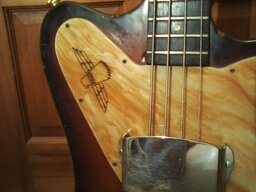
no, turns out (was told it was a 69) but it's a late 70 (the one with the decal) possibly a 71..…same as the one you just got with the controversial decal?

Which Gibson pickups are they? And where did the Gibson pickups come from?
I'm looking at several Thunderbird models and in a lot of cases only see minor differences. I'm wondering if the differences are factory revisions or if they have been modified.
Is there a good resource that provides a description of the differences between each Thunderbird bass model?
For being 53 y/o it still kicks @$$. 'Farts out' a bit below A on the E, but that can be tamed with proper EQing. I can't turn it up above 8 o'clock(7=off)in the house without rattling plates, glassware, etc.There was one at a used music store here a pre-Covid. It was a big sucker for sure.
Wikipedia has a lot of good info. But doesnt really cover all models.This is actually a big question, there are many Thunderbirds out there, not just Gibson.

So kind of you to say Ken, probably better at that then playing bass.

Well, there are a ship(sp?) load of actual Gibson's and Epi's, then there are the Greco's, and who knows how many other copies. Plus the 'homebuilds'. Coupla hundred?Wikipedia has a lot of good info. But doesnt really cover all models.

Bass Face!Something from Saturday night, the VP did sound nice with the Gibson pickups!

I saw this on eBay recently. Not sure about the size but it might be an option:
Black 4 String Bass Guitar High Mass Tune-O-Matic Bridge and Tailpiece | eBay
View attachment 5071138
I’ll figure out what to do about the lower wing. Maybe Wilkins can match the color and redo the lower wing. Or there is a guy in Santa Ana who is supposed to be good with finish repairs who I’ll talk to about it.

And Bettie's butt looks very happy.Bass Face!
I have been missing for a good portion of May. There are over 100 pages I have missed and I have no intention of trying to catch up. Perhaps someone can give me a brief summary...
[unnecessary detail]
Mum finally agreed that she can no longer look after herself and needed to go to assisted living. That started a search for available space in a facility that we (my brother and I) would be happy to see Mum in. The advice I received from one facility (that had 100% occupancy and a 13 person waiting list) was "if you find a place, take it. Assisted living spaces are rare".
After going to see the few that had space available, we were ready to sign a contract. And that was when the hospice called and said that it was time for Mum to be admitted.* So, last week, we got Mum moved in. It is good that she is getting the help she needs to keep her comfortable and maintain her dignity in her last weeks.
The last few weeks have been tiring and draining. On the other side, we finally have a timeline we can work against. I have been making funeral arrangements so that we can have everything in place when the time comes.
* In Ontario, hospice care is limited to the last 90 days of life. So they try as hard as possible to make sure someone is on death's doorstep before admitting.
[/unnecessary detail]
There are only minor differences when it comes to Gibson Thunderbirds made since 1988. The neck angle changed in about 2008 or so. Gibson changed the pickup design off and on over the years. I don't know why, but there doesn't seem to be a whole lot of difference in the sound. I'm sure a person with lots of time, access to all kinds of them, and the patience of Job might be able to find sound differences between the different pickups Gibson used over the years.I'm looking at several Thunderbird models and in a lot of cases only see minor differences. I'm wondering if the differences are factory revisions or if they have been modified.
Is there a good resource that provides a description of the differences between each Thunderbird bass model?
Any method to darkening the fretboard with the leather dye? Do I need to do any sanding?
And I’ll guess the dye will have no effect on the dots, frets?
I have been trying to get a country project off the ground. The guitarist just broke his ankle hiking. Jeez!“Bombshell Bullys” go country….. this i gonna be fun….
View attachment 5071556


