• TalkBass has been independent since 1998. Add your voice.
    Create a free account to reply to discussions, view embedded media, and browse with fewer display ads.
    Join freeLog in
    Want zero display ads or expanded classifieds tools? Compare plans.

Thunderbird Club

Has anyone had a chance to compare all vintage style "recreation" tbird pickups: Lull, Lollar, Thunderbucker (out of production for the last while sadly), Gibson RI, etc.? curious if/what they're sonic differences are, if any at all, who's close to either originals of the 60's/to each other brand wise.
I keep hearing about the 60s reissue being a really good one, nails it.
 
It might just be more straightforward for me to just get a Lollar neck pickup
I have all varieties of T-bird pickups in my various ’birds, Lollar’s, Thunderbucker ‘66’s, Novak’s, Gemini (UK) Devastators, a couple of used sets of Gibson RI’s that had been removed from some 2021 NR basses (these sets are marked “Lead” & “Rhy”), and some Gibson RI purchased directly from Gibson. One set from the 2021 NR are in my 2014 Heritage Cherry ‘bird and the other set will go into my 2013 EB . The ones purchased directly from Gibson are marked “Lead” only. I have a pair of these “Lead” marked pickups in my ‘97 Ebony ‘bird.

I don’t have any Lulls.

One of the ones I purchased directly from Gibson (“lead”) is in my 2019 LP DC Tribute, so this is a bass with just one pickup, like what it sounds like you are doing. I think it and the other Gibson RI’s in my others are a fantastic sounding pickup, big, full, and clear sounding. I can definitely say, as great as the Lollars sound, the Gibson is just a little better.

Also, the Gibson’s come in Chrome cans, while all the others are nickel. All of my nickel ones have just a hint of yellowing, nicely, and work well with the other nickel hardware on those basses. I had to make it a point to get chrome hardware on any bass I put the Gibson’s in. Possibly Lollar can make them chrome, but I’m not sure. I think Gemini UK gives you a choice.
 
There has to be a gig bag for that!
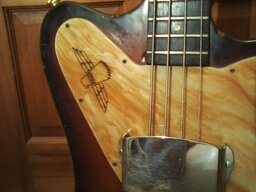
There is(sorta). Actually for some kind of pointy Dean bass.(note extra padding for HS) v
0727201546-00.jpg IMG_0129.jpg
Or I use the Coffin Case:
1002181350-00.jpg 1002181354-00.jpg
 
Last edited:
I keep hearing about the 60s reissue being a really good one, nails it.
Wish i had an original 60's bird to compare the RI Gibson's i've got in my Epiphone Goth bird. But i can say they do sound great, very full, with a good amount of top end (though sometimes i wish i had a little extra bite. I tried SITs stainless on it, but disliked the feel & tone i got from them. Didn't feel as balanced or good under finger compared to Nickels IMO).
 
I'll put down a small sum that the Lull pickup formula is not getting off their bench without a Lull wrapped around it.
I’d bet your bet is a safe bet. Gotta believe Lull probably has a proprietary spec their pickups are made to along with a no compete clause for the manufacturer. That doesn’t mean you can’t get very very close to the Lull sound, but when all is said and done it probably won’t be an exact match. At least that’s my gut feel, no data to back that up on.

Has anyone had a chance to compare all vintage style "recreation" tbird pickups: Lull, Lollar, Thunderbucker (out of production for the last while sadly), Gibson RI, etc.? curious if/what they're sonic differences are, if any at all, who's close to either originals of the 60's/to each other brand wise.
I have a lot of different purchased Thunderbirds with a lot of different pickups. I also have a tendency towards mad scientist type creations - mixing and matching pickups, control and cap variations, active and passive options, hardware and body and neck variations in my personal builds. My current Thunderbird pickup line-up includes:
Gibson stock 2021 NR cans
Gibson reissue cans
Gibson Bicentennial cans
Gibson 1991 cans
Gibson 2012 plastic cap
Gibson 2015 DeCola plastic cap exposed poles
Lull 4 string cans
Lull 5 string cans
Epiphone VP cans
Epiphone ‘64 reissue cans
Epiphone Goth plastic caps
Epiphone CSLE Les Paul rail cans
ChinaBucker (EY) cans
Greco 1975 cans
Greco 1990 cans
EMG Humbucker plastic cap
Bartolini Humbucker plastic cap
Burny plastic cap
Nordstrand Zen exposed rail plastic caps
Dingwall split coil plastic cap soapbars
Sammick cans
Altec plastic cans
Fender wide range humbucker exposed pole cans

I can record and compare any of those you want but to be honest they’re all in different basses, most have different strings, some are active, some have different cap or pot values, and pickup locations vary widely. All those things combined will unfortunately result in an apples to oranges comparison, but I can note the physical differences so you could directionally account for tone differences in the recording if that helps.
 
Last edited:
I just want a Lull TBird neck pickup, but Lull does not sell those anymore without a very expensive bass attached...

If Seymour is the current provider to Lull, do you think their Custom Shop offering is different from what they produce for Lull...?

It might just be more straightforward for me to just get a Lollar neck pickup & their PBass pre-wired controls kit, with the recommended 0.022 microfarad capacitor...

Somebody needs to do an extensive TBird pickup comparison video, preferably using a "Thunder Jazz" platform...!
I have the SD custom shops in a VP. They are supposed to be an "exact" copy of the 1960's Gibson tbird pickups. I have both and would say they are close. The Queen has all three and can provide better ears.
 
I squeezed in a couple hours work yesterday designing the pickguard for the build in Inkscape, as I dont currently have access to a CAD program, and dont need one often enough to justify paying for one.

Which is sorta ironic, as I have 3-person CAD team that reports to me. But directors dont get to 'do.' They just get to wave the stick. I'm 10 years past my last 'Drawn by' title block on a plan set.

Inkscape is very impressive for freeware, and works natively in SVG files, which are vector-based, scale-accurate, and laser-ready. Has a decent autotrace for going from bitmaps to vectors, too.

As the body dimensions and curves from the kit body differ from a production TBird, I can't just copy or scale the guard from my lovely '18, or buy one. A production one is way too long, and doesn't fit to the horn properly. None provided with the original kit, or even a drawing or template. On my own for this.

I made a serious effort to work up a design with old-school drafting methods; paper, pencil, french curves, triangles, etc. Too slow; those skills are 40 years stale for me.

So the process was:
*Finalize body shape and sand out 100%
*Trace down-side wing top surface outline by hand onto tracing paper
*Scan the trace as a bitmap 1:1 with my 4-in-one printer's flatbed, which was barely large enough for just the needed section of the body, horn to bottom pickup screw.
*Import bitmap to Inkscape, trace to beziers and clean up so I had a good model of the down wing.
*Print model and check against body. *Correct.
*Draw guard design in beziers by looking at my '18 and at pix of other production 'Birds, which showed that there's actually been a lot of variation in fit and detail over the years. Margins from body edge especially seem to differ, particularly near the neck.
*Copy an inset line to define where screws will go.
*Print on legal-size paper
*Cut out carefully and try against body.

Not looking too shabby in comparison.

1000013339.jpg

1000013338.jpg

I wanted a touch wider wood margin for visual contrast, based on tentative paint plans. Unlike Gibson models, I don't have a pickup wire route to hide, but I'm dedicated to 'capturing the spirit.' Espiritu sanctii.

Next will be decision tree time:
Should I print to adhesive paper and cut the guard by jigsaw, and bevel by hand, as normally I would,
Or
Should I use laser cutter/engraver to either cut it, or score it for saw cutting?

Bevel will be by hand either way, as my hobbyist-grade 10w laser can only cut at 90 degrees to surface, and it might not be up to cutting full-thickness guard material in a single pass. havent tried it yet. Bought it 8 months ago, have had time only to build it and test it. Still need to run the cutting calibration against actual sample material.

I've messed with router beveling guards before but I get a better result with hand files and a scraper. Lot slower, of course, but no need for a template guide, which feels kind of wasteful when only making one.

Also working up my personalized 'bird' logo and rod cover signature.
Might go with adhesive foil, might try engraving and filling. Will probably test both.

Also toying with laser-engraving a serial number on back of the headstock, pre-paint. Or I may make a custom water-slide instead for under the clear.

Need to test my planned finish, too.

So many decisions. So little free time.
 
Wish i had an original 60's bird to compare the RI Gibson's i've got in my Epiphone Goth bird. But i can say they do sound great, very full, with a good amount of top end (though sometimes i wish i had a little extra bite. I tried SITs stainless on it, but disliked the feel & tone i got from them. Didn't feel as balanced or good under finger compared to Nickels IMO).
You make have to use the force... Seek and find. Empirical data isn't everything, a little risk-taking can put the right mojo into your endeavor. Only believe.
 
I squeezed in a couple hours work yesterday designing the pickguard for the build in Inkscape, as I dont currently have access to a CAD program, and dont need one often enough to justify paying for one.

Which is sorta ironic, as I have 3-person CAD team that reports to me. But directors dont get to 'do.' They just get to wave the stick. I'm 10 years past my last 'Drawn by' title block on a plan set.

Inkscape is very impressive for freeware, and works natively in SVG files, which are vector-based, scale-accurate, and laser-ready. Has a decent autotrace for going from bitmaps to vectors, too.

As the body dimensions and curves from the kit body differ from a production TBird, I can't just copy or scale the guard from my lovely '18, or buy one. A production one is way too long, and doesn't fit to the horn properly. None provided with the original kit, or even a drawing or template. On my own for this.

I made a serious effort to work up a design with old-school drafting methods; paper, pencil, french curves, triangles, etc. Too slow; those skills are 40 years stale for me.

So the process was:
*Finalize body shape and sand out 100%
*Trace down-side wing top surface outline by hand onto tracing paper
*Scan the trace as a bitmap 1:1 with my 4-in-one printer's flatbed, which was barely large enough for just the needed section of the body, horn to bottom pickup screw.
*Import bitmap to Inkscape, trace to beziers and clean up so I had a good model of the down wing.
*Print model and check against body. *Correct.
*Draw guard design in beziers by looking at my '18 and at pix of other production 'Birds, which showed that there's actually been a lot of variation in fit and detail over the years. Margins from body edge especially seem to differ, particularly near the neck.
*Copy an inset line to define where screws will go.
*Print on legal-size paper
*Cut out carefully and try against body.

Not looking too shabby in comparison.

View attachment 7374448
View attachment 7374449
I wanted a touch wider wood margin for visual contrast, based on tentative paint plans. Unlike Gibson models, I don't have a pickup wire route to hide, but I'm dedicated to 'capturing the spirit.' Espiritu sanctii.

Next will be decision tree time:
Should I print to adhesive paper and cut the guard by jigsaw, and bevel by hand, as normally I would,
Or
Should I use laser cutter/engraver to either cut it, or score it for saw cutting?

Bevel will be by hand either way, as my hobbyist-grade 10w laser can only cut at 90 degrees to surface, and it might not be up to cutting full-thickness guard material in a single pass. havent tried it yet. Bought it 8 months ago, have had time only to build it and test it. Still need to run the cutting calibration against actual sample material.

I've messed with router beveling guards before but I get a better result with hand files and a scraper. Lot slower, of course, but no need for a template guide, which feels kind of wasteful when only making one.

Also working up my personalized 'bird' logo and rod cover signature.
Might go with adhesive foil, might try engraving and filling. Will probably test both.

Also toying with laser-engraving a serial number on back of the headstock, pre-paint. Or I may make a custom water-slide instead for under the clear.

Need to test my planned finish, too.

So many decisions. So little free time.
Your guard template looks great!

Just finished mine up yesterday, out of Wenge wood. There’s a lot of variation in pickguard fit from Tbird model to Tbird model and sometimes even within a specific model. So I decided not to sweat the details and just traced an Epiphone guard directly onto the Wenge. Then cut the Wenge out using an electric scroll saw (makes it easier to follow the rounded contours, but harder to get a straight line). Then took it to a belt/disk sander to straighten all the sides and finish to the outline on the wood. I beveled by hand, much easier for me.

Came out great and has the added benefit of being an exact match to an Epiphone guard, so I could flip it out for something stock at a later date if I wanted. Still trying to decide if I want to drill and mount with screws vs just using double back adhesive tape. The tape option provides even more flexibility for after market guards since there’s no screw holes to line up with.
 
Your guard template looks great!

Just finished mine up yesterday, out of Wenge wood. There’s a lot of variation in pickguard fit from Tbird model to Tbird model and sometimes even within a specific model. So I decided not to sweat the details and just traced an Epiphone guard directly onto the Wenge. Then cut the Wenge out using an electric scroll saw (makes it easier to follow the rounded contours, but harder to get a straight line). Then took it to a belt/disk sander to straighten all the sides and finish to the outline on the wood. I beveled by hand, much easier for me.

Came out great and has the added benefit of being an exact match to an Epiphone guard, so I could flip it out for something stock at a later date if I wanted. Still trying to decide if I want to drill and mount with screws vs just using double back adhesive tape. The tape option provides even more flexibility for after market guards since there’s no screw holes to line up with.
The tape option is intriguing.

Drill for screws, then cut the screws and CA just the heads? Or go for the screwless look entirely?
 
I squeezed in a couple hours work yesterday designing the pickguard for the build in Inkscape, as I dont currently have access to a CAD program, and dont need one often enough to justify paying for one.

Which is sorta ironic, as I have 3-person CAD team that reports to me. But directors dont get to 'do.' They just get to wave the stick. I'm 10 years past my last 'Drawn by' title block on a plan set.

Inkscape is very impressive for freeware, and works natively in SVG files, which are vector-based, scale-accurate, and laser-ready. Has a decent autotrace for going from bitmaps to vectors, too.

As the body dimensions and curves from the kit body differ from a production TBird, I can't just copy or scale the guard from my lovely '18, or buy one. A production one is way too long, and doesn't fit to the horn properly. None provided with the original kit, or even a drawing or template. On my own for this.

I made a serious effort to work up a design with old-school drafting methods; paper, pencil, french curves, triangles, etc. Too slow; those skills are 40 years stale for me.

So the process was:
*Finalize body shape and sand out 100%
*Trace down-side wing top surface outline by hand onto tracing paper
*Scan the trace as a bitmap 1:1 with my 4-in-one printer's flatbed, which was barely large enough for just the needed section of the body, horn to bottom pickup screw.
*Import bitmap to Inkscape, trace to beziers and clean up so I had a good model of the down wing.
*Print model and check against body. *Correct.
*Draw guard design in beziers by looking at my '18 and at pix of other production 'Birds, which showed that there's actually been a lot of variation in fit and detail over the years. Margins from body edge especially seem to differ, particularly near the neck.
*Copy an inset line to define where screws will go.
*Print on legal-size paper
*Cut out carefully and try against body.

Not looking too shabby in comparison.

View attachment 7374448
View attachment 7374449
I wanted a touch wider wood margin for visual contrast, based on tentative paint plans. Unlike Gibson models, I don't have a pickup wire route to hide, but I'm dedicated to 'capturing the spirit.' Espiritu sanctii.

Next will be decision tree time:
Should I print to adhesive paper and cut the guard by jigsaw, and bevel by hand, as normally I would,
Or
Should I use laser cutter/engraver to either cut it, or score it for saw cutting?

Bevel will be by hand either way, as my hobbyist-grade 10w laser can only cut at 90 degrees to surface, and it might not be up to cutting full-thickness guard material in a single pass. havent tried it yet. Bought it 8 months ago, have had time only to build it and test it. Still need to run the cutting calibration against actual sample material.

I've messed with router beveling guards before but I get a better result with hand files and a scraper. Lot slower, of course, but no need for a template guide, which feels kind of wasteful when only making one.

Also working up my personalized 'bird' logo and rod cover signature.
Might go with adhesive foil, might try engraving and filling. Will probably test both.

Also toying with laser-engraving a serial number on back of the headstock, pre-paint. Or I may make a custom water-slide instead for under the clear.

Need to test my planned finish, too.

So many decisions. So little free time.
I tried Inkscape, but found it too complicated and gave up. Tinkercad works for me.

For a one-off Tbird pickguard I usually start by tracing one thats close, modifying on paper, trace onto PG material and cut out on a band saw. Then I use various sanding blocks.

I usually make templates and then use a guide bit on a small router table. I tried bevelling with a router bit, but it's too easy to wreck the piece. I also tried bevelling with a blade, but it still needed smoothing/polishing.

I bevel with 80 grit on sanding blocks. Then 180-320-400-600-800 and polish with brasso. That yields a semi-gloss polished look with no tool marks. I do the same to any pickguard/TRC on a bass I buy.
 
Hello, Thunderbird Club...!

So a Sonic Blue Gold Foil Jazz bass (alder body, maple neck, bound ebony fretboard, tort pickguard) arrived a couple days ago, hanging on the wall now...

I want to make a poor man's IMA4 out of it:
  • drop a TBird neck in where the gold foil is
  • change the bridge (Hipshot B FM1)
  • change the knobs (Invalid Link Removed, Invalid Link Removed, or some smooth dometop ebony knobs)
  • change the controls or maybe just the capacitor (0.022 microfarad ?)
  • obviously slap on a set of LaBella IMA Super Polished strings
  • leave the stock tuners on it since they are Gotohs
Trying to figure out which TBird pickup to go with; Curtis Novak, Lollar, or Seymour Duncan Custom Shop...

The Internet is telling me that the Seymour Duncan Custom Shop is the current provider for Mike Lull TBird pickups (previously TV Jones), so that makes me lean heavily towards the Custom Shop for a TBird neck pickup to drop into the Gold Foil Jazz...?

But when I messaged Ian Martin Allison on Instagram, he said "Lulls are the best yeah but Lollars are good too!"

So if Seymour Duncan IS the manufacturer of Lull TBirds, I would just go with one of their neck pickups...

Any thoughts or insight...?

Thanks...!


I have been an Endorsing Artist of Mike Lull pickups since 2008, knew Mike personally, visited with him often as he set up every new Thunderbird that I would buy and know Spencer Lull as well. I own the first production T-4, it is a II. The pickups were originally made by TV Jones, not Seymour Duncan, they came into the picture only after Jones could not keep up with demand, to my knowledge both companies may still be involved in production of the pickups.
I own Thunderbirds with a variety pickups, first, The Real Deal - a '64 Gibson II, an '89 Gibson with Lulls, a BaCH Non Reverse II with a Lull, a Lull t-4 II, a Cataldo Fenderbird with Thunderbucker Ranch pups, a current Gibson Non Reverse with Re-Issue pickups and an Orville that has Seymour Duncan Custom Shop pickups. So, while this isn't all of my Birds, these are relevant to the conversation. The sonic differences between all of these pickups is very small, if the the original Gibson is the standard by which all the rest are judged, yes I do think that Lulls are the closest, but the Thunderbuckers and SD Custom shop are so close that in a blind test most could likely not tell. Right there with them is the current Gibson Re-Issue, in many ways it mimics the original as good as any of the above, and is far less money. I have always heard good comments regarding Jason Lollar's pickups, he was Mike's first choice to make the originals, but he declined as at the time he didn't think there was enough market for them.

TL/DR; Gibson.

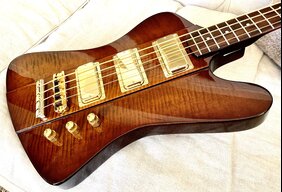
The Lull


Gibson