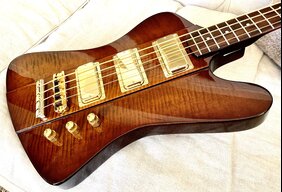
It's a slippery slope. Without getting to deep down the rabbit hole, Gibsons are generally know for being made of mahogany, and Fenders alder, ash and maple. They both have different pu's/pots (250/500) and neck fitment designs. (bolt-on/set-neck/neck-thru) A fender does not sound like a Gibson, and visa-versa. Class dismissed.
The only significant difference between my two Thunderbirds is a little brightness.
Exhibit A:
maple neck/ebony FB, 6 screw neck, poplar body, 2 point low mass bridge/claw tailpiece, Thunderbucker 66S pickup, single volume pot.
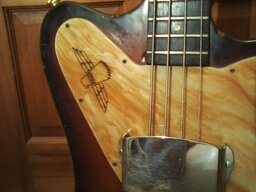
Exhibit B:
mahogany neck/rosewood FB, set neck, mahogany body, 3 point bridge, Thunderbucker 66S pickup, single volume pot.
I listen to those who design and make instruments, like the late Phil Kubicki. Phil said this; "When I'm asked, what's the best wood to use for the body of a bass, people are surprised to hear me say that the neck wood actually contributes more to the sound of a solid body instrument than the body wood does - although, to be honest, I think the pickups and electronics probably play the largest role in determining the plugged-in sound of an electric bass."
Having owned a few Factors - I'm here to say that what he said was true.
Perhaps the new initiation should be to go out into Gen Pop and claim that tone wood, neck wood, fretboard, strings, pickups, etc. make no difference to sound. Only shape matters.









 -Be careful what you ask for!