In my last job I had to program some CNCs (Homag BOF 511) because no one else could get their heads round it (says it all!) Those machines were accurate to 0.02mm over the entire bed surface, I think even a really badly set up and maintained machine would be capable of being accurate to 0.1mm (4 thousandths of an inch). It really sounds like either a program change or maybe and possibly more likely thinking about it some goon in the factory changing a tool without resetting the machine settingsSounds like it could be tolerances on their program, if they use two decimal points (in inches) a typical tolerance would be +/- .05" (nearly 1/16") but it'll still machine it flat(ish) across the whole surface. Also at 1/16" even the paint can account for a decent portion of that.

Enjoy the benefits of a premium membership!
Upgrade Account
-
TalkBass has been independent since 1998. Add your voice.
Create a free account to reply to discussions, view embedded media, and browse with fewer display ads.
Join free Log in
Want zero display ads or expanded classifieds tools? Compare plans.
You are using an out of date browser. It may not display this or other websites correctly.
You should upgrade or use an alternative browser.
You should upgrade or use an alternative browser.
Thunderbird Club
- Thread starter TBird1958
- Start date
-
- Tags
- club thunderbird
More options
Who Replied?

If the CAD file was dimensioned to two decimal places (imperial) than the accuracy of the machine doesn't matter as the file is only good to two decimal places, which a typical two decimal place tolerance would be between .01 and .05" On all the stuff I've done, I set untoleranced two decimal place dimensions to +/- .05"In my last job I had to program some CNCs (Homag BOF 511) because no one else could get their heads round it (says it all!) Those machines were accurate to 0.02mm over the entire bed surface, I think even a really badly set up and maintained machine would be capable of being accurate to 0.1mm (4 thousandths of an inch). It really sounds like either a program change or maybe and possibly more likely thinking about it some goon in the factory changing a tool without resetting the machine settings
A change of tool without zeroing the offset is a good possibility too.
Yes I would agree but Epiphones are made in sunny Asia where they use metric so it's more probable they used a metric program but that is just a guess, there might well be an army of Korean elves hand shaping them for all I really knowIf the CAD file was dimensioned to two decimal places (imperial) than the accuracy of the machine doesn't matter as the file is only good to two decimal places, which a typical two decimal place tolerance would be between .01 and .05" On all the stuff I've done, I set untoleranced two decimal place dimensions to +/- .05"
A change of tool without zeroing the offset is a good possibility too.
The only difference would be the numbers. But the tolerance equivalent would still be relevant.Yes I would agree but Epiphones are made in sunny Asia where they use metric so it's more probable they used a metric program but that is just a guess, there might well be an army of Korean elves hand shaping them for all I really know
Well if it is Korean elves, there's one that should be fired

That's kkoma yojeong (elf in Korean)The only difference would be the numbers. But the tolerance equivalent would still be relevant.
Well if it is Korean elves, there's one that should be fired

I suspect you are off thinking that it is in the CNC machines. I would suspect that the difference is in finish thickness. Spraying, although probably done by machine, is a much less certain process than machining. Colour could also account for a difference as well. White requiring enough spray to be opaque, but the burst requiring at least two finishes (black and clear).
Finishes aren't that thick though, I don't think it would add much more that 1/32" to the thickness front and back but my knowledge is confined to nitro finishes on guitarsI suspect you are off thinking that it is in the CNC machines. I would suspect that the difference is in finish thickness. Spraying, although probably done by machine, is a much less certain process than machining. Colour could also account for a difference as well. White requiring enough spray to be opaque, but the burst requiring at least two finishes (black and clear).
Sorry I don't understand? If a machine was programmed to cut to a line then the tolerance of that machine should be within a maximum of plus or minus some number irrelevant whether it was imperial or metric. If that number is as big as 0.4mm then there is something very wrong with that machine.The only difference would be the numbers. But the tolerance equivalent would still be relevant.
There will be at least two CNCs involved making a Tbird, one for the neck and one for the wings. If there is a general increase of about 1/16" then I would think that it might be a programming change.
Of course there may be those elves at work too
That sounds like I'm arguing, I'm not, just discussing with a mate

My point is that .05" tolerance is the same as 1.3mm tolerance. The fact that it's metric doesn't really matter as long as the numbers are the same conversion. I've just been using imperial because Scott referred to the difference in imperial, and I'm more familiar with imperial.Sorry I don't understand? If a machine was programmed to cut to a line then the tolerance of that machine should be within a maximum of plus or minus some number irrelevant whether it was imperial or metric. If that number is as big as 0.4mm then there is something very wrong with that machine.
There will be at least two CNCs involved making a Tbird, one for the neck and one for the wings. If there is a general increase of about 1/16" then I would think that it might be a programming change.
Of course there may be those elves at work too
That sounds like I'm arguing, I'm not, just discussing with a mate
But I'm not saying it's the machine, I'm saying it could be the tolerance in the programming. If the program is running that particularly bass at the high end of the tolerance, it will not change during flat milling as there's no reason for the z-axis to move on a flat object.
If they're using 6-axis machines than they may just use one machine per bass.
All good here

But a CNC program is to a dimension, any variation from that is going to be machine error and never anything that big unless there's been a PLC fault and that would be catastrophic if the machine's safety functions didn't shut it down. I've never ever seen a CNC that varied off dimension more that 0.1mm and that needed stripping down to change bearingsMy point is that .05" tolerance is the same as 1.3mm tolerance. The fact that it's metric doesn't really matter as long as the numbers are the same conversion. I've just been using imperial because Scott referred to the difference in imperial, and I'm more familiar with imperial.
But I'm not saying it's the machine, I'm saying it could be the tolerance in the programming. If the program is running that particularly bass at the high end of the tolerance, it will not change during flat milling as there's no reason for the z-axis to move on a flat object.
If they're using 6-axis machines than they may just use one machine per bass.
All good here

Parliammo un po n'Inglese se no si incazzano.I miei genitori sono venuti negli Stati Uniti nel 1967. Mio padre non ha accento, ma mia madre ha ancora i suoi ma il loro Inglese è molto buono. Sono andati al college e si sono laureati con 2 anni di laurea.
Parliamo quasi sempre Inglese ora, ma ogni tanto mia madre passa all'Italiano ed è carina.
Yeah same here. Dad was born in Providence but mamma in Sicily. She would only speak it when upset or really happy after her English got decent. The accent never went away
Parliament closed the English casino?Parliammo un po n'Inglese se no si incazzano.
Yeah same here. Dad was born in Providence but mamma in Sicily. She would only speak it when upset or really happy after her English got decent. The accent never went away
How utterly coolParliammo un po n'Inglese se no si incazzano.
Yeah same here. Dad was born in Providence but mamma in Sicily. She would only speak it when upset or really happy after her English got decent. The accent never went away
Why? Are Badbirds just meant for 60's 'Birds?No point.
But a CNC program is to a dimension, any variation from that is going to be machine error and never anything that big unless there's been a PLC fault and that would be catastrophic if the machine's safety functions didn't shut it down. I've never ever seen a CNC that varied off dimension more that 0.1mm and that needed stripping down to change bearings
I see what you're saying. But at the same time, if a dimension is only good to .01" how will a machine determine if it's .010" or .019", that's where variation from the CAD drawing happens. And in written program, I've seen CNC'd nylon that was out over .035", it was completely due to the written program. The programmer used climb milling instead of conventional, but also only dimensioned to one decimal place (again, Imperial) (took a fair bit of marks off that group project).
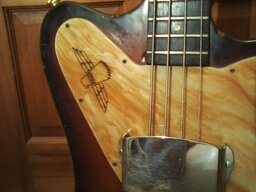
Sounds like you managed to get signal out of it. What was wrong?My suspicions are confirmed. My second Vintage Pro Thunderbird is a beefy bass. Weighing over 10 lbs. It felt just plain big the first time I picked it up. Not svelte like my white one, my 77 or any 60's Thunderbird I have ever held. No doubt about it the thing is a beast. I did some measuring , the body, wings, and headstock are a strong 1/16" thicker than my 9 lb. White VP . The neck profile us also very beefy copaired to the white one. It's not a bad thing but its different. Not sure how I feel about it.
The fit and finish are excellent and the neck while beefy is great, super low action no fret buzz. It sound's fantastic, the pickups just roar.
On the fence if I am going to keep it, with the added mass the bass loses some of its feel, almost feels like your being saddled with something, weighted down. I'll give it a week and make my decision .View attachment 3001152

Why? Are Badbirds just meant for 60's 'Birds?
I was thinking that he didn't have an issue getting proper intonation with the stock bridge.
Some do, some don't on a same model bass? Sounds wonky..I was thinking that he didn't have an issue getting proper intonation with the stock bridge.

I'll use a greatest hits comp. or something from a boxed set when I wanna hear a specific artist or band, and can't decide which album to listen to. Usually, the best songs on a given album, were not "hits", so the compilations don't spend a lotta time in my ears.Just out of curiosity, do anyone else other than me have a liking for "Best of" albums?
I like to have the actual albums on vinyl and best of on CDs for more general listening and housework bop around the house type thing
Some do, some don't on a same model bass? Sounds wonky..
If you're thinking about the white bass he sold Jeff, that was a Classic Pro he put the Badbird Bridge on.


