
Sorry if this has been addressed before by T-Bird experts, but can anyone compare the tone of the Epiphone Embassy Pro to a T-Bird? Specifically older versions from the 60s and 70s. Under $400 one might expect junk, but I'm curious.

Enjoy the benefits of a premium membership!
Upgrade Account
-
TalkBass has been independent since 1998. Add your voice.
Create a free account to reply to discussions, view embedded media, and browse with fewer display ads.
Join free Log in
Want zero display ads or expanded classifieds tools? Compare plans.
You are using an out of date browser. It may not display this or other websites correctly.
You should upgrade or use an alternative browser.
You should upgrade or use an alternative browser.
Thunderbird Club
- Thread starter TBird1958
- Start date
-
- Tags
- club thunderbird
More options
Who Replied?
Gibson bought Epiphone in 57... assuming there was inventory left there could be some good stuff for a little while after. Before 57 I believe they were quite good, their own brand.... I’d like to know by which point Gibson had subjected them to being strictly inferior instruments.
Thanks for depressing me even more. But do have a great holiday!I'll be there with the whole family this Thursday. 14 days/13 nights. Xmas and New Years in paradise! Aloha MF'ers!
View attachment 3250364

Assumes facts not in evidence...Gibson bought Epiphone in 57... assuming there was inventory left there could be some good stuff for a little while after. Before 57 I believe they were quite good, their own brand.... I’d like to know by which point Gibson had subjected them to being strictly inferior instruments.
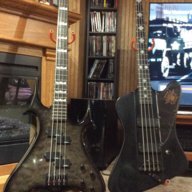
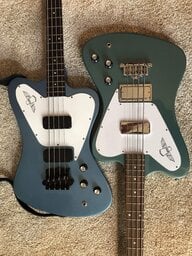
My two Epi birds are great quality. 7 ply (vs 9 ply Gibson) neck thru, great tone.
My Jack Casady (made in China) is great quality. Thunderous tone. No Gibson equivalent.
My Epi EB3 is thicker, heavier, and thicker poly than a Gibson SG.
They didnt buy Epiphone to make instruments of equal quality. They bought it to remove competition and give them access to customers at a lower price point... at least in practice this is what most parent companies do. I have assumed this much, as I said. It’s just what I’ve seen... in every way
I have an Epiphone les Paul custom that I like almost as much as my les Paul studio... high end of one vs low end of another....comes close...
Epiphone, especially the high end models are surprisingly good for the price. Some are just an excuse for a sellable instrument.
I have an Epiphone les Paul custom that I like almost as much as my les Paul studio... high end of one vs low end of another....comes close...
Epiphone, especially the high end models are surprisingly good for the price. Some are just an excuse for a sellable instrument.

Gaolee
Official leathers tester and crash dummy
I recognise the telephone. What is that odd looking rectangular thing with all the little pictures?I know us bass players like our old technology, but now that I have a digital mixer, it’s like I went from this:
View attachment 3250852
To this:
View attachment 3250854

Well.... I hope the poly is thicker on the Epi, cause Gibson uses nitroMy Epi EB3 is thicker, heavier, and thicker poly than a Gibson SG.
You mean the rectangle with the round thing and all the numbers? I don’t know either.I recognise the telephone. What is that odd looking rectangular thing with all the little pictures?
Ps. You might wanna get your eyes checked if you think those numbers look like pictures.
Gaolee
Official leathers tester and crash dummy
Thunderbirds from the '60s and from the '70s had different pickups from each other. I cannot directly compare an Embassy Pro to anything, because I have not played one. That said, my understanding is that they have the same pickups as a Vintage Pro which sound a lot like a '60s Thunderbird. The guy who really knows is Link RemovedSorry if this has been addressed before by T-Bird experts, but can anyone compare the tone of the Epiphone Embassy Pro to a T-Bird? Specifically older versions from the 60s and 70s. Under $400 one might expect junk, but I'm curious.
Gaolee
Official leathers tester and crash dummy
Kids say the darndest things! The round thing is a dial. It is a new invention that lets you make a call without asking the operator to connect you. It is an amazingly advanced new device. I think the other one must be some of that wacky modern art.You mean the rectangle with the round thing and all the numbers? I don’t know either.
Ps. You might wanna get your eyes checked if you think those numbers look like pictures.

True thatThis is where the cool kids hang out. Some get it, some don't.
Bwaahaahaahaa!The one with the campfire smell.

I actually think he was saying he recognizes the telephone and doesn’t know what the iPhone isKids say the darndest things! The round thing is a dial. It is a new invention that lets you make a call without asking the operator to connect you. It is an amazingly advanced new device. I think the other one must be some of that wacky modern art.

- Mar 8, 2011
- 12,232
- 51,187
- Disclosures
- Authorized greenboy designs builder/Owner of BNA Audio
I loathe Behringer as a company (too many design ripoffs) and refuse to buy their products. I like Mackie gear. Yamaha is a good bargain, too.
Since Behringer bought Midas, TC Electronics and Klark Teknik (sp?), the quality of so many of their products has gone up dramatically. I still can’t bring myself to buy any of their stuff yet though. They have one semi modular synth that for once isn’t a clone (rip off) of something else and the price is so reasonable I’ve been tempted, but have never even fired one up. Don’t know why, but I just can’t do it. Maybe I do know why

They didnt buy Epiphone to make instruments of equal quality. They bought it to remove competition and give them access to customers at a lower price point... at least in practice this is what most parent companies do. I have assumed this much, as I said. It’s just what I’ve seen... in every way
Simply untrue. If it were the case, when a company is purchased, the non-buyers in the industry would see their stock price rise whereas the purchaser's stock price would fall. Further, if the only reason for buying a company were to reduce competition, it would never pass government review under anti-trust/anti-combines legislation. In fact, even a hint of reduced competition can scuttle a deal. To pass competition review, there is often a requirement that similar/competing product lines be sold prior to completion of the deal.
I have done this (sold a company). More than once.
I have their Tube Ultragain Mic 500 usb preamp that I use as an interface to record with and it’s awesome for warming up vocals and as a DI for my Bird.Since Behringer bought Midas, TC Electronics and Klark Teknik (sp?), the quality of so many of their products has gone up dramatically. I still can’t bring myself to buy any of their stuff yet though. They have one semi modular synth that for once isn’t a clone (rip off) of something else and the price is so reasonable I’ve been tempted, but have never even fired one up. Don’t know why, but I just can’t do it. Maybe I do know why
Last edited:
Oh so that’s what this thing is?!Kids say the darndest things! The round thing is a dial. It is a new invention that lets you make a call without asking the operator to connect you. It is an amazingly advanced new device. I think the other one must be some of that wacky modern art.
It’s not vintage art?!
So how did this deal work, what were their motivations and why despite laws did the end result end up the same. Just because theyre not supposed to do it doesn’t really mean anything....they still do it alllll the time. That’s not really an answer.
I also never said that it was the only reason to purchase a company....
I also never said that it was the only reason to purchase a company....
Epiphone is American musical instrument manufacturer founded in 1873 by Anastasios Stathopoulos, currently based in Nashville, Tennessee. In 1957 Epiphone, Inc., of New York City was purchased by Chicago Musical Instrument Co. (CMI, the same company that bought Gibson in 1944) and given the name Epiphone, Inc. of Kalamazoo, Michigan. CMI took great measures to keep the Gibson and Epiphone identities separate and housed the two companies in different buildings each with its own separate management team. Epiphone was Gibson's main rival in the archtop market prior to 1957.[2] Their professional archtops, including the Emperor, Deluxe, Broadway and Triumph, rivaled those of Gibson.[citation needed] Aside from guitars, Epiphone also made double basses, banjos, and other string instruments. However, the company's weakness in the aftermath of World War IIand death of Epaminondas Stathopoulos in 1943 allowed Gibson's parent, CMI, to purchase it.[3]
After Epiphone became a subsidiary of Norlin (Gibson's parent after 1969), many of its instruments were later patterned after the more expensive Gibson versions. Occasionally, Epiphone models are of such high quality that sales of those less expensive instruments actually cut into the Gibson's sales. Case in point, the short lived solid body Epiphone Del Rey model was modeled after a Gibson Les Paul double cut. Workmanship and manufacturing standards were so high that Gibson killed the model. To help distinguish itself from the parent brand, Epiphone also maintains its own line of archtop guitars and basses.
After Epiphone became a subsidiary of Norlin (Gibson's parent after 1969), many of its instruments were later patterned after the more expensive Gibson versions. Occasionally, Epiphone models are of such high quality that sales of those less expensive instruments actually cut into the Gibson's sales. Case in point, the short lived solid body Epiphone Del Rey model was modeled after a Gibson Les Paul double cut. Workmanship and manufacturing standards were so high that Gibson killed the model. To help distinguish itself from the parent brand, Epiphone also maintains its own line of archtop guitars and basses.


