
matter of speaking Larry..that's all...Having zero experience in any single-payer system and other than speaking to anecdotal evidence relayed to me, I have nothing to be careful about.


TalkBass has been independent since 1998. Add your voice.
Create a free account to reply to discussions, view embedded media, and browse with fewer display ads.
Join free Log in
Want zero display ads or expanded classifieds tools? Compare plans.
matter of speaking Larry..that's all...Having zero experience in any single-payer system and other than speaking to anecdotal evidence relayed to me, I have nothing to be careful about.

Sorry to hear of your injuries and insults to injuries. While staying away from the political, I only wish folks understood the consequences of single-payer. It's a system and like all systems whether private or socialized, it has its good and its bad.
While I was on vacation in the Hawaiian Islands over Xmas I met a retired Canadian doctor who was on vacation with his wife who was a retired nurse. We discussed the Canadian system to an extent and he addressed the wait times that have become synonymous with socialized medicine.
He told me that those in the Canadian system could choose to pay a high co-payment to be put near the front of the line for procedures/surgeries and that the system uses the payment to offset the costs of the single payer system. Have you looked into this option? Is it something that you could swing?

There is no option in Canada to pay an additional fee for faster access; this is a feature of other socialized systems but is forbidden by the Canada Health Act. There are only 3 countries in which it is illegal to purchase healthcare; Canada, Cuba, and North Korea.
Indeed, be careful what you wish for; you may get it. Canadians tout the US system as being full of "administrative waste", but the reality of Canadian socialized medicine is that the healthcare 'system' expands adding health councils, levels of oversight, committees to 'study' new drugs and treatments, but never add front line services. In the never ending quest for "efficiencies" more administration is added without adding front line personnel and the assets they need to do their jobs.
Sorta like "too many chiefs", etc.?There is no option in Canada to pay an additional fee for faster access; this is a feature of other socialized systems but is forbidden by the Canada Health Act. There are only 3 countries in which it is illegal to purchase healthcare; Canada, Cuba, and North Korea.
Indeed, be careful what you wish for; you may get it. Canadians tout the US system as being full of "administrative waste", but the reality of Canadian socialized medicine is that the healthcare 'system' expands adding health councils, levels of oversight, committees to 'study' new drugs and treatments, but never add front line services. In the never ending quest for "efficiencies" more administration is added without adding front line personnel and the assets they need to do their jobs.
Maybe he had his own little scam going and that's why he's "retired".Is it possible that this retired doctor was lying or was misinformed about a system that he participated in? I suppose, but that is what he told me. Very odd if what he told me isn't true.

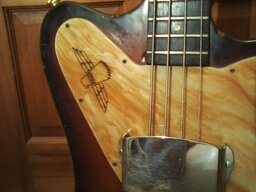
Maybe he had his own little scam going and that's why he's "retired".View attachment 3283925

Nice to know their 'red tape' is just as tangled as ours.Jeez... he seemed so nice... I hope not.
From Wikipedia:
Restrictions on privately funded healthcare
Main article: Canada Health Act
The Canada Health Act, which sets the conditions with which provincial/territorial health insurance plans must comply if they wish to receive their full transfer payments from the federal government, does not allow charges to insured persons for insured services (defined as medically necessary care provided in hospitals or by physicians). Most provinces have responded through various prohibitions on such payments. This does not constitute a ban on privately funded care; indeed, about 30% of Canadian health expenditures come from private sources, both insurance and out-of-pocket payments.Invalid Link Removed The Canada Health Act does not address delivery. Private clinics are therefore permitted, albeit subject to provincial/territorial regulations, but they cannot charge above the agreed-upon fee schedule unless they are treating non-insured persons (which may include those eligible under automobile insurance or worker's compensation, in addition to those who are not Canadian residents), or providing non-insured services. This provision has been controversial among those seeking a greater role for private funding.
In 2006, the Government of British Columbia threatened to shut down one private clinic because it was planning to start accepting private payments from patients.Invalid Link Removed Since 2008, Dr. Brian Day has been suing the British Columbia government on the basis that the Canada Health Act is unconstitutional. In 2016, the Government of Quebec was sued for passing Bill 20, which allows and regulates add-on fees.Invalid Link RemovedInvalid Link Removed


How about Quebec? Being kinda French and all...Careful though, this may apply to socialized medicine in commonwealth countries (UK included). In France the waits are minimal in comparison. So much so, folks joke about it..
Jeez... he seemed so nice... I hope not.
From Wikipedia:
Restrictions on privately funded healthcare
Main article: Canada Health Act
The Canada Health Act, which sets the conditions with which provincial/territorial health insurance plans must comply if they wish to receive their full transfer payments from the federal government, does not allow charges to insured persons for insured services (defined as medically necessary care provided in hospitals or by physicians). Most provinces have responded through various prohibitions on such payments. This does not constitute a ban on privately funded care; indeed, about 30% of Canadian health expenditures come from private sources, both insurance and out-of-pocket payments.Invalid Link Removed The Canada Health Act does not address delivery. Private clinics are therefore permitted, albeit subject to provincial/territorial regulations, but they cannot charge above the agreed-upon fee schedule unless they are treating non-insured persons (which may include those eligible under automobile insurance or worker's compensation, in addition to those who are not Canadian residents), or providing non-insured services. This provision has been controversial among those seeking a greater role for private funding.
In 2006, the Government of British Columbia threatened to shut down one private clinic because it was planning to start accepting private payments from patients.Invalid Link Removed Since 2008, Dr. Brian Day has been suing the British Columbia government on the basis that the Canada Health Act is unconstitutional. In 2016, the Government of Quebec was sued for passing Bill 20, which allows and regulates add-on fees.Invalid Link RemovedInvalid Link Removed
Nice to know their 'red tape' is just as tangled as ours.

Thanks man! On YouTube search for Mosaic Riddim. I’ve only done 1 gig with the band, so I’m in the ones that have been posted in the last week.Sooo goood! Where can I listen to more?
I want that one!
Was just trying to subtly nudge us off the healthcare snoozefest and back to the relative excitement of TBirdsI want that one!

It's all proof that we are not from this planet. We were sent here by an evil alien mischief maker whose intent was to create consternation and screw up the works. Move a few survey stakes and what would have been a perfectly sanely shaped road that would flow freely becomes an ancient evil rune that causes misery. This works at all levels. The same demonic power that moved the survey stakes moved a comma or two in every written form of human endeavor to make things work better and for the same purpose and result. This is proof. Now we are all in on the conspiracy. It's a CONSPIRACY!Anything excluded is not "regulated" and more becomes excluded each year. For example, drugs and physiotherapy are excluded from socialized medicine. But service delivery of anything not excluded can't be legally purchased by a consumer.
Part of the problem stems from jurisdiction. The constitution clearly delegates authority for healthcare to the provinces, but the federal government keeps control through the health transfer payments to the provinces. Should a province not acquiesce to thewhimspolicy of the federal government, it gets cut off. Additionally, policy is made on a case by case and as needed basis - so what happens in one province on one day has no bearing on anything else. And the transfer is used to accomplish other policy goals that the federal government would like implemented but does not have jurisdiction over.
When I lived in California and people would tell me how great Canadian healthcare is because it is a "free" single payer system, I would just say "Imagine the worst HMO. Then imagine that the government runs it." Little more needs saying.
I work in drug development and have a rather intimate knowledge of the state of healthcare. All I can say is when looking at drug approvals, I am interested in the US, EU-5 (the 5 biggest EU economies), and Japan. Those jurisdictions are big enough that it is worthwhile understanding and navigating all the legalities of getting a treatment to patients. Everywhere else is an afterthought.
I'll leave it there lest this become politics.
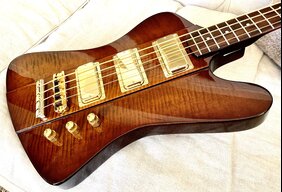
I actually think that looks pretty cool!

And now back to 'Birds. I'll be removing the hardware and electronics from the '91 in order to send it to Bad Mojo for a coat of Burgundy Mist nitro. The goal is to get it shipped this weekend, but that will depend on a whole lot of cooperation by my schedule. It may or may not happen on Saturday, but it will happen soon. Then the turnaround is five or six weeks. I'm in no rush, so if he takes a little longer, that's fine. It won't be "relic" finish, but it will be non-UV stabilized, meaning the color will change over time and could weather check or do whatever all else the wood and the nitro decide they will collectively do. By the time my son inherits it, I hope it looks appropriately aged. If it doesn't, it will because I probably have the life expectancy of a fruit fly anyway.
Tell the guy there's about a dozen other bird owners out there watching intently on how this comes out and that it will be showcased on an international bass forum with hundreds of thousands of members. No pressure at all, just put your best foot forward!I'm both excited and nervous. The original price was $650 and then he came back and said that he thought about it and the price is now $500. If it turns out well, you can't beat it. I'll certainly have pictures and opinions no matter what happens. Sending a bass I really like into the abyss without knowing much of anything about the guy doing the work is a leap of faith, but it's going to happen.


