The pix are taken from their website. Obviously what I clicked and what came up differ-slightly.Looks like a great venue. Here's what popped up on my screen from your original post...
View attachment 4294595


TalkBass has been independent since 1998. Add your voice.
Create a free account to reply to discussions, view embedded media, and browse with fewer display ads.
Join free Log in
Want zero display ads or expanded classifieds tools? Compare plans.
The pix are taken from their website. Obviously what I clicked and what came up differ-slightly.Looks like a great venue. Here's what popped up on my screen from your original post...
View attachment 4294595
The golden rule: The one with the gold make the rules...
 Eeyup!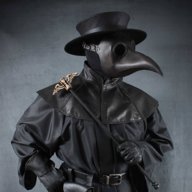
Fixed that...Being chosen by #62 is like being chosen by a Thunderbird, only moreuniqueworrisome.
IF there's a next time. Kinda doubtful-on our part.I decided to take my Les Paul 5er to this(Sunday)morning's "Jazz Brunch". Shoulda tooken the "A" bass. Next time.
THX, Chucky. You obviously know wuttinnahell yer doing far better than I.


Love the nose art themed bird! Is it painted or wrapped? That bass bird has some great bottom end. Bettie Page ain't so bad either.
One of the things that playing an Acoustic 360 does is defeat any opportunity for the FOH to screw with bass tone. The Grexa reissue has a DI out, which makes life easier. But, the folded horn throws enough signal on its own that FOH doesn't do much with or to the bass sound for the most part. Just set it to liquefy and all is well. It doesn't have to be all that loud for the liquefy setting to work just fine.
I plugged the upright into the original ACC 360 over the weekend for a rehearsal. It sounded like bass should sound. Even turned way down, that thing makes a huge sound, not loud at all, just huge. I can't get away with any mistakes, though.
Sure, I'll take a stab at it. It's different from church to church. Some churches intentionally use members (our situation), while others, often really large churches will pay to get good musicians, some may end up being members others are often not--just hired guns. Their goal is about having quality music. (This is a whole other topic for other places.) In my context I don't recall hearing anyone talking about rigs like it was a rock gig, but at times similar equipment is used. In larger churches it's largely or all IEMs with few or no amps/cabs on the platform. But some churches (again typically really large) do a really big production that can at times seem like a concert. (Another controversial topic.) For me I use at church mostly what I would anyplace else. (Head, cab and a my three pedals.)
In my original post I simply was being generic as I know this frustration can happen in all situations. Possibly I caused the confusion myself, but hope I got close to correctly understanding and answering your question Ken.
yeah, sux...many of the full time musicians I know are doing construction now and playing in churches for free....My cousins boyfriend is a pro bassist. He plays and subs at a few churchs and gets paid for any work he does. These are all large churchs and seem to be able to pay for the pro's to play. He is not a member at any of the churchs he works at. Like many musicians he took a real financial hit during Covid.
Fortunately I can use my head and cab. I will always push for that as I want to hear what my Thunderbirds* are supposed to sound like. I get the bigger picture of FOH volume but I've found that can be managed easily enough once the drummer is in a cage (ours is not, for now). That's the one thing that is hard to control volume, but it can be done. The volume knob for drums is between the ears of the drummer and our guy is generally pretty good at it. I've never bought the manage stage volume thing because everything can be managed since everything has volume controls. Just takes being able to say to someone: "Guitar or _____ is too loud." It can even be measured accurately and not subjectively. So it can be done, it's just much easier to tell players they are limited in using what they want. Most places that I've been that have no amps on the platform still have loud FOH, so I often don't buy it. Standing in front of an amp to hear it as your monitor doesn't have to be loud, even with wedges or other monitors. One key is when one person wants more of X to cut virtually everything else. Works most of the time so you don't get volume creep. Thunderbirds* need their amps.That's a pretty good summary!
I much prefer to use my gear, but the guy in charge of the stage setup and sound wants no amps on stage, to have total control over FOH. We have an isolation cab in a closet for guitar players who really want to use their own amp. I use my basses and pedalboard, and go through a DI. Most people have IEMs; I use my Beats because they work fine for me.
While we sometimes have guest musicians, or bring in, say, a sub drummer when none of ours are available, the worship team membership is made of church members, or at least regular attendees (not quite sure what the requirement is). The other church I played at pre-covid was set up similarly, musician-wise, but I was brought in 1-2x a month to give their sole bass player a break. (They provided a backline. The MB seemed OK to me- not great, not bad.) I may look into seeing if they still need someone now that things are in better shape here, but not sure. The leader left because he needed to take more care of his mother, who had some health issues.
Very true. Come to think of if, churches are like Thunderbirds. They are not one trick ponies as far are musical styles go!There are any number of church worship styles, from no instruments at all (most Church of Christ and some others), pipe organ and hymns, piano and rowdy hymns, acoustic instruments with softer, mostly modern songs, acoustic rock, and varieties of electric music, from R&B to old time gospel to bluesy to jazz to rock to EDM. There are even some where the worship will be metal, thrash, etc. While a lot of those styles are more thought of in terms of Christian concerts, there are at least a handful of churches with almost any style you can think of.

The 800RB is the first amp I played through that truly wowed me. I've never strayed from GK since. My Legacy 800 is really great, even down to the aesthetics. Looks like a mini 800RB.Great explanation! Other than having my mistakes heard(haha), it's the same reasons you state as to why I went back to my trusty 800RB and, thankfully, found my all time favorite cabinet again, the Traynor TC412. Without a single pedal plugged in they just sound like a bass is supposed to sound. Nice and full and sorta "in your face". Nothing beats a solidly built cabinet paired with a good amp head, in my opinion. Obviously, there are as many opinions as there are players, but for me that's what sounds best. That and the all important Thunderbird to be the bass playing into said set up.
So CBGB and Madison Square Garden are/were churches? I can dig that.Very true. Come to think of if, churches are like Thunderbirds. They are not one trick ponies as far are musical styles go!
Uhhh... well....So CBGB and Madison Square Garden are/were churches? I can dig that.


Well certainly not CBGB's bathroom. One of the most unholy places on the planet.Uhhh... well....

Here's a pic of how my bass channel is EQed. Looks like some of highs are taken off, but it sound like the lows are removed. Sounds really thin through FOH. Anyone translate what they see here into what's going on? Given the sound I hear vs what I see here I don't think I understand what I'm seeing.
View attachment 4295049
Very true. Come to think of if, churches are like Thunderbirds. They are not one trick ponies as far are musical styles go!
Here's a pic of how my bass channel is EQed. Looks like some of highs are taken off, but it sound like the lows are removed. Sounds really thin through FOH. Anyone translate what they see here into what's going on? Given the sound I hear vs what I see here I don't think I understand what I'm seeing.
View attachment 4295049
Frequencies are listed below the graph.I mean it looks like all your definition is being sucked out of the equation to me. Hard to tell without the frequencies listed on the graph, but if that's a big cut in your upper mids, say goodbye to your definition and cut through. We were recently EQ'ing our next single, and the bass wasn't doing it for me in the mix. Isolated I liked it, and I know I liked the tone when we recorded, so I started playing with the eq. Rolled off some of the lows, and boosted in the mids (lows and high mids) and there it was, cutting through the mix without being overpowering, and not being an indistinct bass woof interfering with the kick. It certainly sounded bigger, and like there was more lows, when in reality there were less, and part of that is perception and how it's fitting like a jigsaw puzzle with the other parts of the mix. That would be my guess as to what's happening here. While the lows are retained, the definition of the notes, which may be occurring higher, is being cut out, making it hard to perceive the lows, and making it seem like there is less bass. It could also be that some of the lows of the bass (and the sub-bass) is being subsumed by the kick.


