If you are the cowbell player that doesn't need micing, then possibly it would work. Bass is foundational - No except if you have superpowers and a lot of experience.

TalkBass has been independent since 1998. Add your voice.
Create a free account to reply to discussions, view embedded media, and browse with fewer display ads.
Join free Log in
Want zero display ads or expanded classifieds tools? Compare plans.

Lots of good advice in this thread so far to choose from. I’ve done bass and sound a lot, though I don’t prefer it and I will charge extra if the money’s there. Something in the post above reminded me of a pet peeve: having the sound set up take so much time that very little is left to dial in the bass. I suggest getting your bass gear set up (then moving the bass out of harms way) to the extent possible before you get too far into the sound setup. Otherwise, you (or at least if you’re me) will be down to the wire rushing to dial in the bass in time for the hit. …very unsatisfying.It can be helpful to get a multitrack recording at a gig, then use that to do a quick "virtual soundcheck" at the next gig. You can also fire up your mixer at home and dig into your EQ, gate, and compression settings...then save that as a template. Of course, this is not a replacement for adjusting at the gig, but it can give you a much better starting point.
The other thing I'd emphasize is be as organized as possible. Have your gear sorted out and stored in a way that's easy to deploy at the gig. Write up a checklist. Draw up a stage plot. Delegate if you trust your bandmates. Keep all cabling neat and tidy. Use stage snakes to reduce clutter, etc.
Most importantly: GET THERE EARLY. I can go from curb to downbeat in an hour, but I'm usually at the venue 2-3 hours before start time. Nothing worse than wrestling with the PA when start time has come and gone and you have a room full of people. Be very clear with bandmates about load-in, setup, and soundcheck times.
Identify a couple of songs per set that the keyboard player can walk out front and check to see if anything is really out of whack. He doesn't have to adjust anything, but he can tell you if something sounds wrong.
We always set up our instruments before the PA, and everybody helps. Nobody gets paid until the stage is clear and all the gear is loaded up to go home.Lots of good advice in this thread so far to choose from. I’ve done bass and sound a lot, though I don’t prefer it and I will charge extra if the money’s there. Something in the post above reminded me of a pet peeve: having the sound set up take so much time that very little is left to dial in the bass. I suggest getting your bass gear set up (then moving the bass out of harms way) to the extent possible before you get too far into the sound setup. Otherwise, you (or at least if you’re me) will be down to the wire rushing to dial in the bass in time for the hit. …very unsatisfying.
It’s great to have a soundman, but every gig doesn’t pay enough or isn’t complicated enough to warrant it. We play a lot of small clubs and a 5th member would not make financial sense. When we play bigger clubs we do have a soundman.Our cover band does our own sound, and I have been elected as the soundman. Being the bass player and the sound man simultaneously has been challenging to say the least, but we are making progress. I got myself a Behringer XR18, which I can run onstage with a tablet. I have wireless on my bass, so I can also walk out into the bar and make adjustments there.
Obviously making adjustments during the show has to be a rare occurrence, so I want to make sure our sound check gets as close to the mark as possible. For those of you that have done this before, do you have any wisdom to impart?

Idk my dads done it for years playing drums lolDon't do it.
Could you imagine a sound engineer trying to play the bass while actively mixing a performance at the sound desk?
Musicians often create great mixes, so it's likely you can do it, just not while playing in the band.
Either find someone to mix your band, or another bassist to play while you mix.
I can't imagine any reason I would reference a room mic if I was at the mix position.@Wasnex in your experience as a sound engineer, have you ever mixed with a room mic and headphones out at the mixing position?
We have a gig on Saturday, and I'm planning to record it so that I can mess with it at home. And allow everyone to hear what we sound like, which is always a humbling and educational experience.It can be helpful to get a multitrack recording at a gig, then use that to do a quick "virtual soundcheck" at the next gig. You can also fire up your mixer at home and dig into your EQ, gate, and compression settings...then save that as a template. Of course, this is not a replacement for adjusting at the gig, but it can give you a much better starting point.


Did it for ten years and still do it now.Don't do it.
Could you imagine a sound engineer trying to play the bass while actively mixing a performance at the sound desk?
Musicians often create great mixes, so it's likely you can do it, just not while playing in the band.
Either find someone to mix your band, or another bassist to play while you mix.
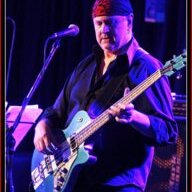
Our cover band does our own sound, and I have been elected as the soundman. Being the bass player and the sound man simultaneously has been challenging to say the least, <SNIP>

Hey! I do exactly this in my cover band, usually splitting the responsibility with my drummer. Does your band use in ear monitors?Our cover band does our own sound, and I have been elected as the soundman. Being the bass player and the sound man simultaneously has been challenging to say the least, but we are making progress. I got myself a Behringer XR18, which I can run onstage with a tablet. I have wireless on my bass, so I can also walk out into the bar and make adjustments there.
Obviously making adjustments during the show has to be a rare occurrence, so I want to make sure our sound check gets as close to the mark as possible. For those of you that have done this before, do you have any wisdom to impart?
Yes, we do now, that was one of the first changes we made. Band complaints about the monitors have all but disappeared.Hey! I do exactly this in my cover band, usually splitting the responsibility with my drummer. Does your band use in ear monitors?

Good info, thanks. I am tempering my expectations. In my area the bar is set pretty low for live music, unfortunately. There are only a couple bands around here that are what I’d call semi-pro caliber in terms of sound and musicianship. And it’s mostly the same half-dozen guys that have been playing together for decades. All the high-paying festivals and city events go to them. We’re in the next tier that plays at the nicer bars and pubs.Yes, it can be done. I used to run sound for my band from stage. So, playing bass, singer, and running sound.
Is it FUN? No. Not remotely. Is it impossible? No. My biggest issue is that you simply are never going to be able to get the mix to sound as good as a dedicated, skilled FOH engineer will. Even if you know all the tricks - high passing, aux fed subs, using RTA, etc - you are not able to make adjustments on the fly, or really dedicate your ears to fine tuning things like a dedicated FOH can do.
One thing - I will NEVER mix from stage if wedge monitors are being used. That's part of what drove us to IEM. Before I took over running sound on my digital board, our BL would mix from stage with an analog board, and we had wedges. Feedback was a constant issue, and controlling/managing feedback was a huge problem. If you want your band to be viewed as strictly amateur hour, the fastest way to do that is to introduce some feedback and then struggle to control it. People REALLY don't like that. So, I bought a digital mixer, learned how to use it, and insisted we switch to IEM along with it. Luckily all were onboard, as we are dedicated to improvement. Our sound immediately got about 500% better. But then we hooked up with our sound engineer - and our sound got 1000% better again.
My new mantra is - running sound yourself might save you money on each individual gig, but it costs you far more in potential for more, better, higher paying gigs down the road. A dedicated FOH engineer is a very worthwhile investment.
wise words!!!!My new mantra is - running sound yourself might save you money on each individual gig, but it costs you far more in potential for more, better, higher paying gigs down the road. A dedicated FOH engineer is a very worthwhile investment.