• TalkBass has been independent since 1998. Add your voice.
    Create a free account to reply to discussions, view embedded media, and browse with fewer display ads.
    Join freeLog in
    Want zero display ads or expanded classifieds tools? Compare plans.

Tips to Help Develop 16th Note Technique?

For learning difficult lines at high speed the conventional, tried-and-true, method is to slow down to a tempo at which you can play the line perfectly every time, and then bump up the metronome every day or week as you master each successive tempo.

Another idea, though, is to play the song at tempo but start out by playing only some of the notes. For example, if you can play the first four 16th's of a bar at tempo, start by playing those four notes and then resting for the remainder of the bar. Once you're comfortable with this, try playing the first 6 notes of a bar and resting; then the first 8 notes of the bar and resting, etc., until you can play the whole bar at tempo.

These methods aren't mutually exclusive, of course; you could go back and forth between them. The latter method might be more fun, though, as you can do it in real time against the recording.

 
For learning difficult lines at high speed the conventional, tried-and-true, method is to slow down to a tempo at which you can play the line perfectly every time, and then bump up the metronome every day or week as you master each successive tempo.

Another idea, though, is to play the song at tempo but start out by playing only some of the notes. For example, if you can play the first four 16th's of a bar at tempo, start by playing those four notes and then resting for the remainder of the bar. Once you're comfortable with this, try playing the first 6 notes of a bar and resting; then the first 8 notes of the bar and resting, etc., until you can play the whole bar at tempo.

These methods aren't mutually exclusive, of course; you could go back and forth between them. The latter method might be more fun, though, as you can do it in real time against the recording.

Yep, good suggestions. I definitely know the "gradually speed up your metronome" technique, and have been using that for years. I like your suggestion to "play only some of the notes" as well.

As a long-time bass player, I can play fast 16th notes in short bursts, but it's the stamina that falls off. I start to get fatigued playing fast 16th notes after 10-15 seconds of continuous playing, and then I tense up trying to maintain the tempo and then my playing gets sloppy.


My mechanics look good, but I wonder if I need to make some micro-adjustments. It seems to be more about economy of motion and the technique that requires the smallest amount of finger movement.

Also, the resistance of the strings seems to have an effect as well. I find it much more difficult to play this style on tape-wound strings or TI flats vs strings that feel stiffer.

I can go much longer if I'm alternating between thumb and index finger or using a pick, but those are band-aid solutions.
 
Last edited:
As a long-time bass player, I can play fast 16th notes in short bursts, but it's the stamina that falls off. I start to get fatigued playing fast 16th notes after 10-15 seconds of continuous playing, and then I tense up trying to maintain the tempo and then my playing gets sloppy.

Your stamina will improve if you keep practicing. I had to learn 'What is Hip' for a band, and took me about a month to develop the stamina to get through it without wearing out. I eventually got it. It's like long-distance running - you need to build up your muscles and stamina over time - anyone with working legs can run really well for a minute or two, but it takes some training to be able to run for an hour.
 
  • Like
Reactions: Les Fret
As a long-time bass player, I can play fast 16th notes in short bursts, but it's the stamina that falls off. I start to get fatigued playing fast 16th notes after 10-15 seconds of continuous playing, and then I tense up trying to maintain the tempo and then my playing gets sloppy.
This is precisely the reasoning behind the second method I suggested, which is a variant of something I learned from Scott Devine's videos: Usually we can play something at a fast tempo just fine for a few bars, but then our technique breaks down. The problem isn't speed per but rather stamina.
 
  • Like
Reactions: HolmeBass
Speed and stamina are both improved by time and repetition.

Sprinters don't run their best times the first time they ran. They got faster with practice.
(Modern) marathon runners didn't start by running 26 miles - they built up to it.

This analogy could be made with just about any activity that requires muscle training.
 
  • Like
Reactions: HolmeBass
"Also, the resistance of the strings seems to have an effect as well. I find it much more difficult to play this style on tape-wound strings or TI flats vs strings that feel stiffer."

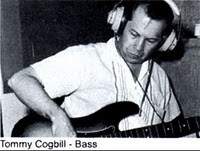
Re mechanical resistance: Rocco had a jar of cold cream sitting on his amp head that he would dip his fingers in. Tommy Cogbill did the same with vaseline.

 
This may seem a bit off the point but i think reading rhythm is critical to accurate playing. How is your reading?

My sight reading is ok. Not expert, not novice. Just ok. I can read this just fine, but I still couldn't record it reliably at tempo, which is where I'm hoping to get with the right preparation.
Screenshot_20230930-101723-835.png
 
Last edited:
When you practice, do it slowly, aiming for relaxed and perfect technique. Then, as you increase the tempo by whatever approach you use, make sure you’re still playing relaxed, with the best technique you have. If something changes as you speed up, say, for example, you start to tense up or you pluck harder, then back up and aim for relaxed and perfect technique at a slightly slower tempo before upping the ante again.

Look at video of players who are judged fast. Very few of them are tight with grimaced faces; they’re really relaxed, in part because they know what they’re playing and in substantial part because their time in the woodshed was less about time in the woodshed and more about noticing and working on the small stuff that makes all the difference.
 
Last edited:
Usually we can play something at a fast tempo just fine for a few bars, but then our technique breaks down. The problem isn't speed per but rather stamina.
Precisely - I have a tune that I play along with at times, and I speed up the thing over several plays - I can easily keep up with it at 20% over speed, but not for a whole time through the tune. After working on it for a while, now I can. It's something that takes time and repetition (and lots of it), like most technique stuff. The longer I work at playing bass, the more "naturally gifted" I appear.
 
  • Like
Reactions: Lobster11
A lot of great advice on right (plucking) hand technique on here, but don’t forget about your left hand. If your fingering is too slow or inefficient, you might find you are not getting your fingers in place in time, or cleanly, on a very fast line.

Also, if taking lessons isn’t in the cards, I’m not so big on online courses, but I highly recommend short instructional videos from highly qualified instructors. The late, great Jim Stinnett’s site Real Bass Lessons on YouTube is a fantastic way to merely observe the technique of someone who was both a great player and instructor (taught at Berklee). He was a huge Jaco/Rocco fan, and just watching him glide effortlessly through those kinds of tunes and closely watching his technique is totally worth the time. He was obviously a very kind and friendly person on top of his talent, I’m so sorry he’s left us.
 
The late, great Jim Stinnett’s site Real Bass Lessons on YouTube is a fantastic way to merely observe the technique of someone who was both a great player and instructor (taught at Berklee). He was a huge Jaco/Rocco fan, and just watching him glide effortlessly through those kinds of tunes and closely watching his technique is totally worth the time. He was obviously a very kind and friendly person on top of his talent, I’m so sorry he’s left us.

Yeah, I LOVE Jim Stinnett's YouTube channel. I can't say that I have worked through all of his lessons, but I have worked through many, and some repeatedly. Great stuff! RIP.
 
  • Like
Reactions: NeckPickup

Latest posts