
Enjoy the benefits of a premium membership!
Upgrade Account
-
TalkBass has been independent since 1998. Add your voice.
Create a free account to reply to discussions, view embedded media, and browse with fewer display ads.
Join free Log in
Want zero display ads or expanded classifieds tools? Compare plans.
You are using an out of date browser. It may not display this or other websites correctly.
You should upgrade or use an alternative browser.
You should upgrade or use an alternative browser.
Tips to Help Develop 16th Note Technique?
- Thread starter T-boneParish
- Start date
More options
Who Replied?

for fingerstyle electric bass?
Yep. It's primarily about string crossing with the bow, but the exercises starting page 11 can easily be adapted for pizz only players to increase right hand dexterity.
Last edited:
I’m working on this as well. Along with the other advise given I just recently realized that plucking closer to the bridge makes it much easier. The tension of the strings nearer to the bridge results in less string movement. I can get a more consistent attack and it’s easier to play faster.
Playing closer to the neck pup on a jazz for me is much harder to play fast.
I’m self taught so this all could be a bad technique issue but less movement by the strings makes it easier.
I do what works for me.
Playing closer to the neck pup on a jazz for me is much harder to play fast.
I’m self taught so this all could be a bad technique issue but less movement by the strings makes it easier.
I do what works for me.

Yep. It's primarily about string crossing with the bow, but the exercises starting page 11 can easily be adapted for pizz only players to increase right hand dexterity.
I agree. I have the book. But you only need three pages or so to get the idea. The rest is more of the some.
- Apr 1, 2000
- 17,398
- 9,828
- Disclosures
- Endorsing Artist: Roscoe Guitars, DR Strings, Aguilar Amplification
In bass, as in combat, slow is smooth and smooth is fast.
Slow down.
Slow down.
Great suggestions.
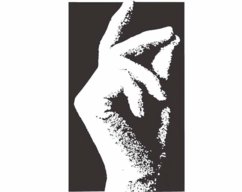
Last night I started looking very closely at my plucking hand position. I realized that I should adjust my wrist bend just a smidge. This sets the angle of my hand to ensure the string touches my fingertips of my index and middle finger equally while the fingers are relaxed.
Since middle finger is longer, the hand needed to be angled just a tiny bit more. Not sure if that makes sense. Without adjusting my hand angle, my middle finger was bending a little more than my index finger, resulting in a little inconsistency of attack between the two fingers. I'm talking about minuscule amounts. But when you play dozens of the same note in rapid succession, even minuscule differences add up. It will take some getting used to this slightly modified position since my hand wants to keep going back to the original position.
First pic shows fingers at right angle to the string plane, middle finger much longer that index.

Second pic shows hand angled to allow both finger tips be be on the same plane.

My natural hand position is closer to the second pic than the first, but I am now consciously focusing on the hand angle where both fingers touch the string equally.
Last night I started looking very closely at my plucking hand position. I realized that I should adjust my wrist bend just a smidge. This sets the angle of my hand to ensure the string touches my fingertips of my index and middle finger equally while the fingers are relaxed.
Since middle finger is longer, the hand needed to be angled just a tiny bit more. Not sure if that makes sense. Without adjusting my hand angle, my middle finger was bending a little more than my index finger, resulting in a little inconsistency of attack between the two fingers. I'm talking about minuscule amounts. But when you play dozens of the same note in rapid succession, even minuscule differences add up. It will take some getting used to this slightly modified position since my hand wants to keep going back to the original position.
First pic shows fingers at right angle to the string plane, middle finger much longer that index.
Second pic shows hand angled to allow both finger tips be be on the same plane.
My natural hand position is closer to the second pic than the first, but I am now consciously focusing on the hand angle where both fingers touch the string equally.
Last edited:
It's a smart thing to do, mainly because more articulation and less bottom comes through as you get closer to the bridge. Fast and clean requires lightness, rather than depth. The balance towards attack and top end near the bridge lends itself to clarifying fast passages.I’m working on this as well. Along with the other advise given I just recently realized that plucking closer to the bridge makes it much easier. The tension of the strings nearer to the bridge results in less string movement. I can get a more consistent attack and it’s easier to play faster.
Playing closer to the neck pup on a jazz for me is much harder to play fast.
I’m self taught so this all could be a bad technique issue but less movement by the strings makes it easier.
I do what works for me.
Here ya go. I've been doing this for decades, and originally used it as a violinist in my formative years in the 70s, but it works great on anything. Have used it on trumpet, bass, piano... any time you have a run of even notes. Works so well, it's almost miraculous. The first line is an example of a lick to be learned, and all of the following lines are the various permutations to practice until each one is clean. After going through the exercise, play the original lick as written. It'll be so easy and so clean you'll be able to play it in your sleep.

Here ya go. I've been doing this for decades, and originally used it as a violinist in my formative years in the 70s, but it works great on anything. Have used it on trumpet, bass, piano... any time you have a run of even notes. Works so well, it's almost miraculous. The first line is an example of a lick to be learned, and all of the following lines are the various permutations to practice until each one is clean. After going through the exercise, play the original lick as written. It'll be so easy and so clean you'll be able to play it in your sleep. View attachment 5206603
Excellent exercise!

Here ya go. I've been doing this for decades, and originally used it as a violinist in my formative years in the 70s, but it works great on anything. Have used it on trumpet, bass, piano... any time you have a run of even notes. Works so well, it's almost miraculous. The first line is an example of a lick to be learned, and all of the following lines are the various permutations to practice until each one is clean. After going through the exercise, play the original lick as written. It'll be so easy and so clean you'll be able to play it in your sleep. View attachment 5206603
This is very useful but (IMHO/IME) IF it is to be used to develop the right hand 2-finger pizz it needs fingerings to be indicated. Every line presents many left- and right-hand fingering questions/decisions, including:
- which RH finger to start on;
- if/when/where to shift;
- if/when/where to switch between a 3-finger (1-2-4 or 1-3-4) or 4-finger (1FPF) left hand;
- when/where to cross strings and;
- if/when to lapse Alternate Plucking (AP) in favour of a rake.

I had to learn 'What is Hip' for a band, and took me about a month to develop the stamina to get through it without wearing out.
I had to learn an uptempo funk tune a year ago and it took me about three weeks to get it up to speed, then another month or so to play it for extended periods of time (like 10-15 minutes) comfortably.
I use transcription software called Transcribe (doh) and it allows setting the tempo by single percentage straps. Getting from 75% to 85% took about a day. The rest of the time was inching up to 100%. The hardest part was the last 5 percent.
As soon as you feel any soreness STOP and take a break.
one thing I do to stay relaxed is to think in whole notes instead of quarter notes.
Good points, but the decisions as to when to use a particular right hand fingering or technique will vary with every different lick being practiced, left hand fingering chosen, etc. I wasn't suggesting that the exact lick I used in that example should be practiced; in reality, it's not the hippest or most useful phrase to use in a solo or bass line of course. It was just easy to type out so I could illustrate using the technique of using varied rhythmic permutations resulting in different "landing" or "check" longer notes. This practice technique can, and should, be applied to any run of even fast notes. The specific run being studied will dictate the other details you brought up. Since much of our playing and soloing is improvisatory in nature, practice and achieving fluency with varied fingerings on the same passage is definitely helpful, too. We don't always land on the same finger, left or right hand, on a particular portion of a scale or lick when we're soloing, and it's important to have alternate fingerings and techniques in our pocket.This is very useful but (IMHO/IME) IF it is to be used to develop the right hand 2-finger pizz it needs fingerings to be indicated. Every line presents many left- and right-hand fingering questions/decisions, including:
All of these, but in particular the last one, should be conscious and deliberate decisions, not left to chance when trying to train the right hand. Perhaps it is for the student to come up with these things, but this does not always lead to the best outcome.
- which RH finger to start on;
- if/when/where to shift;
- if/when/where to switch between a 3-finger (1-2-4 or 1-3-4) or 4-finger (1FPF) left hand;
- when/where to cross strings and;
- if/when to lapse Alternate Plucking (AP) in favour of a rake.

...
the decisions as to when to use a particular right hand fingering or technique will vary with every different lick being practiced, left hand fingering chosen, etc.
My point was that a lot of players don't make actual decisions - they just leave things to chance, preferring to let the right hand just "do it's thing". There are plenty of them around as reading through older threads like this will attest. With such an approach, the outcomes are more "lucky accidents" and less "as intended" or "by design". I'm sure you remember from violin being taught to follow bowing directions, and no doubt will have at least once suffered the indignity of 'running out of bow' when you decided to do your own thing? So you practice up/down, down/up, up/up, down/down, retakes and the like, all as building-blocks for more advanced bow techniques. My contention is that RH fingering deserves a similar level of attention and training but is largely ignored in the literature.
YMMV.
To be brutally honest, as a bassist, I don't have enough "M" to have the right to "V." (I don't have enough dexterity or experience as an electric bassist to even begin to talk intelligently about right hand technique with someone like you who obviously does). I really appreciate your thoughts, and admit that my right hand development has definitely been of the "well, this seems to work here" method rather than anything real focused.My point was that a lot of players don't make actual decisions - they just leave things to chance, preferring to let the right hand just "do it's thing". There are plenty of them around as reading through older threads like this will attest. With such an approach, the outcomes are more "lucky accidents" and less "as intended" or "by design". I'm sure you remember from violin being taught to follow bowing directions, and no doubt will have at least once suffered the indignity of 'running out of bow' when you decided to do your own thing? So you practice up/down, down/up, up/up, down/down, retakes and the like, all as building-blocks for more advanced bow techniques. My contention is that RH fingering deserves a similar level of attention and training but is largely ignored in the literature.
YMMV.
The parallels between violin arco and electric right hand may be apt, but I can see some pretty major differences. The main reason to follow indicated bowings are ensemble-related, especially in an orchestra. Multiple people are playing exactly the same part, and need to blend and play it exactly the same way. Matching bowing helps achieve a unified sound especially in terms of phrasing and articulation, but even more obviously to the audience it makes the entire section appear unified visually. There isn't room for individual choice, although discussions definitely ensue as to what bowings would be most appropriate. Typically, the section leader simply bows consistently, other players keep an eye on the leader, and mark their parts accordingly if the parts aren't already marked. In string quartet settings where passages are in rhythmic unison, players generally discuss what feels best, try different options, and come to a group decision in rehearsal. As a soloist, I admit to freely deviating in performance from some bowings that I've practiced when moved to do so, and there's no harm/no foul for that. Sort of like my earlier comments about having a bunch of options in your pocket to fit the exact moment you happen to be in.
Electric bassists don't have to worry about any of that. While I wholeheartedly agree with you that practicing specific right hand pre-planned fingerings and techniques are of tremendous benefit, (and here's where I'm completely talking out of my... ahem... nether regions as I'm not a great player), I think getting stuck into thinking that there's only one certain way a certain passage should be articulated/fingered in the RH would lead to a less fluid, organic overall technical command of the instrument than perfecting that passage with multiple ways of playing it. As a jazz player, I think much more in terms of skills needed for improvisation than I do about a finite skill required for a specific bass line; perhaps, if there IS an area of slight disagreement between us (and there very well may not be), perhaps that is where the disconnect lies. The technique required to give voice clearly through your instrument to whatever sound pops into your ear, instantly and reliably, is in some ways more demanding, especially of flexibility, than the technique required to perform a passage one has had the opportunity to rehearse and practice for weeks and months ahead of time.
Something like that. I will definitely put your advice into practice though, and spend some good quality time being more guided in my right hand approach. Thank you!
...
I think getting stuck into thinking that there's only one certain way a certain passage should be articulated/fingered in the RH would lead to a less fluid, organic overall technical command of the instrument than perfecting that passage with multiple ways of playing it. As a jazz player, I think much more in terms of skills needed for improvisation than I do about a finite skill required for a specific bass line; perhaps, if there IS an area of slight disagreement between us (and there very well may not be), perhaps that is where the disconnect lies. The technique required to give voice clearly through your instrument to whatever sound pops into your ear, instantly and reliably, is in some ways more demanding, especially of flexibility, than the technique required to perform a passage one has had the opportunity to rehearse and practice for weeks and months ahead of time.
...
I think we are saying the same thing. I am certainly not saying there is one definitive way to play any specific thing. Nor am I suggesting exploring options for the achievement of that objective. Far from it. What I am suggesting is that, through thorough exploration and concious practice of the possibilities, we achieve a state of readiness* where all of those options are immediately to hand via the subconcience ("flow") during performance without the risk of our technique imploding or the performance stalling because we have played ourselves into a cul-de-sac. In performance the hand can be trusted because it is trained, not because it 'seems to do OK most of the time'.
* read R.Fripp for further details.
BTW, I get all of the 'section' stuff

Last edited:


