• TalkBass has been independent since 1998. Add your voice.
    Create a free account to reply to discussions, view embedded media, and browse with fewer display ads.
    Join freeLog in
    Want zero display ads or expanded classifieds tools? Compare plans.

To those who only run their amps 'flat': why?

Listen to your instrument with the mixer EQ set at unity/zero EQ and use a basic set of studio headphones, like the classic AKG 240 cans or whatever the current standard is.

You will hear what your bass sounds like without an amp. IMHO, that is "Flat." Pretty boring, too.
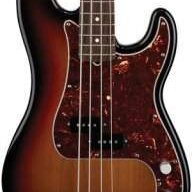
Not really. The Pbass has a built-in hump around 200Hz to make it sit in the mix perfectly and wonderfully without any EQing. The Jazz has the bump at ~500Hz for a similar effect but in a different way. All basses have built-in frequency responces. That's what we like about them.
Yes, many like the way their basses interact with amps, but some like the way their bass is set up and don't feel the need to mess with it any further. Strokes for folks, as they say.

Ps. I think my P run straight to an analog board with the gain goosed sounds fantastic. Even moreso if it's a Neve board. (I have a thing for British tones)
 
Spent 25 years moving knobs the way I felt like moving them without a care in the world. Then I heard this "flat" thing and thought I was missing out. Turns out I wasn't. I could almost never leave an amp flat and enjoy the tone. So now I'm back to not caring. I cut and boost as I feel I need. And I will even boost the bass knob considerably if it gets me the sound I need, and that goes against all "internet wisdom." So take that, you Talkbass knob-nooning cut-only snobs! :D
 
Amp designers wouldn't put EQ controls on their amps if they didn't expect you to use them. I try to buy amps that meet my tone goals when set flat because I don't want to have to be tweaking knobs all the time to find a sound I like. Chances are with most amps if you're cranking knobs heavily, your tone in going to suffer whether you think so or not. For me, EQ is there to adjust to the venue. If it's too boomy, I work with the bass control. Too bright, a small tweak on the treble. I occasionally will adjust the bass to maybe 1 o'clock if I'm outdoors. I like to put a little extra high mid into the mix for note definition if the room is boomy. Right now, I have six amps by four builders: GK, Glockenklang, Mesa and Eden, and they all sound good set flat.
 
Amp designers wouldn't put EQ controls on their amps if they didn't expect you to use them. I try to buy amps that meet my tone goals when set flat because I don't want to have to be tweaking knobs all the time to find a sound I like. Chances are with most amps if you're cranking knobs heavily, your tone in going to suffer whether you think so or not. For me, EQ is there to adjust to the venue. If it's too boomy, I work with the bass control. Too bright, a small tweak on the treble. I occasionally will adjust the bass to maybe 1 o'clock if I'm outdoors. I like to put a little extra high mid into the mix for note definition if the room is boomy. Right now, I have six amps by four builders: GK, Glockenklang, Mesa and Eden, and they all sound good set flat.

What he said. I want to manipulate tone and timbre with my hands and the tone controls on my bass. I've had some great amps, but generally twiddled their knobs only to deal with room or weird mix issues. And yes, I pay a lot of attention to the "flat" tone in selecting the amps I like. My own goal is to sound fat yet fast, on the clean side with uniform timbre from bottom to top of range and clarity on triple-stops; Tecamp Puma, Thunderfunk and solid-state pre-amp circuits from the late, lamented Genz Benz have been my faves. Note that the Puma, T-funk and my GB Contour 500 combo all have some sort of "contour" control for immediate and broad timbre control…a great principle, which I believe traces back to Thunderfunk's antecedent, the AMP 420, and which is way different from the midrange suppression controls on older SWR and Eden stuff.
 
  • Like
Reactions: Munjibunga
Two reasons to run an amp flat:

1. People already got a high quality toneshaper / EQ upstream of their amp;

2. Psychological thing. People tend to think that their base sound is somehow wrong or not adequate if they need to twist the EQ knobs too much to get a good sound. I've also heard silly things like "the amp performs best when set flat". Some people even go as far as to intentionally add an EQ pedal or preamp in order to keep their amp controls flat.
 
My feelings on 'flat' is this: if you have to twist an EQ knob past 3:00 or 9:00, it might not be the amp for you. Find an amp with a character you like straight out of the gate, then you can adjust your EQ for the room or the bass and still be in the ballpark.
I 100% agree with this.
Amp designers wouldn't put EQ controls on their amps if they didn't expect you to use them. I try to buy amps that meet my tone goals when set flat because I don't want to have to be tweaking knobs all the time to find a sound I like. Chances are with most amps if you're cranking knobs heavily, your tone in going to suffer whether you think so or not. For me, EQ is there to adjust to the venue. If it's too boomy, I work with the bass control. Too bright, a small tweak on the treble. I occasionally will adjust the bass to maybe 1 o'clock if I'm outdoors. I like to put a little extra high mid into the mix for note definition if the room is boomy. Right now, I have six amps by four builders: GK, Glockenklang, Mesa and Eden, and they all sound good set flat.

 
I just want to say that there is nothing "natural" in an electronic instrument, and I'm not sure it makes sense to say there are "neutral" settings that bring out the "natural" parts of your instrument. After all, the sound that you can hear is the result of a complex mechanical–electronic system that, at some point, interacts with your ear. All of the factors come together to produce the sound you want to produce. What could "natural" even mean when you're the one who decides what sounds are good sounds? What settings could be "neutral" when you're the one who decides what settings to set?

Setting your amp "flat" is a good place to start figuring out what effect your EQ has on what you hear or which settings you prefer—but that's about it, I'd say.
 
Last edited:
The eq is just another "effect" you can use and add to your sound. I mean, it's good if you change the eq and it's good to go just flat. In my case, I just add a little bit of mids and treble because I like how it sounds, but it depends on the room too. Sometimes I believe we overthink too much about it. I mean, play and judge. You will see what you need and you can add (or cut) that. Don't be afraid of use it because you have the best bass in the world or the best amp in the world.
 
My eq setting on the amp is not Flat but it is set to have a "flat" sound, to my ears of course.
The sound i consider "flat" is the most versatile again to my ears. Picking/Slapping/fingerstyle/tapping, no matter the technic used; i try to have a unique sound for all and a good one.


Most amps do not have a flat response, even with a flat eq. The Fender flat eq is 10 on the mids.

Someone who is telling you that "he runs all amps EQ flat" does not care about his sound or does not hear any differences between amps.
 
My feelings on 'flat' is this: if you have to twist an EQ knob past 3:00 or 9:00, it might not be the amp for you. Find an amp with a character you like straight out of the gate, then you can adjust your EQ for the room or the bass and still be in the ballpark.

I'm not sure about this. Not every amp works this way. I just, for example, picked up a Sound City from the Mark IV era. These amps had strange preamps—I think they're called "ladder preamps" or something like that. The signal is divvied up to 3 frequency bands, and each of them is amplified separately. That means I can turn up the treble the same way I turn up the whole signal's volume. I think it means I can even _overdrive_ the treble and leave the bass clean.

If I left my EQ knobs in the middle, the signal would seem weak and the amp would seem broken. ;)
 
I'm not sure about this. Not every amp works this way. I just, for example, picked up a Sound City from the Mark IV era. These amps had strange preamps—I think they're called "ladder preamps" or something like that. The signal is divvied up to 3 frequency bands, and each of them is amplified separately. That means I can turn up the treble the same way I turn up the whole signal's volume. I think it means I can even _overdrive_ the treble and leave the bass clean.

If I left my EQ knobs in the middle, the signal would seem weak and the amp would seem broken. ;)

Yep, there are some weird EQs around. The equalizer on the EBS-1 rack preamp works that way, if you turn the EQ all the way counter-clockwise, you hear no sound at all. You actually NEED to use the EQ to get a sound. It's incredibly powerful that way though, once you learn how to work with it.
 
I just don't need any Eq. My side chain is my fingers, my bass ( my g&l used to go passive ) and then the amp. At that point I reached the sound so mostly that is 99,98 % I don't need any eQ.
Three situations:
1 - Rec engineers tend not to agree with my eq choice, for they work on it. Recording meets different standard and perhaps no amp.
2- I'm in a Phil jones Cub 100 for rehearsal and small gigs, and need to use a weird ( for me ) eq , and I do it
3- I'm looking for a Tecamp head, and love the BlackJag which has more eq and modeling options from the Puma . But I say to myself ....anyway ....I'll be using flat ... is it worth for me ?

I'm a most likely flat guy also.
L
 
OCD. I like all the knobs pointing in the same direction with a commonly-acknowledged orientation: 12:00.

When grocery shopping, I always select the 3rd package back, never the first in the row as it has undoubtedly been handled & stared at thus compromising the integrity of the components within. This is true...ask Mrs. (Susan) Zooberwerx.

Riis
 
  • Like
Reactions: Munjibunga

Latest posts