• TalkBass has been independent since 1998. Add your voice.
    Create a free account to reply to discussions, view embedded media, and browse with fewer display ads.
    Join freeLog in
    Want zero display ads or expanded classifieds tools? Compare plans.

tone knob stuck

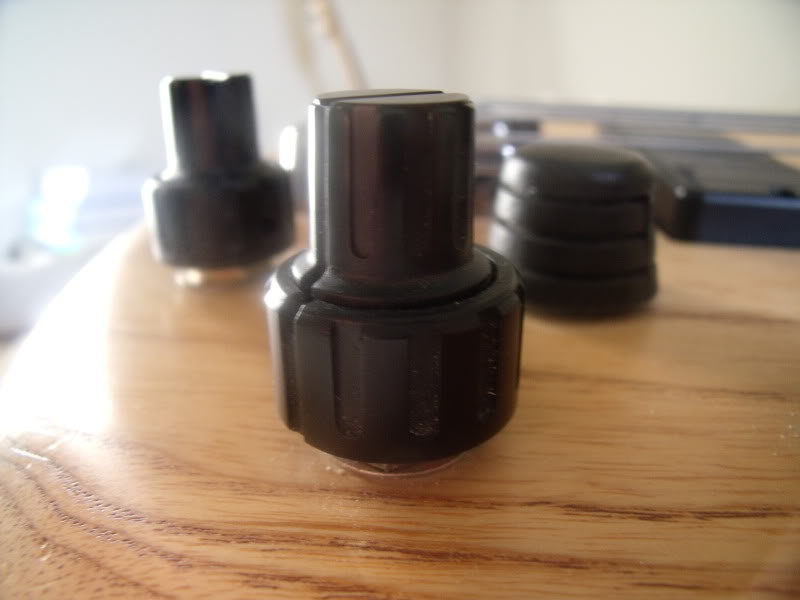
ok, this is probably a stupid problem to have, but here we go anyway
bass001.jpg


bass002.jpg


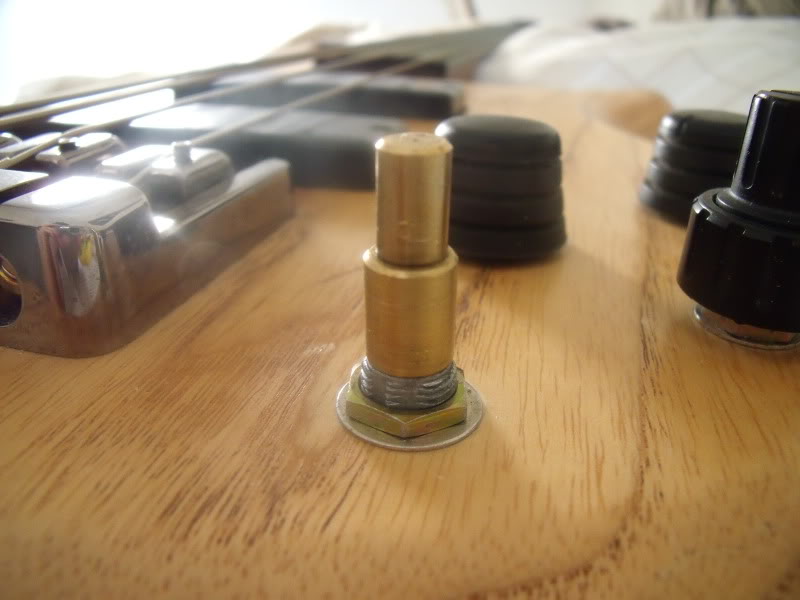
So for the tone control you can see in the picture above (with and without plastic knobs), the bottom part of the knob normally rotates independantly from the top part, controlling different things. However this one seems to have gotten stuck - you turn the bottom, the top comes with it, etc. The nut below isnt turning or anything, so its not a problem with it not being properly attached to the base, seems just that the two parts of the control are refusing to turn independantly.

First plan of action = WD40 to see if it just needs lubricating?
 
Some type of cleaning and lubrication is the first order of business. Caig makes DeOxit. It is probably the industry standard.

WD-40=Water Displacement-40(th attempt at the formulation)

The chief use of WD-40 in guitar repair is to protect newly cleaned or derusted parts from oxidation.

It protects metals against moisture penetration.

It doesn't lubricate. It is not an oil. It contains no oil.
It penetrates. But it does not free up rusted parts like a penetrating oil because it doesn't contain a penetrating oil.
It doesn't clean because it does not contain any cleaners or solvents.
It's not made for electrical circuits or devices like a potentiometer.

However, it does a champ-een job of attracting dirt and grit.

Use the right chemicals for the job and you'll never have a problem.
 
It looks bent to me in the picture - and it sounds like that is your problem in reading through the description.

I'm no genius when it comes to this stuff, and there is a lot that I would do and have done to my basses, but I would NOT squirt WD40 on it! That sounds messy and I'd be afraid to squirt that on a pot and have it get on the finish / in the control cavity.

AND the big deal - if it is bent (as it looks like it is) lube is note goinmg to fix the problem.
 
Some type of cleaning and lubrication is the first order of business. Caig makes DeOxit. It is probably the industry standard.

WD-40=Water Displacement-40(th attempt at the formulation)

The chief use of WD-40 in guitar repair is to protect newly cleaned or derusted parts from oxidation.

It protects metals against moisture penetration.

It doesn't lubricate. It is not an oil. It contains no oil.
It penetrates. But it does not free up rusted parts like a penetrating oil because it doesn't contain a penetrating oil.
It doesn't clean because it does not contain any cleaners or solvents.
It's not made for electrical circuits or devices like a potentiometer.

However, it does a champ-een job of attracting dirt and grit.

Use the right chemicals for the job and you'll never have a problem.

WD-40 is also petroleum based and dries to form varnish. I refuse to use WD-40 for anything.
 
Bent shaft: It does appear to be bent in the image. However, the image could be distorted. Start with clean and lube. If the problem is mechanical, it will identify itself immediately. Then the advice becomes longer and more detailed.

WD-40: It has it's place(s). For padlocks that live outdoors it's great. For moving or stationary parts that typically do not require lubrication but could use some extra moisture protection i.e. the gate in the chain link fence, it works pretty well, too. The fact that it is petroleum based leads most people to assume that it is a lubricant. It's a good bet that most of the WD-40 sold in the USA is to folks who are going to use it to free up some rusted parts and lubricate them when they're done. A little can of 3 in 1 runs rings around it.
 
Bent shaft: It does appear to be bent in the image. However, the image could be distorted. Start with clean and lube. If the problem is mechanical, it will identify itself immediately. Then the advice becomes longer and more detailed.

WD-40: It has it's place(s). For padlocks that live outdoors it's great. For moving or stationary parts that typically do not require lubrication but could use some extra moisture protection i.e. the gate in the chain link fence, it works pretty well, too. The fact that it is petroleum based leads most people to assume that it is a lubricant. It's a good bet that most of the WD-40 sold in the USA is to folks who are going to use it to free up some rusted parts and lubricate them when they're done. A little can of 3 in 1 runs rings around it.

With PB Blaster, LPS, Aero-Kroil, and all the fun stuff from CRC available, it's hard to believe anyone still uses WD.
 
cleaned and lubricated to no avail, the two parts still dont want to turn independantly. Having looked at it properly, it does appear to be slightly bent so I'm thinking that has to be somewhat of the problem, if not all of it.

Suggestions?