• TalkBass has been independent since 1998. Add your voice.
    Create a free account to reply to discussions, view embedded media, and browse with fewer display ads.
    Join freeLog in
    Want zero display ads or expanded classifieds tools? Compare plans.
Too late to learn to play?

IMHO in some ways bass is easier than other instruments. That's not to say bass can't also be incredibly challenging, but in truth a lot of pop music requires much less of bass than other instruments. However there can be a huge difference between playing the correct simple line, and playing the correct simple line well. A playing the correct simple line well may involved much nuance that most people don't even notice.

In order to be successful, I think it's really helpful if you have sort of a fascination with bass and an hunger to play music. Without this sort of drive, I think learning to play an instrument can quickly turn into a chore that stifles progress.

I had the necessary passion when I was younger, and somehow I managed to have a fairly long and successful career as a pro. But eventually, the passion left me, and I no longer yearned to play or grow musically. Eventually I stopped playing bass and became a full-time audio tech for a few years. Had a blast while it lasted.

Just before I transitioned to audio I bought an electric guitar and a bunch of effects. I learned various bar chords and had fun for several years laying down short loops and then jamming over the loops. I also had a few jam sessions with one of my brothers who plays guitar. So I could sort of fake it over simple chord progressions.

I would say I learned a bit, as playing lead on guitar had some influence on how I play melodies and solos on bass. But I never really learned to play guitar or had the drive and focus necessary to learn and hone actual songs. Eventually I lost interest. I don't think I have even taken the guitar out of it's case for over a years.

I don't have regrets. Actually I had quite a bit of fun and passed many hours noodling away. But I want to point out some key differences. I already had strong musical instincts, applicable skills, and knowledge of music theory, etc. Overall much of my apparent ability was faking it. Basically I was relying on instincts learned from being a professional bassist. Essentially I learned a few rudimentary chord shapes and finger patterns I could superimpose on top of the advanced skills and foundational music knowledge I already had.

I share this little story to try and illuminate that there is a huge difference between someone who thinks it would be cool to learn an instrument and someone who is naturally driven to learn a musical instrument. I thought it would be cool to learn guitar, but lacked the necessary drive to really see it through.

Unless you have an actual fascination, you are likely to lose interest even quicker than I did with guitar A natural fascination and drive are what keeps you moving forward at what is likely to seem like a snails pace. Without this fascination, much of the required work will likely be unbearably tedious and dull.

Since you have expressed an interest, I do encourage you to try. You never know, you may turn out to be a late blooming prodigy.

Good luck!
 
I'm 68 (what's this "retirement" y'all are talkin' about?), been playing since I was 14, and I'm still hoping it's not too late! Music is a deep, deep, deep subject. You can start when you're 2 years old, spend your whole life at it, and still not cover it all. Anything that brings you joy and purpose is worth starting no matter what age you are. (Well, my right ankle clicks a little sometimes when I walk, so that did put an end to my ninja career training. Probably should have started that when I was 2. ;))

My father once told me, "You're not too old until you decide you're too old." I've always taken that to heart.
 
My mother went to a music store at age 60 and returned with a low cost used electric bass guitar and small combo amp. All without even mentioning it to me! She started learning and ended up performing in a trio with two of her friends. I helped her a little, but really she just had the desire to keep playing and an idea of what sounds she was trying to make.

She’s 78 and still at it! Don’t let your age stop you. We just did some living room jamming several weeks ago after celebrating my parents’ 50th wedding anniversary.

Having played mandolin and double bass, I believe that electric bass guitar (or ukulele bass) would be the least physically challenging for someone with joint limitations. Though I would certainly defer to others with arthritis who play all three.

Good luck!
 
I’m 68 and Ive been playing guitar and bass for a long time but I didn’t start on mandolin until I was in my mid-50s. Heres some things about mandolin:
1. All things being equal, a good mandolin costs about 2x as much as a good guitar. So a 1k mandolin is equal in quality to a 2k guitar. I wouldn’t even consider a mandolin that was less than $500. But there are lots of quite playable $300 electric basses out there.
2. The double courses of mandolin strings can be harder on your fingers for a beginner, especially one with RA. Until you build up sone callouses, guitar and mandolin can be painful. This causes a lot of people to give up.
3. There’s two types of mandolin, oval hole and f-hole. They have different tones, and you just have to decide which sound you like. F-holes are typically used for bluegrass, and oval holes mostly for folk and old time music, among others. There are exceptions, of course.
4. A mandolin is a heckuva lot easier to tote to a jam or lessons than a double bass, and electric basses need amps.
5. My bass strings last six years. Mandolin strings last about six weeks. But they’re cheaper than bass strings. It’s just the way it is.
6. If you go with mandolin, Mandolin Cafe us your friend. It’s the TalkBass of the mandolin world.
7. “Mandolin” is Italian for “out of tune”. Buy a good tuner, you’ll be using it a lot.
Not trying to talk you into or out of anything. Just sone stuff that I’ve learned over the last 15 years. Food for thought.
 
67. Built my fEARful cab 1.5 yrs. ago. Started twanging away on my first bass purchase. A 5 string. Joints not cooperative. Eyesight not what it used to be. Reflexes are slow, I was extremely frustrated but upon purchasing a short scale base, it made it alot easier. I got better!! Then I bought a full size 4 string bass. And another. And another..:0 GO FOR IT!
 
  • Like
Reactions: Wasnex and BadMonk
Hello all,
New here. I thought I would ask the Forum the following:
I'm going into semi-retirement. I wanted to take some time to try again to learn an instrument. I have been diagnosed with rheumatoid arthritis which does affect my hands, fingers and wrists. I have considered the mandolin, the bass ukulele and the double bass. Knowing myself and now my limitations, I want something simple to play at a low cost. The bass ukulele and the electric double bass look promising. I have no plans to play in a group or without an amp. This attempt to learn an instrument is to let me focus on something and personal growth.

Any opinions from the spectrum of users on this forum.

Thank you,
Stay away from the double bass. The arthritis in my hands makes it increasingly difficult for me to play mine. Easiest on your hands will be the bass uke - I have one but it doesn't get a lot of play time. Both my 4 and 5 string electrics are 34" scale and with a good setup they don't give me problems - yet. You might also consider medium and short scale electrics.
 
I’m 71. Started at 60, from literally no music experience at all. So you can do it.
But - get a really good teacher, ideally locally, Zoom/Skype if not; and - if you can ($) - do a lesson each week. It’ll keep you focused and moving forward, and most important it’ll nip any bad habits in the bud.
Don’t just use YouTube videos; you may think you’re doing what they show, but it’s 95% probable you aren’t.
Enjoy it!
 
  • Like
Reactions: Bassic_desires
Hello all,
New here. I thought I would ask the Forum the following:
I'm going into semi-retirement. I wanted to take some time to try again to learn an instrument. I have been diagnosed with rheumatoid arthritis which does affect my hands, fingers and wrists. I have considered the mandolin, the bass ukulele and the double bass. Knowing myself and now my limitations, I want something simple to play at a low cost. The bass ukulele and the electric double bass look promising. I have no plans to play in a group or without an amp. This attempt to learn an instrument is to let me focus on something and personal growth.

Any opinions from the spectrum of users on this forum.

Thank you,

Imo,
Step 1
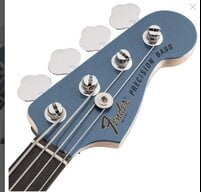
If you are in a metro area try to find a guitar shop that rents basses. If not, just buy an inexpensive short scale bass 30" scale or 28.6" as in a Squier Mini Precision. Rent or purchase a small amp as well.

Step 2
Watch a few beginner videos on YouTube. And learn a 12 bar blues progression. After you have gotten that down....

Step 3

Go to a guitar shop that has a good selection of bass guitars and play what you have learned on all of them. That will reveal to you what neck profile you feel most comfortable playing.

Step 4
Go from there

All the best on your quest !
 
Hello all,
New here. I thought I would ask the Forum the following:
I'm going into semi-retirement. I wanted to take some time to try again to learn an instrument. I have been diagnosed with rheumatoid arthritis which does affect my hands, fingers and wrists. I have considered the mandolin, the bass ukulele and the double bass. Knowing myself and now my limitations, I want something simple to play at a low cost. The bass ukulele and the electric double bass look promising. I have no plans to play in a group or without an amp. This attempt to learn an instrument is to let me focus on something and personal growth.

Any opinions from the spectrum of users on this forum.

Thank you,

Personally, I found Mandolins in general are not the greatest for comfort. The finger board is cramped, and you have to play two strings at a minimum. For someone that is developing arthritic discomfort, if your condition deteriorates, I’m afraid you will not want to play it.

A DB is at the other end of the spectrum for a Mandolin. DBs are huge comparatively speaking which also in your situation might be uncomfortable to play or become uncomfortable. The bass is a lonely instrument to play minus the rest of the musicians in a piece, but if I was hell bent on playing a bass just for the purpose of learning I’d opt for the Uke-Bass.
 
Short answer - no.

Longer answer, learning is one of the most fun things anyone can do. I am pretty damn good at my job, I'm going on 65 and retiring next March, I still get fired up when I learn something I didn't know before, or it makes me better.

I have a lot of hobbies and love learning more which helps me enjoy those hobbies even more.

Do it and have a ball!
 
No it’s not too late!! - what do you have to lose? Learning an instrument is very rewarding. And the feeling of performing music in a band, either live or in rehearsal, is second to none (hold comments on this one please :) ).

The upright bass is a serious physical undertaking though (electric or acoustic). I don’t know about athritis (luckily), but tendonitis is a serious concern if you are not careful and new to the instrument. I can’t imagine it’d be a walk in the park if you are struggling with arthritis.

Depending on the music you want to play and how technical it is could be a factor also. Country, Americana, blues or singer/songwriter can be quite a bit less demanding physically than say Prog rock, jazz or other more complex music.

I would suggest looking at a short scale bass and try different ones to see which neck feels best to you. The necks vary in width, depth and shape. So it will be important to find one that feels right.

The standard (long) 34” scale of a bass guitar is a bit of a bear to learn and get comfortable with initially, especially if you have small hands. I find that new bass players/students often struggle with the long scale bass which is actually 90% of what is out there, and if they don’t get comfortable it, with they will just eventually avoid it and quit.

A short scale bass is usually around 30” from nut to bridge and so the frets are closer together which alleviates the need to stretch your fingers as much. These basses are not super common, but tend to be reasonably priced. Ibanez, Sterling by Musicman, and Nordstrand offer models to look at.

I’d start there, the bass ukelele is even shorter and could be interesting, but it is kind of a specialty thing and not very versatile. If you knew it was a good fit for the music you want to play then it might be worth a whirl though.

hope this helps!
 

Latest posts