Hmmm, OP asked a question, but I didn't see where he expressed any of the opinions with which you are crediting him.Seriously, if the OP can explain the attraction of inefficiency for him, I'd be grateful.

Enjoy the benefits of a premium membership!
Upgrade Account
-
TalkBass has been independent since 1998. Add your voice.
Create a free account to reply to discussions, view embedded media, and browse with fewer display ads.
Join free Log in
Want zero display ads or expanded classifieds tools? Compare plans.
You are using an out of date browser. It may not display this or other websites correctly.
You should upgrade or use an alternative browser.
You should upgrade or use an alternative browser.
Totally Hand Built....
- Thread starter sps500
- Start date
More options
Who Replied?
I'm completely baffled why anyone would care whether wood is cut by CNC, router, or chisel. The materials and design of the bass and skill of the luthier are what really matter, the tools are irrelevant.
A CNC router is still a router. They both use the exact same router bits, rotating at the exact same speed. You do NOT get a better result routing a neck pocket by hand. Quite the opposite, as a matter of fact. This whole anti-CNC thing smacks of hippie nutso-ism.
As Bruce Johnson said, CNC doesn't save as much labor as many think.
Depends on volume. If you're making several hundred guitar bodies a week, then a CNC machine saves a sh*t-ton of cash. CNC machines aren't cheap, and companies don't buy them on a whim. You have to do some serious cost analyses before you drop some dough on one of those things.
That's almost verbatim how I would have put it: CNT lessens the time wasted on grunt work.
I can't imagine how anyone could believe CNT materially lessens the quality of a bass, or that sweatily chopping down the raw blanks by hand would make it better.
As the old adage goes, "Doing things the hard way doesn't mean you're smart. Doing things the hard way means you're stupid."
Does CNT make all the mojo leak out?
Seriously, if the OP can explain the attraction of inefficiency for him, I'd be grateful.

+1
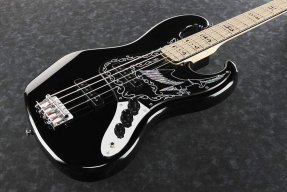
It has been said before but I'll repeat it here: If Leo Fender had CNC machines he would've used them from the beginning and he still would've made the iconic basses people know and love.

And eliminated a huge amount of vintage lemons.It has been said before but I'll repeat it here: If Leo Fender had CNC machines he would've used them from the beginning and he still would've made the iconic basses people know and love.
Thanks for the support. I'm taking trainloads of TalkBass bubba hate for dispensing common sense these days.


Thanks for the nice comments, guys!
We Luthiers always have to make tradeoffs in how much labor we put into our basses versus how expensive they become. We'd love to add all kinds of extra details and do every step really carefully, but how much are you (the customers) willing to pay for that? The more expensive the bass is, the harder it is to sell.
Should we invest money in better tooling to save labor in one area, in order to lower the selling price? Or should that labor savings be spent in adding more features to make our bass more exotic and worth more? As Cheaply As Possible isn't the answer either, because that puts you in competition with instruments that are built much cheaper in large quantities. These are tough tradeoffs that we have to make.
And, as I've described in some other threads, there's no money in this business. The prices that our basses sell for are well below what we should be charging by any standard small business model. The biggest name guys with established reputations make a modest living at best. The rest of us are somewhere between going out of business and barely getting by. You actually do have to be crazy to be a Luthier. It's a requirement!
We Luthiers always have to make tradeoffs in how much labor we put into our basses versus how expensive they become. We'd love to add all kinds of extra details and do every step really carefully, but how much are you (the customers) willing to pay for that? The more expensive the bass is, the harder it is to sell.
Should we invest money in better tooling to save labor in one area, in order to lower the selling price? Or should that labor savings be spent in adding more features to make our bass more exotic and worth more? As Cheaply As Possible isn't the answer either, because that puts you in competition with instruments that are built much cheaper in large quantities. These are tough tradeoffs that we have to make.
And, as I've described in some other threads, there's no money in this business. The prices that our basses sell for are well below what we should be charging by any standard small business model. The biggest name guys with established reputations make a modest living at best. The rest of us are somewhere between going out of business and barely getting by. You actually do have to be crazy to be a Luthier. It's a requirement!

Thanks for the info guys. I actually like well built basses and from the info so does everybody.
Its just a question I hear a lot sometimes... does the builder use a CNC or is it all saws and chisels...lol. So I was just trying to find out who does and who has moved on to more modern methods.
Interesting enough from the info that I have read and the basses I have played the consistency of the top brands whether CNC carved like say Warwick to an old school build by a top builder is very similar. Says a lot for skills!
Me... I dont have a personal preference but more a preference of luthiers that I trust.
Its just a question I hear a lot sometimes... does the builder use a CNC or is it all saws and chisels...lol. So I was just trying to find out who does and who has moved on to more modern methods.
Interesting enough from the info that I have read and the basses I have played the consistency of the top brands whether CNC carved like say Warwick to an old school build by a top builder is very similar. Says a lot for skills!
Me... I dont have a personal preference but more a preference of luthiers that I trust.

If even the tools arent made by hand i will not buy a bass
I designed and built my own automatic-feed pickup winding machine. I machined up all the metal parts on my various lathes and milling machines. So, does that count?
Same with my power contour-following fret slotting saw, and my fingerboard radiusing fixture....and many more. Hand-built electric-powered labor-saving machines, that's what I like.
(I realize that you are joking, but you can see where this leads...)
Hah, you just reminded my of a saying my stepfather used to lay on us. He was the tool crib manager of a machining company.
He'd say, "I guard the tools that build the tools that make the tools."
I designed and built my own automatic-feed pickup winding machine. I machined up all the metal parts on my various lathes and milling machines. So, does that count?
Same with my power contour-following fret slotting saw, and my fingerboard radiusing fixture....and many more. Hand-built electric-powered labor-saving machines, that's what I like.
(I realize that you are joking, but you can see where this leads...)
You are quite resourceful!
(not sarcastic)

I love these threads.

To take the point in the opposite direction, is anyone here in possession of a bass with a hand carved (no electric router) neck pocket? Now that's a hand carving challenge.How cutting a neck pocket with a router and a template is in any way superior or "different" than cutting it on a CNC machine eludes me.
+1 Priceless.If even the tools arent made by hand i will not buy a bass
Hah, you just reminded my of a saying my stepfather used to lay on us. He was the tool crib manager of a machining company.
He'd say, "I guard the tools that build the tools that make the tools."
Machinists have great nonsensical sounding sayings that actually make sense. I've always loved:
A mill uses round tools to make things square. A lathe uses square tools to make things round.
I'm saving up to build a neck carving machine. That's my next big hand-made labor saving machine. It's not going to be CNC; it will be controlled by ME, pulling the levers and turning the cranks. It's going to be a pattern-following type machine, specifically designed for shaping necks. That is, I'll hand carve a master pattern first, just the way I hand-shape the necks now. The master pattern and a partially finished neck will index into the machine. Then, I'll skillfully caress the levers and the router head will exactly replicate the master pattern's shape onto the neck. If it works right. Right now, I spend about 2 1/2 hours hand shaping the back of each Scroll Bass neck, using patterns and lines to keep them consistent. This machine, if it works, will hopefully bring that down to a half hour per neck, and make them all identical.
That's what it's all about: reduced labor and consistent quality. And no stinkin' mathematical modeling needed! I trust my hand more than that software to tell me if the neck shape is right!
So, to continue beating a dead horse, would these necks still be considered hand-shaped? It would still be me, delicately operating the levers of a hand-made machine (with a screaming router head hand-made by Porter-Cable).
That's what it's all about: reduced labor and consistent quality. And no stinkin' mathematical modeling needed! I trust my hand more than that software to tell me if the neck shape is right!
So, to continue beating a dead horse, would these necks still be considered hand-shaped? It would still be me, delicately operating the levers of a hand-made machine (with a screaming router head hand-made by Porter-Cable).


