Well, Porter-Cable sure. If you used Ryobi I would be worried.
DUH!

TalkBass has been independent since 1998. Add your voice.
Create a free account to reply to discussions, view embedded media, and browse with fewer display ads.
Join free Log in
Want zero display ads or expanded classifieds tools? Compare plans.
Well, Porter-Cable sure. If you used Ryobi I would be worried.


My experiences have shown me two things that I believe to be undeniable.....
1) CNC's main advantage, by far, is repeatability. Not time savings, labor savings and certainly not stress reduction. I love my CNC machine but the one thing I haven't seen anyone mention is that it is a LOT of machine to keep up with. That beings the case though, I wouldn't go back or trade it for all the handheld routers in the world.
2) Wood removal by any other name is still wood removal.
Ok i am starting this thread more as information for guys wanting to know so please add the makers...
Who are the luthiers that totally use only tools and no CNC for their builds... Neck and Body.... I only know 2 so please feel free to add...
1) Fodera
2) MBasses

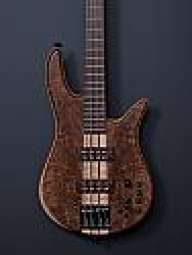
I think I read somewhere that fodera do use CNC these days.
Magnus guitars does not, I think, if he does, it's minimal
Invalid Link Removed
Seibass doesn't have a CNC either.
www.seibass.com
I personally have no issue whatsoever with using CNC.
We actually have two CNC-based machines. One we use for roughing out bodies and necks and the other (a "Plek") we use for leveling fingerboards and doing fret jobs.
Our decision to use these tools was not made lightly. They were HUGELY expensive purchases for a small shop like ours and have required a massive amount of specialized (and very expensive) labor to properly set them up and integrate them into the way that we work.
The upside has been that our very skilled luthiers have more time to do the things that matter most rather than spending a lot of time doing repetitive tasks over and over again.
It never made much sense (to me anyway) to have Vinny Fodera trace the same shape on a piece of wood 50 times a year and then cut it out on a jig saw when that time could be spent designing new models, hand carving a neck to a customer's precise specifications or creating a stunningly beautiful inlay.
So, like any other machine used in building, a CNC is merely a tool. Used well it can be a phenomenal one, but only if all of the things that are so vital to creating the finest instruments are in place. Things like wood selection, model design, a fanatical attention to detail, the right electronics, hardware, pickups, a finish process that enhances tone rather than stifling it....the list goes on and on.
Thus far I am not certain that using CNC (one of which we have been using for over three years and the other coming up on two years) has actually saved us a penny. But it has enabled us to have the really highest skilled aspects of building be focused on more intently and it has made certain aspects of quality control and building much more consistent.
I could personally build you a really poorly made Fodera 100% by hand (remember that I am not the skilled luthier in this bunch!) that would pale in comparison to our normal instruments that are now partially made using a CNC. Which would be better?
Of course, our culture here ensures that there is still an incredible amount of hand time going into every instrument that we make to get them as close to "perfect" as we are capable of...
I hope that this makes sense.
Kindest regards,
Jason

There is something to be said when spending 5K plus for an instrument and knowing no electricity was used to build it.

Thanks for the nice comments, guys!
We Luthiers always have to make tradeoffs in how much labor we put into our basses versus how expensive they become. We'd love to add all kinds of extra details and do every step really carefully, but how much are you (the customers) willing to pay for that? The more expensive the bass is, the harder it is to sell.
Should we invest money in better tooling to save labor in one area, in order to lower the selling price? Or should that labor savings be spent in adding more features to make our bass more exotic and worth more? As Cheaply As Possible isn't the answer either, because that puts you in competition with instruments that are built much cheaper in large quantities. These are tough tradeoffs that we have to make.
And, as I've described in some other threads, there's no money in this business. The prices that our basses sell for are well below what we should be charging by any standard small business model. The biggest name guys with established reputations make a modest living at best. The rest of us are somewhere between going out of business and barely getting by. You actually do have to be crazy to be a Luthier. It's a requirement!



And, as I've described in some other threads, there's no money in this business. The prices that our basses sell for are well below what we should be charging by any standard small business model. The biggest name guys with established reputations make a modest living at best. The rest of us are somewhere between going out of business and barely getting by. You actually do have to be crazy to be a Luthier. It's a requirement!

I hope that this makes sense.

I have no doubts about CNC, the OP asked about luthiers that makes the entire instrument by hand.
Nothing wrong in using CNC here. It´s just a tool.
Who are the luthiers that totally use only tools and no CNC for their builds... Neck and Body.... I only know 2 so please feel free to add...
1) Fodera
2) MBasses
Actually, the OP singled out CNC machines from all other tools, as if they are some sort of soul leeching, devil machines.

It has been said before but I'll repeat it here: If Leo Fender had CNC machines he would've used them from the beginning and he still would've made the iconic basses people know and love.