

Enjoy the benefits of a premium membership!
Upgrade Account
-
TalkBass has been independent since 1998. Add your voice.
Create a free account to reply to discussions, view embedded media, and browse with fewer display ads.
Join free Log in
Want zero display ads or expanded classifieds tools? Compare plans.
You are using an out of date browser. It may not display this or other websites correctly.
You should upgrade or use an alternative browser.
You should upgrade or use an alternative browser.
Transitions between songs
- Thread starter Jared Houseman
- Start date
More options
Who Replied?
We have created some interludes pieces between certain songs. Mostly at the beginning of our set. Our approach was to have just one or two instruments play during this time. It works best for us when there is a long note at the end that transitions into the bridge. The end of the bridge begins the note of the next song. I can capture some examples from our show and share/post, if you like. Hope that helps!

Good advice above ... WhenI'm the band leader, I have my songs selected in advance and think carefully about tempo (3 of 4 the next song is "faster") and key (alway "complementary" that is, appropriate scale change). Pre Planning so I don't have to worry about it
I've backed other that can do this intuitively - I can't - but reading the crowd is indeed a great skill
I've backed other that can do this intuitively - I can't - but reading the crowd is indeed a great skill

My two cents - in addition to the other stuff here. If you're a cover band, don't introduce songs. If you say "here's some Springsteen", a lot of the audience will say "I don't like Springsteen", so those people you're now fighting to win over. A few will think "hey cool, Springsteen", then they will load their favorite Springsteen song into their brain, and odds are you won't play that tune. So, you've set up expectations for folks, and not really made anyone happy. If you just play the Springsteen tune, some of the non - Springsteen fans might like it (they might not ever know it's a Springsteen tune), and the Springsteen fans will like it (you played a song by one of their favorite artists - you generate more positive feelings in the audience by happy surprises than you do by setting up expectations that you don't fulfill.
If you play originals, announcing those is cool - part of what you want to do it get people familiar with your music.
And, one other thing to know. When people come up to you and offer you a compliment, even if it's "misplaced", say thanks. I once played in a band that did only originals, and once someone came up and said "Hey, man I really liked that Blondie tune you guys did". Honestly, we didn't play a Blondie tune, and I have no idea what tune he thought even sounded like a Blondie tune, but the point is he liked something we did. The correct answer to this kind of thing is always "thanks". If you're nice, maybe he'll come back and enjoy the "Blondie" tune, maybe he'll figure out it's one of yours, whatever - when you have good will going, don't wreck it by correcting someone's "mistake".
If you play originals, announcing those is cool - part of what you want to do it get people familiar with your music.
And, one other thing to know. When people come up to you and offer you a compliment, even if it's "misplaced", say thanks. I once played in a band that did only originals, and once someone came up and said "Hey, man I really liked that Blondie tune you guys did". Honestly, we didn't play a Blondie tune, and I have no idea what tune he thought even sounded like a Blondie tune, but the point is he liked something we did. The correct answer to this kind of thing is always "thanks". If you're nice, maybe he'll come back and enjoy the "Blondie" tune, maybe he'll figure out it's one of yours, whatever - when you have good will going, don't wreck it by correcting someone's "mistake".

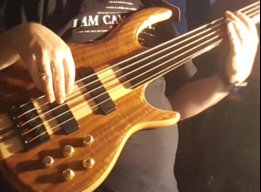
I did a living colour song (I think it was Type) and transitioned it into Rocky Mountain Way in one of my bands...... was a blast... and it worked so well. Lead singer and bassist in that case, but for rocky mountain way I did the talking guitar solo on my double neck guitar/bass with a midi foot controller to do the rhythmic bass part on one note.
You can do musical transitions that freak folks out sometimes if you choose songs with teh same basic tempo and share a key or chord in the 1st song that can lead to the main lick chord in the 2nd song.
Either that or tell a joke!
A priest, a pastor and a rabbi walk into a bar and soon begin arguing over who’s the best at what they do.
Eventually they decide that in order to prove who’s the best, they would all go out alone into the woods and convert a bear to their respective religion.
A few weeks later.. they meet up at the bar and the priest announces, "I found a bear by the river and started talking to him about the Lord. He liked it so much that he now comes to mass every week."
The pastor says, "Well, I saw a bear in the clearing. I started reading him the bible and he loved it so much that he is now going to be baptized in about a week."
The priest and the pastor turn to look at the rabbi, who now has a broken arm, a fractured collarbone and several cuts and bruises.
The rabbi says, You know what, looking back.. maybe I shouldn't have started with a circumcision
You can do musical transitions that freak folks out sometimes if you choose songs with teh same basic tempo and share a key or chord in the 1st song that can lead to the main lick chord in the 2nd song.
Either that or tell a joke!
A priest, a pastor and a rabbi walk into a bar and soon begin arguing over who’s the best at what they do.
Eventually they decide that in order to prove who’s the best, they would all go out alone into the woods and convert a bear to their respective religion.
A few weeks later.. they meet up at the bar and the priest announces, "I found a bear by the river and started talking to him about the Lord. He liked it so much that he now comes to mass every week."
The pastor says, "Well, I saw a bear in the clearing. I started reading him the bible and he loved it so much that he is now going to be baptized in about a week."
The priest and the pastor turn to look at the rabbi, who now has a broken arm, a fractured collarbone and several cuts and bruises.
The rabbi says, You know what, looking back.. maybe I shouldn't have started with a circumcision

Some general rules:
-avoid starting songs by counting them off. The best option is to have one player start the song, usually it's guitar or drums. Count ONLY when absolutely necessary.
-on a similar note, hold the last note instead of a hard ending (use some artistic discretion) The idea is that while the last note is ringing someone is starting the next song (see first rule)
-Trust each other to be ready. You should not have to look around and check with everyone before you start a song. Just start it.
-Medleys are great whenever possible.
-Be aware of who starts/ends each song when making the set list. For example I would not follow "Alone" (ends with piano) with a song that starts with keys. Just helps to know when people might need a second or two.
-Like the music itself, PRACTICE. Practice some transitions at rehearsal. You cant do every combination of songs, nor do you need to. You just need to get the principles and expectations into everybody's heads.
-avoid starting songs by counting them off. The best option is to have one player start the song, usually it's guitar or drums. Count ONLY when absolutely necessary.
-on a similar note, hold the last note instead of a hard ending (use some artistic discretion) The idea is that while the last note is ringing someone is starting the next song (see first rule)
-Trust each other to be ready. You should not have to look around and check with everyone before you start a song. Just start it.
-Medleys are great whenever possible.
-Be aware of who starts/ends each song when making the set list. For example I would not follow "Alone" (ends with piano) with a song that starts with keys. Just helps to know when people might need a second or two.
-Like the music itself, PRACTICE. Practice some transitions at rehearsal. You cant do every combination of songs, nor do you need to. You just need to get the principles and expectations into everybody's heads.
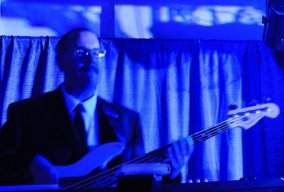
Balsam Range is awesome. Their bassist, Tim Surrett, is as good a musician as has ever been. He takes off on a Steinberger on I Saw The Light in the late 80s/early 90s (YouTube the Kingsmen). Minimal talk/just play is king! Watch for the encore...
Dude, that’s just ridiculous! I love the bewildered look on the dobro players face......while playing his ass off.
My trio does that several times across a set length; generally, we try to have the transition song be in the same key or ends the song with notes that are the lead-in notes for the next tune.
One cool example - we do ZZ Top Blue Jean Blues into Since I've Been Loving You by Led Zep.
We've worked really hard to get our material solid and polished; it's really paying off.
One cool example - we do ZZ Top Blue Jean Blues into Since I've Been Loving You by Led Zep.
We've worked really hard to get our material solid and polished; it's really paying off.
We do Rock covers and usually do our transitions by having the guitar player start with a guitar only intro. End one song and he starts playing the next song intro right away. You can also talk over the guitar intro if you need to. 8 bars of guitar and the rest of the band jumps in. It works perfect.

Many here roll their eyes when they are brought up, but mashups work. We do half a dozen of them. The crowd loves them.

It's not at all hard to do as long as everyone knows who ends each song and who begins the next one. If the song doesn't have an intro played on just one instrument, then either the drummer or whoever will be singing should count it in.
Over the last 25 years, I've seen a lot of poopie bands and had the privilege to see a few amazing bands - and here I'm just talking about their live set and not their musicianship or the music itself. Obviously this is just my experience, but I've always found the best bands keep to the following rules of thumb:
- The less known you are, and especially if you're an opening act, shut the heck up. Nobody cares until the vast majority of the people in the room are there to see you specifically. As a rule of thumb, assuming a 10ish song set: you should introduce the band name after the first song, banter a bit after the fifth song, reintroduce the band and its members after the ninth song, and make sure you bring the house down with the tenth song. Say goodnight and if you did your job well, you should have some new fans!
- The more well know and renowned the band, the more the frontperson can spend time between songs interacting with the audience... only when called for. There are different types of shows: Sting likes to introduce everything he does, for example, or give a little story. That really works for him. You are not Sting; find what really works for you. Best way to do this is to experiment and then ask different people what they thought of it: band members opinions count for very little here. Have someone in the audience going around and schmoozing people and getting audience members opinion.
- Even so, I'm here to hear music, not chatter - lots of amateur bands ramble on between each song. Prince, AC/DC, Clapton, Springsteen, etc, etc., they never ramble - every time they speak, they're making a specific point, they have a specific thing to say, but then they dive into a 3-5 song set.
- Ultimately, it's a show. The best shows are those that manage their highs, their lows... their pacing. Pacing is the most important thing in a show for keeping an audience interested - too much slow stuff, and it's boring. Too much high energy stuff and it's tiring.
This is all correct. I'll add something to it - most banter at the mic literally cannot be heard in the crowd. Most people I know talk too fast and mumble and it's literally nothing out there in the room. If you DO banter, or talk in any way, make it SLOW and BIG - LET's get READY to RUMMMMBBLLLLLE! Don't have to literally go pro-wrestling voice on it, but howzevrybuddydointonight is useless, HOOWW's EveryBODDY DOING - OUT - THERE!!!!! can work.
Some people take years to transition and you want to do it between songs...... that's a seriously quick surgeon! 

My advice is to devise transitions to make songs flow but don't take you out of dancing, and quite simply, when one song is ending, just start counting the next one off.

come up with a few vamps and scatter them through your set.
if your guitarist is tuning, then bass, drums, keys, do a simple vamp with energy.
have a few of those handy, and use judiciously throughout your sets.
if your guitarist is tuning, then bass, drums, keys, do a simple vamp with energy.
have a few of those handy, and use judiciously throughout your sets.

Telling stories about the stuff in the songs works very well for my BL, but he writes all the songs. 

Organize your songlist by tempo and key. It should be easy to go between songs where both match.
If just the tempos match ask your drummer to find a way to transition from one beat to the other. If they can, then everyone drops out, drummer changes the beat and everyone comes back in.
If just the tempos match ask your drummer to find a way to transition from one beat to the other. If they can, then everyone drops out, drummer changes the beat and everyone comes back in.
Telling stories about the stuff in the songs works very well for my BL, but he writes all the songs.
Yes - I think there's a world of difference between an originals band where the crowd may have come to see the artist, vs. a cover band where the crowd is there to party to the music. If people want to experience the artist, they'll have a lot more interest in hearing stories and banter. But you still have to have clear articulation over the mic.


