

Enjoy the benefits of a premium membership!
Upgrade Account
-
TalkBass has been independent since 1998. Add your voice.
Create a free account to reply to discussions, view embedded media, and browse with fewer display ads.
Join free Log in
Want zero display ads or expanded classifieds tools? Compare plans.
You are using an out of date browser. It may not display this or other websites correctly.
You should upgrade or use an alternative browser.
You should upgrade or use an alternative browser.
Truth or Marketing?
- Thread starter Pluckoff
- Start date
More options
Who Replied?
What was the single-pickup version, was that the Broadcaster or the Esquire? That guitar had some seriously weird wiring decisions!
The original Fender production Spanish guitar was the Esquire, in one or two pickup versions. Supposedly 50 were made. The neck had no truss rod, and the early users convinced Fender a truss rod was needed. So the new two pickup version with a truss rod was renamed the Broadcaster. Gretsch had a drum set called the Broadkaster, and soon asked Fender to change the guitar's name, with the new choice being Telecaster.
The original two pickup wiring was bridge pickup with blend control for the neck pickup, neck pickup alone, and neck pickup with a tone capacitor to darken the sound. The one pickup wiring was bridge pickup with just a volume control, bridge pickup with volume and tone control, and bridge pickup with volume control and darkening capacitor.
Also I think most folks -- including Leo -- would agree that having a single bridge saddle for every pair of strings was a compromise at best.
It wasn't by the standards of 1950, when most electric guitars had one piece bridges that could only adjust intonation by moving the entire bridge. The only bridge with completely adjustable intonation in 1950 was probably the Melita Synchro-sonic, and few of them were in circulation yet. Gibson wouldn't introduce the Tune-o-matic bridge until 1953.

The use of the word “best” automatically makes it an opinion statement.
I knew a guy who worked at the G&L factory in the early 80's. He told me that he was surprised how revered the old G&L's are because he and everyone else building them were stoned the whole time. Of course, I imagine the same could be said for the other brands and many of their employees at that time, as well.
Maybe they came up with a few "half-baked" ideas?

The same is true of the words “good” and “better”.The use of the word “best” automatically makes it an opinion statement.

My favourite Fender guitar is teh esquite.
My favourite Fender bass is the single coil P.
I find that I get more variety in tone from single pickup instruments, through playing technique, placement of plucking hand etc., than I do from those that have two or more
My favourite Fender bass is the single coil P.
I find that I get more variety in tone from single pickup instruments, through playing technique, placement of plucking hand etc., than I do from those that have two or more
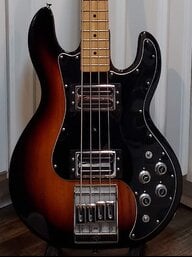
IMO… the best made bridge, EVER! I am not one who is in agreement with “upgrading” a bridge. I think it’s a waste of time and money. But the G&L bridges are just incredible! Great sustain and it provides the owner with a great experience with the intonation process. If it were an easy task to replace my Fender and Squier stock bridges with the G&L, I definitely would. I’m sure there would be some router work required, however. And I’m just not that brave!The G&L bridge and it's mounting and saddle-lock concept is what stood out the most for me compared to Fender and other brands. Saddle Lock Bridge

That’s it! That’s my answer …What else could he have said? Although I am with G&L now, I made the best instruments when I was at Fender?
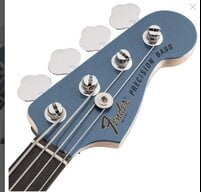
Everything Leo did after Fender rendered his earlier designs completely obsolete. That’s why you so rarely see anyone playing a Precision or a Jazz any more. Er… well…

Indeed. And where did all the Stingrays go?Everything Leo did after Fender rendered his earlier designs completely obsolete. That’s why you so rarely see anyone playing a Precision or a Jazz any more. Er… well…



Leo Fender, the creator of both Fender and G&L, famously declared that: “G&L guitars (and basses) are the best instruments I have ever made”.
The answer is not one of your two choices. Leo’s statement is clearly his opinion. His opinion about stringed musical instruments is definitely an opinion that should not be dismissed, especially his opinion on instruments he designed and built, however, his opinion on a new product from which he could receive significant financial gain might be a little biased.
Truth? That could possibly be determined by some scientific research / testing, but if you are trying to determine the truth of a subjective topic (best), you are working on a fool’s errand.
Marketing? Most likely everything Leo did every day had some fraction of marketing involved. Making a statement on the quality of his current product in relation to all products he produced probably contained a very large fraction of marketing….
This is the best explanation I have read, yet. Well put, sir!The answer is not one of your two choices. Leo’s statement is clearly his opinion. His opinion about stringed musical instruments is definitely an opinion that should not be dismissed, especially his opinion on instruments he designed and built, however, his opinion on a new product from which he could receive significant financial gain might be a little biased.
Truth? That could possibly be determined by some scientific research / testing, but if you are trying to determine the truth of a subjective topic (best), you are working on a fool’s errand.
Marketing? Most likely everything Leo did every day had some fraction of marketing involved. Making a statement on the quality of his current product in relation to all products he produced probably contained a very large fraction of marketing….

G&L is the natural evolution of his earlier designs. Updated hardware and Electronics with his older body shapes as well as some completely new designs. I prefer them.
I know this topic is about what is thought of the statement that Mr Fender makes in that ad copy and I respect every word, even though I may not agree it.
My thoughts and opinions of basses are formed firmly on the tone and character of a bass. Speaking strictly in terms of tone, not necessarily build quality, the Fender Precision and later, the Jazz basses set a standard of tone that is still very much with us today. Later, the Music Man Stingray was an evolution of that tone, good or bad (very good in my view).
When the G&Ls came along, I have to admit (and I'll get pummeled for this, don't care, I've built a Kevlar hide these last several years), that I tried the G&L "Wunkay", I think it's called and several subsequent G&L basses over the years. I found them to be quality-built, well-fitting instruments. But they did nothing and still do nothing to this day for my soul. I get nothing back from them as I do other instruments. So to me, evolution isn't necessarily a move up. It may be for folks looking for other things from a bass. But in terms of tone and feel,
G&Ls just didn't do it for me. (and what is "soul" in this context, anyway? I thought I'd beat that question to the punch.... ))
))
Having said all of this, the G&L players are some of the most fierce, most vocal, first to suggest G&Ls, even when the topic didn't really ask for that answer, and loyal folks around here and elsewhere. Leo certainly did something right for those folks and I give him all the credit for the success the G&Ls have had.
My thoughts and opinions of basses are formed firmly on the tone and character of a bass. Speaking strictly in terms of tone, not necessarily build quality, the Fender Precision and later, the Jazz basses set a standard of tone that is still very much with us today. Later, the Music Man Stingray was an evolution of that tone, good or bad (very good in my view).
When the G&Ls came along, I have to admit (and I'll get pummeled for this, don't care, I've built a Kevlar hide these last several years), that I tried the G&L "Wunkay", I think it's called and several subsequent G&L basses over the years. I found them to be quality-built, well-fitting instruments. But they did nothing and still do nothing to this day for my soul. I get nothing back from them as I do other instruments. So to me, evolution isn't necessarily a move up. It may be for folks looking for other things from a bass. But in terms of tone and feel,
G&Ls just didn't do it for me. (and what is "soul" in this context, anyway? I thought I'd beat that question to the punch....
))Having said all of this, the G&L players are some of the most fierce, most vocal, first to suggest G&Ls, even when the topic didn't really ask for that answer, and loyal folks around here and elsewhere. Leo certainly did something right for those folks and I give him all the credit for the success the G&Ls have had.
I guess it is down to your definition of "best".Leo Fender, the creator of both Fender and G&L, famously declared that: “G&L guitars (and basses) are the best instruments I have ever made”.
Since one of my criteria is styling, I would disagree, on the basis that the bridge is a bit gonky and the headstock is fugly.

He was certainly entitled to his opinion.
According to Don Randall, the designs that Fender came up with were products of an entire team. Between ‘51 and ‘57, they grew a lot, and were a long way away from Leo tinkering over a Broadcaster on a bench. George was just one of many employees who contributed to the designs, and most designs were refined by customers before being released. G&L’s were pitched back in the 80s as some evolutionary culmination of Leo’s innovations. But he had to somehow compete with a market saturated by his own former designs - so he had to differentiate them slightly, and pitch it as an improvement. Whether it was or not is entirely a matter of opinion, and as a player, your opinion is worth as much or more than Leo’s, since he could only play the radio.
According to Don Randall, the designs that Fender came up with were products of an entire team. Between ‘51 and ‘57, they grew a lot, and were a long way away from Leo tinkering over a Broadcaster on a bench. George was just one of many employees who contributed to the designs, and most designs were refined by customers before being released. G&L’s were pitched back in the 80s as some evolutionary culmination of Leo’s innovations. But he had to somehow compete with a market saturated by his own former designs - so he had to differentiate them slightly, and pitch it as an improvement. Whether it was or not is entirely a matter of opinion, and as a player, your opinion is worth as much or more than Leo’s, since he could only play the radio.
I agree with this very factual post.I know this topic is about what is thought of the statement that Mr Fender makes in that ad copy and I respect every word, even though I may not agree it.
My thoughts and opinions of basses are formed firmly on the tone and character of a bass. Speaking strictly in terms of tone, not necessarily build quality, the Fender Precision and later, the Jazz basses set a standard of tone that is still very much with us today. Later, the Music Man Stingray was an evolution of that tone, good or bad (very good in my view).
When the G&Ls came along, I have to admit (and I'll get pummeled for this, don't care, I've built a Kevlar hide these last several years), that I tried the G&L "Wunkay", I think it's called and several subsequent G&L basses over the years. I found them to be quality-built, well-fitting instruments. But they did nothing and still do nothing to this day for my soul. I get nothing back from them as I do other instruments. So to me, evolution isn't necessarily a move up. It may be for folks looking for other things from a bass. But in terms of tone and feel,
G&Ls just didn't do it for me. (and what is "soul" in this context, anyway? I thought I'd beat that question to the punch....
Having said all of this, the G&L players are some of the most fierce, most vocal, first to suggest G&Ls, even when the topic didn't really ask for that answer, and loyal folks around here and elsewhere. Leo certainly did something right for those folks and I give him all the credit for the success the G&Ls have had.

ThisIt depends on whether you agree with what Leo Fender considered to be refinements.
In guitar terms, he got a lot right with the first Telecaster, except some weird wiring decisions. The Strat is clearly a refinement of this idea. The Jaguar and Jazzmaster are, again, an evolution. But, those offsets were designed to have a broad tone with lots of passive circuitry cunning to give players more options. Are they better than a slab-bodied '52 Tele? Or, are they convoluted and fiddly designs, lacking a certain mojo because the performance Leo chased in his designs deviated increasingly from what guitarists and bassists actually wanted.
I personally dislike the sturdier (heavier) G&L hardware (I also dislike Badass bridges for the same reason), and I personally find G&L MFD pickups to be nasally and boinky, not at all what I want in a strat or tele. But... these are strictly my personal tastes and preferences.
Last edited:

Leo Fender, the creator of both Fender and G&L, famously declared that: “G&L guitars (and basses) are the best instruments I have ever made”.
After playing an L1000 in 1980, I had to agree. I liked G&L much better than MusicMan, owned a fretless L1000 and a fretted L2500 in the past. I liked the passive bass control in particular.
Latest posts
-
-

-

-
 Adding J pup to P bass, should I go 60’s or 70’s spacing?
- Latest: darwin-bass
