
Enjoy the benefits of a premium membership!
Upgrade Account
-
TalkBass has been independent since 1998. Add your voice.
Create a free account to reply to discussions, view embedded media, and browse with fewer display ads.
Join free Log in
Want zero display ads or expanded classifieds tools? Compare plans.
You are using an out of date browser. It may not display this or other websites correctly.
You should upgrade or use an alternative browser.
You should upgrade or use an alternative browser.
tubes or transformer?
- Thread starter gtirard
- Start date
More options
Who Replied?

- Feb 12, 2006
- 60,961
- 5
- 220,636
- Disclosures
- Development Engineer-Mesa Boogie, Development Engineer-Genzler (pedals), Product Support-Genz Benz
It's all part of the design trade-offs. There are several real MC240 transformers depending on the era, as long as it's designed and constructed the same it will sound the same. There's no fairy dust in the design equations.On a thousand occasions, Agedhorse has learned more about electronics in a day than I have in my lifetime. That said, I do know a little. And it appears as though transformers are important in tube amps. It appears as though there are tube amplifiers which can turn in performances that most tube amps cannot, and those amplifiers could not perform this way without the 'special' transformers they use. You cannot build a Harmon Kardon Citation unless you have the proper transformers. Same with a McIntosh MC 240. Andy says it all depends on design and that the matching the transformer to the topology is the key and I think this is part of the story but not the whole story. You can build a transformer which meets the spec for the MC240, but which does not get the job done like a 'real' McIntosh MC240 transformer. My amp tech would hold a particular transformer in his hand and say this transformer, maximized, can meet this-and-that performance spec, and would go on to say that if you want better LF performance than that, then you will need a different/better transformer. So no...I think you cannot build a top notch amplifier with cheap transformers. Yes, the transformer is part of the magic. And I have heard some folks say it is a BIG part of the magic. And.....
...the transformers in my SVT are nearly the size of small loaves of bread. I doubt there is any mass-produced bass amplifier with bigger transformers. And the SVT has....ahem...a reputation. Coincidence?
A small transformer would in fact get the job done just fine if the frequency is high enough. At 100kHz, the transformer would end up being about 2" x 2" x 2" and weigh about a pound.Not sure what 'galvanic isolation' might be but it is my understanding that power transformers do make a difference. A power transformer the size of a marshmallow in an SVT would not get the job done.
As in everything... it depends.

If what you want is the same tone that's been played for 50 years tubes and transformers are important but solid state is lighter and doesn't color your tone unless you want it to.
Hmmm. we like what we like.
Amps I recall as not liking...percieved sterilty etc.
Thunderfunk, Aguilar TH, Markbass, Ampeg PF/SVT 3, Berg.
All with degrees of meh..
Amps I have very fond memories of.
SVT ll, SWR SM, DB750.
The outlier is Demeter 800.
So, what conclusion should I make.
Amps I recall as not liking...percieved sterilty etc.
Thunderfunk, Aguilar TH, Markbass, Ampeg PF/SVT 3, Berg.
All with degrees of meh..
Amps I have very fond memories of.
SVT ll, SWR SM, DB750.
The outlier is Demeter 800.
So, what conclusion should I make.
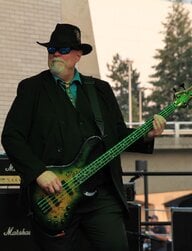
Hahahahahaha!All generalizations are false.

Funny thread as I own my very first all tube amps for about a week now, after exclusively only playing SS amps.
It's a Sadowsky sa200. It's tone is simply absolutely unique. A warmth I never felt. Even with the famous Ampeg full tube amps.
Is it the tubes? The design? Both?
However if I didn't have this new amp I'd be still play my fantastic Ampeg svt7 pro. As IMO and IME it sounds pretty much the same as the all tube line. With more power and way less weight.
It's a Sadowsky sa200. It's tone is simply absolutely unique. A warmth I never felt. Even with the famous Ampeg full tube amps.
Is it the tubes? The design? Both?
However if I didn't have this new amp I'd be still play my fantastic Ampeg svt7 pro. As IMO and IME it sounds pretty much the same as the all tube line. With more power and way less weight.

Al Kraft
Supporting Member
- May 2, 2016
- 10,768
- 40,436
- Disclosures
- Mesa Boogie beta product tester and player support
IMO it would be impossible to successfully argue that parts and specifications don't matter...however, IME they mainly matter in the context of design and the designer's intent. Some parts/technologies simply work better to achieve design goals in certain applications. I know for sure that's the case in aviation technologies.
We also need to recognize that vintage gear could only be designed using the technologies that existed at the time. Presumably those technologies and the associated characteristics and/or artifacts yielded the results the designer intended and the consumers liked. In many cases that doesn't mean that newer designs and technologies can't also produce those same results, in addition to offering capabilities that go beyond the previous state of the art.
We also need to recognize that vintage gear could only be designed using the technologies that existed at the time. Presumably those technologies and the associated characteristics and/or artifacts yielded the results the designer intended and the consumers liked. In many cases that doesn't mean that newer designs and technologies can't also produce those same results, in addition to offering capabilities that go beyond the previous state of the art.

Portland's own, for a minute, Patrick O'Hearn on bass!

Yea, what’s he doing these days?

SleepingYea, what’s he doing these days?
But not in a jar, in an unmarked grave.

Last edited:

+1
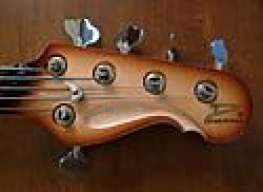
Portland's own, for a minute, Patrick O'Hearn on bass!
Classic Frank.

I was not a big tube user back in da day.I was a tube snob until I got a WD800.
Dad's B-15, I had a Sunn Model T for a bit.
Didn't like the under powered B-15 for playing rock with half stacks and the Model T was so loud that I didn't get it into any tube grit, it was ran clean all the time.
That little WD box is da kine
I can get a vibe that reminds me of the sound I liked at low volume of the B-15 but with some power behind it without breaking up but if I want that, that power tube emulation gives me that sound with more consistency, and 800 watts to draw from.
You like what you like.Hmmm. we like what we like.
Amps I recall as not liking...percieved sterilty etc.
Thunderfunk, Aguilar TH, Markbass, Ampeg PF/SVT 3, Berg.
All with degrees of meh..
Amps I have very fond memories of.
SVT ll, SWR SM, DB750.
The outlier is Demeter 800.
So, what conclusion should I make.
I'd like to disagree, if I may, on a small point.If what you want is the same tone that's been played for 50 years tubes and transformers are important but solid state is lighter and doesn't color your tone unless you want it to.
That being that transistors do not color your tone unless you want them too.
A tube or transistor amplifier circuit operating completely within their respective linear regions (clean) should not sound different from one another. Rather, I believe it's the RC (Resistor/Capacitor) tone shaping networks associated with those devices that have a much larger impact on what you hear.
What you say about, if you want the same tone, holds a lot of water. And given that output tubes need a transformer, where SS devices do not, one can argue that transformers do make a difference. But tube vs transistor alone should not. You could test a tube output before the transformer and compare that to transistors. But we don't normally, preferring to test with our ears instead. Which is the final and most important test. A good transformer will do a respectable job of not adding color. Good enough to do that with no coloration, gets real expensive real fast, not to mention being larger and heavier than what we might be accustomed to.
A lot of the tone differences we speak of in SS vs valves, is in how the device is driven. If no longer operating in the linear region we are no longer clean. The devices themselves distort in different ways. A transformer's ability respond to these distortions can add to what is now happen with the tubes. Kind of, once we go beyond clean, all bets are off.
So while I agree that your overall assessment is on track. I think it would be better for all if we could avoid generalizations based solely on the type of device in use. You and I have awareness' about such matters that perhaps a newbie does not. I would not want to turn someone off to SS, based on their lack of that awareness.
Thanks for indulging.

Funny, in my early years of playing, my goal was to be loud and clean. I felt like if I was playing loud and there was any distortion, I was losing the character of my bass. My first real amp was an Acoustic 140/106 set* that did alright but struggled sometimes. Then I moved up to a Sunn Coliseum head and got a pair of Peavey 215 cabs, and that rig allowed me to play as loud as I wanted, cleanly. If I wanted any grit, I was going to get it myself with my Rickenbacker and rounds. But it was going to be clean grit. Loud and clean.I was not a big tube user back in da day.
Dad's B-15, I had a Sunn Model T for a bit.
Didn't like the under powered B-15 for playing rock with half stacks and the Model T was so loud that I didn't get it into any tube grit, it was ran clean all the time.
That little WD box is da kine
I can get a vibe that reminds me of the sound I liked at low volume of the B-15 but with some power behind it without breaking up but if I want that, that power tube emulation gives me that sound with more consistency, and 800 watts to draw from.
Of course, knowing what I know now, there was probably tons of distortion that I didn't know how to recognize. I'm kind of amazed that I never blew anything up or burned anything down given how little I actually knew about anything.
*

Funny, in my early years of playing, my goal was to be loud and clean. I felt like if I was playing loud and there was any distortion, I was losing the character of my bass. My first real amp was an Acoustic 140/106 set that did alright but struggled sometimes. Then I moved up to a Sunn Coliseum head and got a pair of Peavey 215 cabs, and that rig allowed me to play as loud as I wanted, cleanly. If I wanted any grit, I was going to get it myself with my Rickenbacker and rounds. But it was going to be clean grit. Loud and clean.
Of course, knowing what I know now, there was probably tons of distortion that I didn't know how to recognize. I'm kind of amazed that I never blew anything up or burned anything down given how little I actually knew about anything.
I never wanted the distortion just clear clean bass guitar. The best loudest amp I had was the Sunn Model T but even at a young age, I found it too heavy to schlep. Your reminder of Sunn, I did later have a Sunn Concert head and an 18 prototype cabinet from one of the cabinet designer and builder for Sunn. Then an Acoustic 126 combo. Then I went bi-amp, pa amps and crossover into two, yes two Peavey 1820s

I started with my dad's B-15 and after all my travels ended up here...

Interestingly enough, Early transistor power amps did use transformers, before they discovered they weren't really needed, and removed the reactive and non linear characteristics intrinsic to transformers.I'd like to disagree, if I may, on a small point.
That being that transistors do not color your tone unless you want them too.
A tube or transistor amplifier circuit operating completely within their respective linear regions (clean) should not sound different from one another. Rather, I believe it's the RC (Resistor/Capacitor) tone shaping networks associated with those devices that have a much larger impact on what you hear.
What you say about, if you want the same tone, holds a lot of water. And given that output tubes need a transformer, where SS devices do not, one can argue that transformers do make a difference. But tube vs transistor alone should not. You could test a tube output before the transformer and compare that to transistors. But we don't normally, preferring to test with our ears instead. Which is the final and most important test. A good transformer will do a respectable job of not adding color. Good enough to do that with no coloration, gets real expensive real fast, not to mention being larger and heavier than what we might be accustomed to.
A lot of the tone differences we speak of in SS vs valves, is in how the device is driven. If no longer operating in the linear region we are no longer clean. The devices themselves distort in different ways. A transformer's ability respond to these distortions can add to what is now happen with the tubes. Kind of, once we go beyond clean, all bets are off.
So while I agree that your overall assessment is on track. I think it would be better for all if we could avoid generalizations based solely on the type of device in use. You and I have awareness' about such matters that perhaps a newbie does not. I would not want to turn someone off to SS, based on their lack of that awareness.
Thanks for indulging.
I recall seeing a McIntosh Hifi power amp built in the 1970s, if I recall correctly, that was transistor output with an output transformer. I didn't really see the need, aside from impedance matching, which would allow the amp to develop it's full rated power across various common speaker impedance loads. Or, maybe they were trying to recapture something from the heyday of their tube output amps.
Edit: Another factor that I think many people overlook is the mechanical resonance of the electrodes in tubes; microphonics is an extreme example. In lower amounts though, it can add a reverb like effect that some listeners may find pleasing.
Last edited:
McIntosh were making these well into the 2000s. The claimed reason was so that the power circuit can work with an optimum load regardless of what kind of speaker is connected. The MC150 is rated 150 watts for 2, 4 and 8 ohm loads, and instead of a single pair of speaker terminals the amp has 2, 4, and 8 ohm terminals.I recall seeing a McIntosh Hifi power amp built in the 1970s, if I recall correctly, that was transistor output with an output transformer. I didn't really see the need, aside from impedance matching, which would allow the amp to develop it's full rated power across various common speaker impedance loads. Or, maybe they were trying to recapture something from the heyday of their tube output amps.
I'm not an electronics engineer, and I have no idea whether this is a worthwhile design goal, overengineering for minor gains, or just kinda pointless.
That is interesting.Interestingly enough, Early transistor power amps did use transformers, before they discovered they weren't really needed, and removed the reactive and non linear characteristics intrinsic to transformers.
I recall seeing a McIntosh Hifi power amp built in the 1970s, if I recall correctly, that was transistor output with an output transformer. I didn't really see the need, aside from impedance matching, which would allow the amp to develop it's full rated power across various common speaker impedance loads. Or, maybe they were trying to recapture something from the heyday of their tube output amps.
Edit: Another factor that I think many people overlook is the mechanical resonance of the electrodes in tubes; microphonics is an extreme example. In lower amounts though, it can add a reverb like effect that some listeners may find pleasing.
I was an early adopter of Solid State. Had a bass amp in '67 or '68 that was SS. Not a lot of power in those days, but no transformer. Probably all of 20-25 watts. Very similar to this.
Tube microphonics (usually undesired) could play into a "tube sound" if it were subtle. But then on a straight up comparison with a transistor device, I think we'd have to consider the tube to be defective. I'm sure a transistor could be microphonic as well, but much more rate IME, and not producing the same results as a microphonic tube.
- Feb 12, 2006
- 60,961
- 5
- 220,636
- Disclosures
- Development Engineer-Mesa Boogie, Development Engineer-Genzler (pedals), Product Support-Genz Benz
Transistors CAN be defective microphonically, but it's pretty rare because of how they are constructed and encapsulated.
Last edited:


