Maybe a few silly question but I’ve never had a C-extension and I just added one with a single E gate to my Upton build and was just thinking about the proper way to tune it. Do you open the gate, tune the C, then close the gate and assume the E will be right, or do you tune it to E with the gate closed? Or is there some play in the gate and you tune the open C and then adjust the E gate until it’s in tune? What’s the best way to get the job done? Thanks! Also, anyone have an Evah Pirazzi experience with an extended E?

Enjoy the benefits of a premium membership!
Upgrade Account
-
TalkBass has been independent since 1998. Add your voice.
Create a free account to reply to discussions, view embedded media, and browse with fewer display ads.
Join free Log in
Want zero display ads or expanded classifieds tools? Compare plans.
You are using an out of date browser. It may not display this or other websites correctly.
You should upgrade or use an alternative browser.
You should upgrade or use an alternative browser.
Double Bass Tuning a C extension
- Thread starter BassFalcon
- Start date
More options
Who Replied?
I typically tune the E with all gates closed and don't mess with the gates at any point thereafter or before, but if I tune using the open low C (for instance, when I'm tuning using a reference pitch rather than my clip on tuner, which I've been tending to do more often lately), I'll do a soft left hand pizz. on the G and bow the 2nd harmonic on the E string (which would then sound a C harmonic). Just my .2 cents, and I'd be curious to know what others with C extensions do.

Thanks for the insight! I don’t know if it would actually matter in practice, but I think tuning the E with the gate closed would bind the windings. That thought is kind of what spurred my general question, to see how everyone else is doing it and to see if that thought even makes sense.

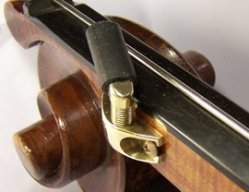
I have a mechanical extension, which I tune with the E key held. I release it then hold down again to check. It's no big deal. takes about 5 seconds longer than without an extension
- Aug 1, 2005
- 3,546
- 1,421
- Disclosures
- Private Inventor - Bass Capos
I would say that as long as everything is set up and adjusted properly then it shouldn't matter. Personally I tune with it open to C. Pizzing the open G like Phil but bowing the 3rd harmonic at the low G which produces a unison.
I have used Evah extended Es for several years and they have been good. If you like Evahs in general I believe you'll be happy. I also have three of robobass's capos which have worked very well for me.Maybe a few silly question but I’ve never had a C-extension and I just added one with a single E gate to my Upton build and was just thinking about the proper way to tune it. Do you open the gate, tune the C, then close the gate and assume the E will be right, or do you tune it to E with the gate closed? Or is there some play in the gate and you tune the open C and then adjust the E gate until it’s in tune? What’s the best way to get the job done? Thanks! Also, anyone have an Evah Pirazzi experience with an extended E?

I tune the open C when I put a new string on, then check the closed E. If it's off, I tune it with the movable nut on the top of the extension. Once that's set, the E will be the same whether its latch is open or closed.
Yes...Yes...Yes.I tune the open C when I put a new string on, then check the closed E. If it's off, I tune it with the movable nut on the top of the extension. Once that's set, the E will be the same whether its latch is open or closed.
Not all C extensions are created/constructed correctly.
Trust, But Verify, both the open C and closed E - they must be simultaneously "in tune".
IMFE.
Thanks.
I have a Stenholm extension and it is a bit temperamental. If the bulk of the music does not call for low c, I tuned it to the E with the gates locked; if there is a lot of work below I tuned the C/G harmonics noted above.

I switched to a five-string, but when I had the extension, I used to tune the open C. Play the harmonic on the 4th finger in half position on the low string, which should match the open G string. When you're in tune, the open G will vibrate sympathetically. Close the E stop and cross check for good measure.
- Aug 1, 2005
- 3,546
- 1,421
- Disclosures
- Private Inventor - Bass Capos
I would say that as long as everything is set up and adjusted properly then it shouldn't matter. Personally I tune with it open to C. Pizzing the open G like Phil but bowing the 3rd harmonic at the low G which produces a unison.
Wait. Scratch that. If you touch the E sting at the A then it will ring a second octave E whether open to C or closed at E. That's how I tune. Don't know what I was thinking

However...when the latch is open to C, the harmonic at the A, (the 5th partial, sounding an "E"), is out of tune - it is a non-tempered major 3rd, "E". (It is approx. 14 cents FLAT.)Wait. Scratch that. If you touch the E sting at the A then it will ring a second octave E whether open to C or closed at E. That's how I tune. Don't know what I was thinking
The harmonic/partial (at "A" on the closed C/E string), CAN be used (to tune the "E" string) when the latch is closed at E. Then that harmonic, now the 4th partial, (sounding an E), is reliable and in tune with the E string...but the open C string may NOT be in tune if the length of the open C string is incorrect. (Usually too SHORT, in my experience.)
Use a tuner and verify each scenario, or consult publications regarding the Harmonic Series with regard to Equal Temperament.
This is my understanding of the tuning options for the C/E string on an Extension.
Thanks.
(Still using and digging your C ext. wheel on my Juzek.)

Greg Clinkingbeard
Commercial User
The E gate may hold the string interfering with the tuning. I tend to open and close it a few times, checking both the E and C until it’s right. If an extension has more gates it may be even more necessary as the string would be held at four points.
For what it’s worth, I just found out Robertson and Sons recommends to tune with the E gate closed.
[Invalid or Expired Link Removed]
[Invalid or Expired Link Removed]
- Aug 1, 2005
- 3,546
- 1,421
- Disclosures
- Private Inventor - Bass Capos
However...when the latch is open to C, the harmonic at the A, (the 5th partial, sounding an "E"), is out of tune - it is a non-tempered major 3rd, "E". (It is approx. 14 cents FLAT.)..
Good point!
It’s no problem if you have a movable nut at the top of the extension. Tube the open C. Check the closed E. If it’s sharp, move the nut towards the bridge and vice versa if it’s flat. Once that’s set, I tune open strings with a tuner and play.
Last edited:
My head is spinning. I want a five stringer now!!
that’s kind of funny, I had the exact same thought, maybe I should change my order from a 4+extension to just a 5-string. It would be cheaper. There’s no playability issues or extra costs for gates or tuning conundrums. I get a low B instead of a C… Upton apparently knows how to make a great 5er from what I can gather. I’ve played 6-string electric bass for about 25 years now so I’m very comfortable with a B-string. I’m really thinking now, To quote The Mandelorian, “This is the way”

Veering off topic here, but does anyone use a fine tuner on their C/E string?Maybe a few silly question but I’ve never had a C-extension and I just added one with a single E gate to my Upton build and was just thinking about the proper way to tune it. Do you open the gate, tune the C, then close the gate and assume the E will be right, or do you tune it to E with the gate closed? Or is there some play in the gate and you tune the open C and then adjust the E gate until it’s in tune? What’s the best way to get the job done? Thanks! Also, anyone have an Evah Pirazzi experience with an extended E?
I've seen a few on basses for sale, but I've never found a source to buy such a thing. I'm starting to think that they only exist as specialty items handmade by request.
Here's one on a 5 string:
Veering off topic here, but does anyone use a fine tuner on their C/E string?
I've seen a few on basses for sale, but I've never found a source to buy such a thing. I'm starting to think that they only exist as specialty items handmade by request.
Here's one on a 5 string:
View attachment 4750051
I used a tail with four fine tuners (eadg-str.) Combined with the magnetic Sheller old-style pickup and chrome-metal bridge adjust-controls, it looks like techno-punk, but it's very uncomfortable. Replacing a string takes twice as long, and removing and installing the tail when transporting a bass requires a lot of effort. I did not notice an effect on the sound, but all the time I was afraid that a bounce or new wolf notes would appear. In all my time of use (a couple of years or so), I have never used the fine tuning on the tail to change the pitch. It is always easier and more familiar to tune the tuning pegs on the pegbox. Fine tuning is useful on the violin, but on the double bass it was not useful to me.


