• TalkBass has been independent since 1998. Add your voice.
    Create a free account to reply to discussions, view embedded media, and browse with fewer display ads.
    Join freeLog in
    Want zero display ads or expanded classifieds tools? Compare plans.

Double Bass Tuning key causing buzz?

Hello, all. I recently purchased a new bass from my local violin shop (www.stradviolin.com), and although the bass sounds amazing (a huge upgrade from the one I was renting previously), I've run into a problem. One of the tuning keys is loose and is causing a rattling sound when I play notes on my A and E string. The part that is loose seems to just be fitted in there, and there isn't any screw holes or anything. Any suggestions on how I can fix this problem?
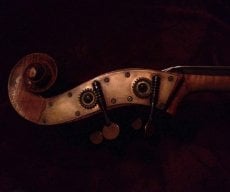
 
From your description, it's hard to visualize the problem. Could you post a photo, with a pencil point showing where you believe the problem stems from?

I've had old basses with loose, rattling machines fixed with electrical tape, solder and all manner of contrivances. All were ugly, and none of which you should have to live with on a new bass that you just bought. Call the shop.
 
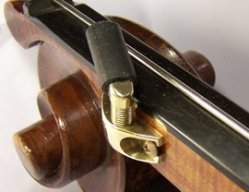
Here's a terrible picture.
0608122112.jpg

The arrow is pointing to a small indent on the head, but there doesn't seem to be any way to tighten it whatsoever. The key is basically able to be rattled around. This is only a problem when playing arco, however.
 
Thanks for clarifying. That's pretty much where I figure the problem would be but didn't want to assume and lead you in the wrong direction.

The German plywood I recently sold developed a rattle for the same reason. A blob of solder (not PC board solder, welding solder) fixed it but, as I said above, it wasn't purdy.
 
Hmm.. Well I guess I can see if I can find a way to hold it in place for now, but I'll definitely be taking it to the shop again. Was hoping I wouldn't have to make another trip so soon, I just got it today. /:
 
Hi, portphilia,
I had the same problem exactly and took the bass to my luthier. He said that the wing of the tuning machine was slightly loose inside the slit of its axis - and fitted it with a tiny drop of Loctite. Said it was a common problem and that I could do it again if the problem returned.
 
Hi, portphilia,
I had the same problem exactly and took the bass to my luthier. He said that the wing of the tuning machine was slightly loose inside the slit of its axis - and fitted it with a tiny drop of Loctite. Said it was a common problem and that I could do it again if the problem returned.

It's a common problem. The blade of the tuner pivots on a pin, kind of an axle for want of a better word. Mine on the "D" tuner is slightly loose but since it doesn't buzz I just ignore it. If it does give me a problem, I'll carefully give it a few taps with hammer, I would probably have to take the tuner machine off of the bass so it can be laid on an anvil, but a trusty helper holding steel plate on the underside of the key would probably work, too.
It you look closely (at mine), you can see that that was how it was done. The blade was inserted, placed on the pin and tapped (peened ?) shut. Locktite sounds like a possible soulution. I would stay awy from any brazing or soldiering.
 
It's a common problem. The blade of the tuner pivots on a pin, kind of an axle for want of a better word. Mine on the "D" tuner is slightly loose but since it doesn't buzz I just ignore it. If it does give me a problem, I'll carefully give it a few taps with hammer, I would probably have to take the tuner machine off of the bass so it can be laid on an anvil, but a trusty helper holding steel plate on the underside of the key would probably work, too.
It you look closely (at mine), you can see that that was how it was done. The blade was inserted, placed on the pin and tapped (peened ?) shut. Locktite sounds like a possible soulution. I would stay awy from any brazing or soldiering.

I would use a drop of Krazy Glue, because it's transparent and pretty tuff.
 
VERY CAREFULLY if using a hammer!!

I've fixed that problem with the tiniest dab of clear silicone(painter's caulk) and a wet paper towel..put the dab where the blade meets the pin,and work it in/wipe it clean with the wet towel. It stays flexible so it won't flake like Krazy Glue..I've tried Krazy Glue also but it tended to flake from being brittle when cured and no way to properly scuff the glued surfaces for a good 'stick' on an often stressed part..
 
It's brand new from a reputable shop. There's no need for DIY dirty work. Take it back to the shop and insist on a replacement part at their expense.

WIN

Also from my experience superglue will work for a short time, but since it is a very brittle glue it will crack in time and you've got a bigger mess than before.

I've had much success in soldering, and with a little caution and some steel wool you can barely tell that it was soldered. The solder is flexible enough that it will absorb any shock (that would otherwise crack the superglue) and I've yet to have a bass come back where this method has failed.

But again take it back to the shop :)
 
Just dealt with this problem on my Squier Jazz last night, actually. Picked it up at a yard sale, $30.

Just about broke my arm with a pair of pliers (put some paper between to prevent scuff), then masked the key with masking tape and filled the rest with a few applications of super glue. Time will tell.