My band plays in D# Standard. It won’t take much effort. Just tune it, let the neck settle for a bit and make adjustments to the truss and intonation.
Last edited:

TalkBass has been independent since 1998. Add your voice.
Create a free account to reply to discussions, view embedded media, and browse with fewer display ads.
Join free Log in
Want zero display ads or expanded classifieds tools? Compare plans.


It only becomes challenging when the guitarist insists on calling the chord E when it's actually F - he confuses the fingering shape with the chord. So you can go with him and tune up - then you too are a liar, or your can stay in standard tuning and play the real notes recognizing that the guitarist is wrong, or get the guitarist to stop calling an F an E. Good luck getting the guitarist to change.However communications become challenging now that everything gets translated.
Since when is tuning up a semitone Eflat?Maybe I'm missing something, but...
The guitarist is tuning to Eb. So I'd just tune down to Eb and call it good.

I'm just curious, what kinds of venues and what genre do you play a 1200 song rep and make good money? And how do you choose which 20, 30 or so of those you will do on any given night?

My guitar player wants to tune his strings up a semitone. Currently he plays in open D, so I guess now we are going to try open Eb... what I'm wondering is:
1. Has anyone here ever tried this?
2. What did it do to your set up?
3. Any particular strings that you would recommend?
He’s playing in OPEN D. Tuning up a half step would be open Eb.Since when is tuning up a semitone Eflat?
What brand/type/gauges of strings do you normally use for the standard tuning?
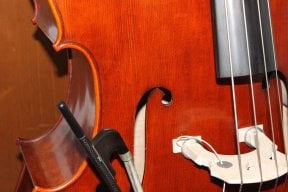
Sorry, this was the first response and I totally missed it. Currently using Fender 7250 nickel plated strings, .045 - .125

Sorry, this was the first response and I totally missed it. Currently using Fender 7250 nickel plated strings, .045 - .125

This is my standard answer (bass is a 12-key instrument!), but I don't play genres that are dependent on a lot of open strings. I don't have a problem playing standards in Eb on any standard tuned bass (4,5 or 6 string).
But if the bass parts have a lot of low Eb pedal tones, and the riffs center around open, down-tuned guitar strings, and the set list is mainly songs in keys corresponding to open, down-tuned guitar strings.... I can see down-tuning the bass.
It's not like you're going to have some diva singer want to sit in and do a song transposed up a fourth or fifth.
Since when is tuning up a semitone Eflat?

Just to be clear for anybody: OP seems to go for an Open Eb tuning. Since he is now in open D/ E standard (D/E,A,D,G)this means his A,D,and G string had to come up a half step. Tuning therfore would be Eb,Bb,Eb,Ab.
In regards to set up and/ or adjustments i think it all comes down how rigid the neck of your bass is. If it's realy hard, there is a good chance that no adjustment is necessary. If not so, just do the adjustments. Its not to difficult and a good way to get more familar with your instrument anyway.

For your situation, I would tune up the semitone. You’ll have to try it, to see if it requires truss rod/intonation adjustments, but it’s not a big change. You could also look at lighter strings.Yes and no... the guitarist is tuning up from open D to open Eb. I will be tuning up from B E A D G to C F Bb Eb Ab.
The bassist is currently tuning BEADG. Tuning this up a semitone is not Eflat.He’s playing in OPEN D. Tuning up a half step would be open Eb.

Or just play as you are tuned and transpose to meet the guitar.
You both don't have to be the same tuning at all.
However communications become challenging now that everything gets translated.
My solution is a 5'er in standard tuning. I play in lots of keys (church gigs where singers call the keys) - transposing is our superpower.


