
Enjoy the benefits of a premium membership!
Upgrade Account
-
TalkBass has been independent since 1998. Add your voice.
Create a free account to reply to discussions, view embedded media, and browse with fewer display ads.
Join free Log in
Want zero display ads or expanded classifieds tools? Compare plans.
You are using an out of date browser. It may not display this or other websites correctly.
You should upgrade or use an alternative browser.
You should upgrade or use an alternative browser.
Two Cabs - positioning
- Thread starter Mr_Martin
- Start date
More options
Who Replied?

Try this: drop a pebble in a pond and look at the waves radiate evenly. Now drop two pebbles about 6" apart at the same time. You will notice weird wave front interference where the wave from one pebble collides with the wave from another.
The one pebble bounced off the ice. Two pebbles also bounced off the ice. I suppose this might work better when winter is over...
 Or it's a good example of what happens to your sound when you get a cold reception from the audience....

Chef
In Memoriam
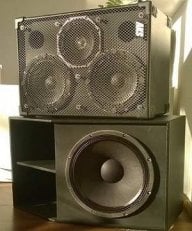
I have a GK 212_II now, so i want to add another GK 212_II.
But when i read what "Joe Nerve" said i'm not sure if it will be loud enough.
Two GK 212 Neos is hella loud. I have it. I seldom use it; as it's just too much...Hardly "a nightmare" as one poster suggested. Just too much for most of the smaller, "reasonable volume" shows I do. No need for that much rig on stage, with my bands anyway.
I have two GK Neo 112's as well. I use those much more often; stacked vertically as in scenario one.
I don't know why JoeNerve was underwhelmed by GK cabs; I find them to work really well for me.
Chef
In Memoriam
The whole "410's/412's etc can't/don't/won't work and are subject to horrid comb filtering that ruins everything for everyone" position just doesn't hold water with me.
I don't deny that this or that cab setup has this or that property. But to take that position so far as to say 410's/412's etc are untenable non-working gear that makes musicians and audiences suffer horribly is just balderdash. I used 410's, 2x410, 810's, 412's etc for much of my working career, and never, ever, ever, ever had a band member, audience member or sound engineer complain about them; ever. Through thousands and thousands of shows and sessions.
For the post part, now, as I'm not in some Gigantic Touring Roadshow that needs Gigantic Touring Roadshow rigs for either sound or looks; I use two 112 cabs stacked vertically. Smaller, lighter, easier to move, and the 2x112 stacked vertically gets the sound up in my ears for better personal monitoring, much like the taller setups I mentioned above.
I don't deny that this or that cab setup has this or that property. But to take that position so far as to say 410's/412's etc are untenable non-working gear that makes musicians and audiences suffer horribly is just balderdash. I used 410's, 2x410, 810's, 412's etc for much of my working career, and never, ever, ever, ever had a band member, audience member or sound engineer complain about them; ever. Through thousands and thousands of shows and sessions.
For the post part, now, as I'm not in some Gigantic Touring Roadshow that needs Gigantic Touring Roadshow rigs for either sound or looks; I use two 112 cabs stacked vertically. Smaller, lighter, easier to move, and the 2x112 stacked vertically gets the sound up in my ears for better personal monitoring, much like the taller setups I mentioned above.
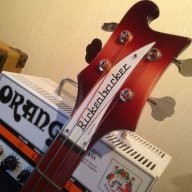
Two GK 212 Neos is hella loud. I have it. I seldom use it; as it's just too much...Hardly "a nightmare" as one poster suggested.
Nightmare in regards to comb filtering. This gets into philosophical differences and design goals, no disrespect intended. It's all about education. Rather than me discuss all 210, 410, 610 212, 412, designs, etc., I'll use one example.
Lets take the venerable Ampeg 'Fridge, probably the most successful cab in bassdom. (And if not, certainly the most recognized.) Its unique grind and growl comes from two things, and one of them is a mistake (or an overlooked/disregarded engineering principle). The sealed cabs created a cool distortion as the drivers struggle to produce lows sent by the head. That is the signature sound of a seal cab. It's cool, lots of people love it. The other characteristic of its sound is the comb filtering from the side x side drivers. Technically, an engineering mistake, but that produced a unique grindy growl in the mids. Sort of a happy accident. People love the 'Fridge, not trying to bash anyones' love for it here.
No, doesn't ruin everything for everyone at all. Just some things for some of the people. What happens is that the cool mid growl is not spread evenly across the playing or listening area. It sounds great here at X marks the spot, but as you walk across, then it sounds weird. Then it sounds good again as you continue across the listening area. You wind up with this pattern of sounds great, sounds weird, great, weird, so only half of the listening area gets the cool neato sound you are striving for, the other half gets weird sound. And for lots of players and audience members, that's fine. No big deal, no one gets hurt, etc. But if one's goal is to have even dispersion with the most people able to get the same listening experience, side x side drivers are not going to deliver that in the frequencies over approx 500Hz. Only vertically stacked drivers can. (Yeah, okay, a .5 aligned side x side driver cab can work as well for those techies who are out there looking for some gotcha moment.The whole "410's/412's etc can't/don't/won't work and are subject to horrid comb filtering that ruins everything for everyone" position just doesn't hold water with me.
 )
)
Last edited:

... Why do people use 410, 610, 810, or set cabs together side x side? Because they saw the other guy do it, and it is stuck in the zeitgeist now. ... The general principle of driver placement to mask destructive interference with the other driver (combing), and maximize dispersion, is to stack vertically for horizontal dispersion. ...
Try this: drop a pebble in a pond and look at the waves radiate evenly. Now drop two pebbles about 6" apart at the same time. You will notice weird wave front interference where the wave from one pebble collides with the wave from another. There's lots of diagrams to Google for that illustrate it better than me.

But doesn't the "staggered/diagonal" driver placement of these specific cabs alleviate the comb filtering to a great extent? Not as advantageous as completely vertical, but much better than horizontal.
Last edited:
Not really. Just makes the cab a bit narrower for easier placement. Any improvement in comb filtering is negligible.
But doesn't the "staggered/diagonal" driver placement of these specific cabs alleviate the comb filtering to a great extent? Not as advantageous as completely vertical, but much better than horizontal.

Yes, it will sound fine so long as you are standing at about a 45º angle to the floor.
But doesn't the "staggered/diagonal" driver placement of these specific cabs alleviate the comb filtering to a great extent? Not as advantageous as completely vertical, but much better than horizontal.

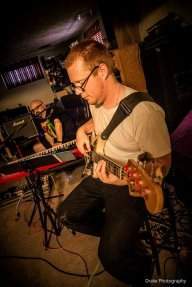
From a non-engineering, I tried these setups and these are my non expert thoughts, standpoint. I prefer the third setup when available. It gives you a great monitoring setup and helps me regulate my volume by keeping it close to the ear.
Not a 212 fan, cept the swr bigfoot ill kill for one, but the 2x212 and 412 rigs ive heard, particularly the Gk, are louder than new England in the last 30 seconds of this years super bowl.
Not a 212 fan, cept the swr bigfoot ill kill for one, but the 2x212 and 412 rigs ive heard, particularly the Gk, are louder than new England in the last 30 seconds of this years super bowl.
I was at a TB GTG on saturdayI have a GK 212_II now, so i want to add another GK 212_II.
But when i read what "Joe Nerve" said i'm not sure if it will be loud enough.
one of the members had a Bag End 1 15 cab-it was smaller than my 1 12 cab.
that cab went to volume levels I couldn't believe to the point where it hurt my insides and sounded excellent. that was with a 350 watt head too.
something is wrong if 4 12's cant get er done.

Ric5
Inactive
- Jan 29, 2008
- 29,772
- 30,452
- Disclosures
- I like 5, 8, 10, and 12 string basses

real-world, anything besides the vertical stack is silly.
as for the combing "problem" of the SVT cab, maybe the band doesn't want the mids and highs from the bass rig spreading out all over the stage; maybe keeping them focused in front of the cab (and thus in front of just the bass player) is a good thing, to help the bass player with pitch recognition while not stepping on the mids and highs of the rest of the stage sound for the other players.
as for the combing "problem" of the SVT cab, maybe the band doesn't want the mids and highs from the bass rig spreading out all over the stage; maybe keeping them focused in front of the cab (and thus in front of just the bass player) is a good thing, to help the bass player with pitch recognition while not stepping on the mids and highs of the rest of the stage sound for the other players.

I wonder at what frequency the comb filtering starts? It may be too high to cause any problems for most of us. It seems it would not start until around 800-1000 Hz where the wavelength is about 1.1-1.3 feet. For guitars, sure. For bass- ?
Also - yes- stacking speakers increases horizontal dispersion. That's why column speakers are used for PA.
Also - yes- stacking speakers increases horizontal dispersion. That's why column speakers are used for PA.

#1 end of story. Two words: "coupling gain." The weight of the top cabinet increases the resonance of both cabinets, and you get a few extra dB. Its greater than the sum of its parts and absolutely the most efficient way.
You'll also have the best of both worlds: one cab touching the floor to shake the room and the other up closer to your ears.
You'll also have the best of both worlds: one cab touching the floor to shake the room and the other up closer to your ears.


- May 9, 2008
- 4,081
- 1,236
- Disclosures
- Proprietor Springvale Studios
What should be clearly pointed out here, is that the comb filtering effect starts to occur off axis with laterally mounted twin loudspeaker setups.
That's why figure 1 suffers the least comb filtering effect, laterally across the auditorium.
The time it takes at circa 1 millisecond a foot for the ear to hear the signal from the top cab, is the same as the bottom cab wherever you stand.
However walls return echos of the original signal causing pockets of comb filtering in areas close to them.
Thus to overcome this issue it is important to only measure off axis response in rooms designed thus.
Now having connected a microphone or DI to the vertically aligned bass rig, don't under any circumstances play those signals via any other amplification system, PA ETC into the auditorium unless the cabinets are vertically aligned with the bass rig and are in coincedent phase with the output of the bass rig at all frequencies.
(It's obvious that any mixing of speakers/crossover types etc should be avoided at all costs, so a decision now has to be made by the mixing speakers Police, at this point the only option is to remove any PA support or go to comb filtering jail)
Also any spill from our bass rig into vocal or other instruments microphones placed other than exactly where the bass rig stands are liable to let the dreaded comb filtering effects into our acoustically phase aligned perfect world.
Leaving the only non comb filtering option available, a single centrally positioned mono 360 degree point source PA and no bass rig at all.
Still having a slight problem with comb filtering from the roof?, so In the absence of an anechoic chamber never play indoors or near other buildings or reflective surfaces, or allow your audience or other band mates to listen to you play, other than from a gig where the PA and audience are all suspended above the ground by cables or better still as cables have their own resonance problems, obviously highly acoustically absorbent hot air balloons in perfectly still air are the only option for not having any comb filtering at all.

Here at Springvale Studios we are allways prepared to go that extra mile, to avoid any sonic perturbations.
That's why figure 1 suffers the least comb filtering effect, laterally across the auditorium.
The time it takes at circa 1 millisecond a foot for the ear to hear the signal from the top cab, is the same as the bottom cab wherever you stand.
However walls return echos of the original signal causing pockets of comb filtering in areas close to them.
Thus to overcome this issue it is important to only measure off axis response in rooms designed thus.
Now having connected a microphone or DI to the vertically aligned bass rig, don't under any circumstances play those signals via any other amplification system, PA ETC into the auditorium unless the cabinets are vertically aligned with the bass rig and are in coincedent phase with the output of the bass rig at all frequencies.
(It's obvious that any mixing of speakers/crossover types etc should be avoided at all costs, so a decision now has to be made by the mixing speakers Police, at this point the only option is to remove any PA support or go to comb filtering jail)
Also any spill from our bass rig into vocal or other instruments microphones placed other than exactly where the bass rig stands are liable to let the dreaded comb filtering effects into our acoustically phase aligned perfect world.
Leaving the only non comb filtering option available, a single centrally positioned mono 360 degree point source PA and no bass rig at all.
Still having a slight problem with comb filtering from the roof?, so In the absence of an anechoic chamber never play indoors or near other buildings or reflective surfaces, or allow your audience or other band mates to listen to you play, other than from a gig where the PA and audience are all suspended above the ground by cables or better still as cables have their own resonance problems, obviously highly acoustically absorbent hot air balloons in perfectly still air are the only option for not having any comb filtering at all.
Here at Springvale Studios we are allways prepared to go that extra mile, to avoid any sonic perturbations.
Last edited:

Vertical stack, #1. I have "x" amount of available floor space on any given stage and have to work within the spatial constraints. Sounds better, too.
Riis
Riis
Perhaps no.1.... or.. stacked like the no.1 but on the table? CMIIWWhat is the most efficient positioning concerning driver coupling, bass frequencies, loudness etc.
And what are the advantages/disadvantages of these three different positions in the rehearsal room?
View attachment 551796
Very informative thread.
I once put Peavey 1810 cabinets on opposite ends of the stage in an outdoor gig.
No chance of wall bounce cancellation.
Guitar player said his sounded terrible.
Mine sounded great.
I once put Peavey 1810 cabinets on opposite ends of the stage in an outdoor gig.
No chance of wall bounce cancellation.
Guitar player said his sounded terrible.
Mine sounded great.
If two cabs side by side will cancel, wouldnt two drivers side by side in the same cab do the same?


