• TalkBass has been independent since 1998. Add your voice.
    Create a free account to reply to discussions, view embedded media, and browse with fewer display ads.
    Join freeLog in
    Want zero display ads or expanded classifieds tools? Compare plans.

Two octave scales

I remember worrying when I was asked to play two octave scales and arpeggios back in the days of grades and exams. There seemed to be endless ways to play a scale in two octaves. Eventually I settled on this easy method of extending the one octave scales using the same pattern with a few simple position shifts:


I also tried out a 4 note per string method but I really liked this system so I stuck with it. Now I don't even really think of 2 octave scales in the way because it's easier to just think of bridging a gap between a lower and upper position and just working up in any way that seems appropriate but for anyone that likes a solid, reliable pattern to work from, this system is really easy to learn.

I don't see many lessons or articles on 2 octave scales so I thought it might be useful.
 
Solid. Thanks! As I've been working on increasing my command of the fretboard, scales are one thing I've slacked on, due perhaps to unreadiness to tackle two-octave patterns. But this is logical and doesn't require insane stretches, but does require practicing smooth position shifts.

If I study these and couple them with the pattern that has stretches (e.g. G maj scale with G-A-B on the E string, up to C-D-E on the A string), that gives me much-needed exercise in moving around in different ways, perfect for helping dive into new songs with more fretboard flexibility.

Next up for me will be two-octave arpeggios, and a couple of modes and the minor pentatonic (& blues) scales. After I learn the majors thoroughly, that is.
 
I found this on a different thread, but it seems to be a pretty solid pattern. I tried googling for two octave minor scales and came to the Dummies page, but then it had a spot where you had to shift and then switch fingers, which I found confusing. This guy seems to have it better.

I'm linking to his front page so you can go to multiple different scales from there.

Link Removed
 
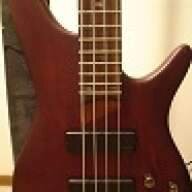
Cheers. It's an Ibanez SR1000 from roughly the 1990-1992 era. I bought it in about 1993. Use it mainly for solo stuff or anything where I need to play fast intricate lines because of the 24 frets and the ridiculous guitar thin neck. I use the Marcus Miller Fender for most bread and butter gigs. I find that's better as a one size fits all instrument.

Your videos are excellent quality, well paced, a minimum of nor-relavant patter and instructionally sound. Good Luck! I hope more TBers will tune in for your stuff.