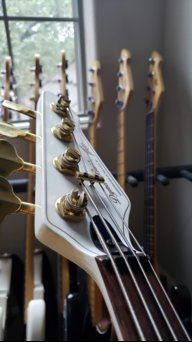
Just a quick 2 questions also. Wouldn't the neck construction of the T-40 contribute heavily to the unique sound that the bass produces, besides other factors like Peavey's own wound pickups and heavy mass bridge, metal nut etc.
Q1. I gather that Peavey were the first manufacturer, and correct me if i'm wrong here, to produce a bi-laminated neck with the T-40? In other words they took a length of maple, sawed it longways into 2 pieces and reversed one side, inserted the stainless steel truss rod before gluing back together the two halves with the opposing grain along the neck length. That would make for a really solid stable neck with no extra fingerboard added and the finished maple surface was the actual playing surface. The only added boards of course were the rosewood fingerboards laid on top of the maple, which surely would give a different sound compared to the maple as well?
On a side-note I have owned my rosewood fingerboard Dyna Bass since 1991 and never realised that the neck may have been constructed that way too until I read about the T-40 method. I checked the back of the Dyna's neck and sure enough there is a fine seam line down the middle length of the neck, something over the years I have never noticed as it is that fine a join.
Q2. Are all Peavey model bass necks made the same way seeing as how the T-40 was so successful???
Now surely that style of making a stable bass guitar neck, besides the other contributing factors aforementioned, would add to the unique sound of the Peavey basses, especially the flagship T-40?