• TalkBass has been independent since 1998. Add your voice.
    Create a free account to reply to discussions, view embedded media, and browse with fewer display ads.
    Join freeLog in
    Want zero display ads or expanded classifieds tools? Compare plans.

Ultra Light Weight Bass Cabinet

I don"t think that Flite uses this technology. As I remember it was some sort of cardboard honeycomb with some sort of plastic or resin panels. They might have changed, though. But at their price point (very reasonable) I doubt it.
A honeycomb construction with only the outside of the comb sheathed offers a couple of major advantages. First is the far higher internal to external box volume ratio, as you don't give up internal volume to foam. Second is damping of internal low frequency reflections. A hi-fi design from the 50s used a honeycomb interior for just that purpose. It's a technique easily done by the DIYer, making their own honeycomb from 1/8" BB, but it is very time consuming.
Does that simulator allow you to continuously vary the phase and magnitude of each source? Those graphics suggest identical phase and equal SPL from each source. Also once you get up to rock band SPL there's a whole host of non-linearities involved. And how do the pressure modes transform to velocity modes and deliver the wave?
More pertinent is the wavelength shown. If the expanse of one color shows a 1/2 wavelength period the results would be quite different when that dimension is four times or more the depth of the cabinet, as would be the case with port radiation frequencies.
The main advantage to spread ports happens inside the cab. With very long excursion drivers unequal pressure within the box can result in rocking of the cone; spread ports equalizes internal pressures to reduce cone rocking.
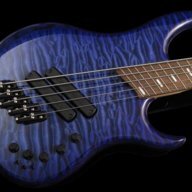
 
That's some beautiful composite work.

I worked in the composite industry for a few years. I assure you, a decent vacuum bag can be done for a few bucks. All you need is the film, some goopy putty (for the seal) and a good pump (a good vacuum cleaner is usually sufficient). You have to know what you're doing, i.e., keep your fibers straight and ALWAYS bag into a female mold, not a male mold.

It is a lot of work setting up a re-usable mold, but once set up you can whip off a dozen easy.

If you have an existing prototype made of any material you can use that to make your molds in just a few hours. I would use silicon stuff by 3M (I forget the name) that's made specifically to make molds off of prototypes. For large parts you may need to cure and use the mold flat on the floor or build a scaffold into the silicon molding material that it can cure around. Otherwise the resulting mold is floppy and useless.

I'm glad someone else is building it.
 
"My goal on this build was to make a bass cabinet under 30 pounds, over 120 db-spl, and flat from 30-18K." (and light weight?) !!!!!!!!!!!!!!!!!!

YEAH RIGHT!!!!!!!!!!!!!???????????????

Isn't this goal pretty much impossible? Down to 30hz? 120db-spl of loudness? Flat response through 30 to 18K?

I'm not an engineer. Over the past 40 years I've read article after article on audiophile speakers and there is always a trade-off with high efficiency and low efficiency speakers.

Low efficiency speakers have the better sound but they are not loud. High efficiency speakers are loud but not as accurate in sound as the other.

Year after year after year there is this endless quest for the "perfect stereo speaker". The quest continues.

How can a DIY kind of guy/bassist build something better than what's already available commercially?

Not promoting Mr. Andy Lewis and his Acmes but read about his dilemma in trying to build "the perfect bass cab". His highly rated cabs have custom built speakers by Emminence. Mr. Bergantino also uses custom built speakers by them. These speakers are not available to the public.

In a nut shell, Andy states that if ya want the low hz to produce the low B string on a 5er bass, then one ends up with a low 90s db range bass cab. Ya want loudness? Then, one looses low end not even producing the E string's hz!!!!

As for a light weight non-resonate cab of fiberglass or whatever..............GO FOR IT! I wonder why already established bass cab makers are not using it????? Or why Hi Fi Stereo Audiophile speakers are not made of it???

The quest for the perfect bass cab! Perhaps someday. Hopefully it'll be affordable too. Ya think?
 
As with everything it's a matter of choosing your compromises. 30hz in a bassist's cab is not only nearly impossible, it's not advisable. I doubt if a bassist has ever heard 30hz let alone want it in their sound. When one hears a big deep bass he's likely hearing the first harmonic. Especially with the B string. And I don't agree that the established makers have some sort of magic or genius that is unattainable in non-commercial enterprises
I made my own cabs for 25 years because I wasn't pleased with what was available. I'm just a bassist, not an engineer. But I have a really good ear. So although I used what available info was out there, I depended on my ear (and to be honest, many unsuccessful cabs) and came up with cabs that were better (for my needs) than any available commercial cabs. So much so that there are still a few dozen cabs around here in Chicago that I reluctantly built for local players in use.
Around 2000 (since I was an endorser ) I'd go down to the Lakland factory. He'd always have the best new cabs around. I then realized that the state of the art in bass cabs was substantially higher. And mostly a lot lighter than my 3/4 Baltic cabs. So I got an endorsement with EA and was in lightweight bliss for 8 years. Recently I realized that there were better cabs out there that were an improvement . Which led me to the Thunderchild. Which is the best cab I've ever owned.
I'm building my own cabs now to fill in what the Thunderchild won't do. (like weighing less than 20# for the many small jazz gigs that I do). With the very generous help of many of the much more knowledgeable guys out there than me. The composite cabs will likely never be available on a larger commercial scale due to the small profits due to time consuming production.
 
  • Like
Reactions: DavesnothereCA
These speakers are not available to the public.
True, but OEM drivers don't break the laws of physics either. While you may not be able to buy the exact same drivers off the shelf you can find drivers that are comparable and get comparable results.
As to the rest of your post, those all well known design limitations covered by Hoffman's Iron Law, which only Chuck Norris can break. :eek:
So yes, the OP cannot achieve impossible response versus sensitivity versus cabinet size goals. But he can get a very good result while saving a lot of weight.
I wonder why already established bass cab makers are not using it????? Or why Hi Fi Stereo Audiophile speakers are not made of it???
Price. They do exist, and they don't come cheap.
 
Going back to the Flite sound cabs, my understanding it they are a lightweight foam core with a layer of thin plywood on either side. I believe there was a thread here many moons ago that showed pics of the insides of one.

I don't know if they changed their design along the way. I do know that a friend of mine tried to order one a few years ago and came up empty. He came away with the impression that the business itself has pretty much stopped being a business and only produces cabs occasionally.

That's a shame but not surprising. IMO the future for cabs like these is in DIY, and possibly in small scale custom boutique builds made to order. The amount I time and labour involved is always going to make it very hard to compete price wise with robots spitting out wooden rectangles.
 
Bogey, what sim program are you using? Can you post a few screenshots of a model of behavior at say half an octave below port tuning?

Hey guys i already felt my first post was some what of a hijack, so i feel the thread has moved past it. I dont want to hijack the thread or upset anybody. I just figured it would be neat to see.
My main point was that from all the models i have seen, Using 4 ports per driver placed evenly/ symmetrically around the driver resulted in the best performance. And likewise if the ports are more symmetrical to the enclosure performance seemed to be better as well.

Otherwise the software is only known by its internal name and is not yet available to the public. Keep in mind to even run this on my desktop computer i have to keep the resolution very low and the overall viewable space low as well. You need a rather hefty computer to run the newer versions. I was just a basic tester am no longer involved with it.

This model assumes a perfect piston capable of producing a clean sinewave at any frequency. so most likely will not model what really happens 1/2 or an Octave below tuning. And in the real world we all know/heard what happens below tuning freq

I did make some screenshots per request.

this is 1/2 octave below tune, as far as i can see the pressure exceeds the volume, and the ports will start to resonant before the waveform leaves the cone, depending on the volume and port size determines how well this goes without distortion.
the screenshot doesnt show this since i captured it at the same point in the cycle as the others

[Invalid or Expired Link Removed]

going one octave below turns into a mess, i took this screenshot earlier in the cycle to show you how port energy, starts to show before the next 1/2 cycle starts at the cone.
you can see the green negative pressure still leaving the baffle. and the port doesnt really resonant and is starting to become just a vent for all the pressure and causes distortion.

[Invalid or Expired Link Removed]

and likewise to bass unique and alexclaber, phase and magnitude, multiple pistons and whole bunch of functions are available in later versions. Including reflection and absorption to model floors, walls etc and the ability to view complex waveforms instead of just a sinewave.
 
"My goal on this build was to make a bass cabinet under 30 pounds, over 120 db-spl, and flat from 30-18K." (and light weight?) !!!!!!!!!!!!!!!!!!

YEAH RIGHT!!!!!!!!!!!!!???????????????

Isn't this goal pretty much impossible? Down to 30hz? 120db-spl of loudness? Flat response through 30 to 18K?

I'm not an engineer. Over the past 40 years I've read article after article on audiophile speakers and there is always a trade-off with high efficiency and low efficiency speakers.

Low efficiency speakers have the better sound but they are not loud. High efficiency speakers are loud but not as accurate in sound as the other.

Year after year after year there is this endless quest for the "perfect stereo speaker". The quest continues.

How can a DIY kind of guy/bassist build something better than what's already available commercially?....

The above is exactly what I am trying to achieve and make a design available to you all FOC for building! If you see the thread on Transmission line cabs I post some actual outdoor results towards the end of my "hybrid".

Flat to 30 Hz is not easy in any cab on free space, however, most of us have some boundary reinforcement either in rooms or stages. My hope is to achieve flat to 30 Hz in real world conditions (to cope with a B string output properly) and also provide enough punch higher up which is not normally available in an extended shelf bass alignment. I have measured around 95 to 96 dB/W using a 3012LF in a total volume of 86 litres (giving 121 to 122 dB max). This does include a frequency specific mass loading effect which I am now modelling and hopeing to make it robust enough to transfer to smaller boxes, a crossover and large mid. This typically means the box can be around 1/3 smaller than conventional reflex designs for the same alignment.

In terms of afordability, it should be cheap to build yourself and cover in whatever finish you desire. Cab material costs run to around £120 ($200?)

Weight -my prototype was 22 kgs (around 48 lbs.) however, I believe I could construct this with a lighter thinner material (as it is so heavily braced, without any sonic degradation). which means the final version should be up to 6 kgs lighter (depending on finish) so around 35 to 40 lbs.

Dont mean to hyjack thread so if you want to learn more, PM me. More details provided in another thread when I have the plans.:bassist:
 
Barefaced Big Baby Barefaced Bass - Big Baby
USABLE Frequency RANGE
30Hz - 10kHz (Big Baby)
30Hz - 22kHz (Big Baby T)
30Hz - 1kHz (Baby Sub)

Weight
34 lbs (Big Baby)
36 lbs (Big Baby T)
29 lbs (Baby Sub)

Hi there MoscowBass -

The discussion you have on your site about "punch" is probably one of the best I've seen. "What exactly is punch?". Really well done, thanks for that, I think that is worthy of a thread all by itself!

That helps define the vocabulary, and get us aligned on a common way of talking about Bass tone. Really cool.

Rob
 
Barefaced looks awesome! It's interesting to see how Phil Jones and Barefaced looked at the same problem and came up with very different solutions. Phil uses brute force: aluminum cones so it doesn't shred, and resonance. Barefaced uses electronics and special purpose speakers to overcome the limits of the speakers.

I'd love to hear one.
 
I suggest using helium filled aluminium alloy foam core with asymmetrically spaced aluminium stringers (and support rings for the drivers) and carbon fibre skin. Nice and rigid, but light. Not too expensive, either, if you already have the facilities to produce the foam and cure the carbon fibre products.... Which do cost a fair amount, I must admit. :D :help:
 
Usable frequency response is likely -10db. I know that the Barefaced cabs are very well engineered and executed---I wanted to buy one if it weren't for a crappy exchange rate and shipping. It's what inspired me to start making my own cabs!
All of the designers here are using the same (or very similar--the OEM 3012's are really only slightly different than the stock ones--not HUGE differences) drivers and technologies. The designers pick and choose compromises that serve their design goals. A cab that is is -10db at 30 hz is likely -3db at likely 42 hz or so. (which much better represents what the speaker does in real world situations)
Don't get me wrong, this is not at all a criticism of the Barefaced cabs. They appear well thought out and executed and are likely competitive with the best out there. The differences between the -3db and -10 db points tells a lot about the chosen bass response but can be confusing when looking at specs. Most bassists can't interpolate the real world difference between a cab with a published -3db response and a published -10db response.
Again, there is no magic here---just compromises between enclosure size, driver response, etc. Roger Baer uses a variation of the 3012ho driver because even though it didn't have quite the low end extension of the 3012lf, he and others that tried his early cabs liked the SOUND and response of the driver closer to the 3012ho. (his is a special OEM) His cab is a bit bigger than some of the other small 12's, but it's what he needed to get the best low end extension. And from the reviews I've heard his cab has a great low end. But it's -3db at 55hz and -10db at 40hz. If he chose a 3012lf based cab it could be smaller to get the same low end response. But he liked the sound and response of his driver.
I play lots of big concerts around the world and sometimes the Pa guys think that they're doing me a favor by giving me a flatter response down to 40hz. I can barely play with that much low end! Everyone in the band is immediately like "way too much bass" And I agree. On electric or upright. For my context. I am still adament about the fact that if a bassist were to have an analyzer hooked up and he got "a good low end" he'd be very surprised to see what the real low end wound up being.
 
  • Like
Reactions: DavesnothereCA
I think the bass response that people like varies for a number of reasons due to the venues they (but also because of personal preference, music genre and instrument balance which can be massive):

1) They play mostly in small pubs/clubs

2) They play in large clubs or on theatre stages

3) The play in large theatres or outdoors right up to stadiums...

Number 1 would require the least bass boost as the room would provide a lot of extra low end. Too much output in the 70 to 140 Hz region and not enough around 40 Hz can make cabs sound boomy and uneven. A lower level but much flatter and deeper response would actually minimise boom in this region. Just dont turn up the bass control as much as you used to and try to keep the speaker out of the corners... you are probably used to a coloured sound.

2) The larger clubs and small theatres would support much longer wavelengths. However, a relatively small speaker would not really give enough low end so people tend to boost the bass significantly. This usually results again in too much 60 to 120 Hz and not enough bottom so again sound really "full" but not adequately deep. Better to turn the bass down in these venues and utilise more of the room mode support if you can - place the speaker as close to a backwall or corner as practicable to boost the lowest modes instead which are less likely to sound boomy than small venues. PA support is likely to be included but with smallish PA speakers/subs, they probably also dont go deep enough to match your cab, bringing back the boomy effect.

3) The biggest venues and outdoors will give the impression of a low level of bass from your rig so again you tend to turn it up on the amp. However, it is less likely you can get near to a corner for room support and you may tend to run out of amp headroom. You need a bigger rig with more power than bass as a monitor (also as you may be further from the speakers than usual). Use larger or more speakers. But here, your PA support would do most of the work at launching the low frequencies to the audience. On stage, you turn it up to compensate for the poor sound engineers response or peaks and troughs on the stage due to cancellations between the two systems which makes the on stage level too bassy or inaudible. Dont blame your bass cab... its probably in the wrong position.

Remember, what people are used to is possibly not flat. Most cabs give an impression of bass without really offering the low end. The harmonics define the instrument. If it were all bottom end, they would all sound pretty much the same. What matters is that you can hear yourself and your audience dont get a one note bass effect. It should not hurt your sound at all to be flat response - it should highlight different instruments or effects. Just dont turn it up too much at the low end on your amp or push your speaker too hard.
 
  • Like
Reactions: DavesnothereCA
If he chose a 3012lf based cab it could be smaller to get the same low end response. But he liked the sound and response of his driver.
The 3012LF will go lower than a 3012HO, but it needs a larger cab to do it, not smaller. I haven't seen any OEM versions of the 3012LF, but as always if you place a big enough order you can get one made for you. I've seen quite a few OEM versions of the 3012HO, all with a lower Fs than the 3012HO, but otherwise very similar. Eminence could have run with three 3012 versions, the LF, standard and HO. The LF for subwoofers, standard for electric bass, HO for PA tops. They didn't, leaving the 'standard' option an OEM only, and those seem to be what's finding their way into most bass cabs.
 
  • Like
Reactions: DavesnothereCA
Every time I hear someone saying that the E string sounds huge it's likely 84 hz that they're hearing. In learning parametric eq I had to educate myself in terms of understanding which frequencies related to which sounds. The most surprising was the low end.
 
  • Like
Reactions: DavesnothereCA
The 3012LF will go lower than a 3012HO, but it needs a larger cab to do it, not smaller. I haven't seen any OEM versions of the 3012LF, but as always if you place a big enough order you can get one made for you. I've seen quite a few OEM versions of the 3012HO, all with a lower Fs than the 3012HO, but otherwise very similar. Eminence could have run with three 3012 versions, the LF, standard and HO. The LF for subwoofers, standard for electric bass, HO for PA tops. They didn't, leaving the 'standard' option an OEM only, and those seem to be what's finding their way into most bass cabs.

+1 - I agree - it seems that the middle version of the HO/LF hybrid is what most bass cabs desire and I would not put it past Eminence to release a popular "standard" version in the future for general release. However, with the unsure future of neo materials and also enough business from the commercial cab industry to satisfy this demand short term, dont expect one in the next year.

It is a problem that the DIY insustry have to live with for now and be more innovative to make up the difference in good cab design (generally within the limits of Hoffmans iron law...).

I have modelled many LF and HO cabs and, when it is small enough, there is very little dfference in low end response between the two speakers (as BFM just said - generally below 35 to 40 litres no difference). Suffice to say, if you want a micro cab, get an HO as it would do more for you and you wont reach the limits of its excursion below 28 litres up to its thermal limit. (up to 35 would be good for an HO for most people to get a good balance and make up for the fact there is only 1).

A 3012 LF really starts to shine above 50 litres and a practical upper limit is around 90 litres where excursion will cause problems pretty early before thermal limits. Model that size box (per speaker) and it will completely dwarf the HO in output at the "low end". So, for those that want loads of low bass, use two LFs in a box around 120 to 140 litres tuned around 40 Hz in a pure reflex box. (I would personally tune 5 to 10 Hz lower as there is less compromise at the 2nd and third harmonic if you design it righ and it provides useful extension).

For those with horn designs I guess the HO would be better in terms of output provided the length of the horn and mouth area is sufficient to provide an adequate low end (this means bigger and these dimensions dominate the low end output).;)
 
  • Like
Reactions: DavesnothereCA