From Crutchf
Fom Crutchfield;
Underpowering your subwoofer — Pop and Sizzle
Underpowering a subwoofer isn’t inherently bad for the sub. Not giving it enough power just means that the music will sound weak and lack detail.
The danger is when that power is coming from an amplifier that's being overworked and sending out a clipped signal. The clipped signal tries to make the sub do things it's not designed to do, which leads to it tearing itself apart or overheating and burning out.
First, what’s a clipped signal?
Clipping a signal, or squaring its waveform, occurs when the volume of a source signal exceeds the electronic capability of a circuit. Let's say our amplifier can't play a signal more powerful than what voltage V1 can produce. If we tried to increase the volume at the source, the amplifier wouldn't produce more voltage, it would distort the signal, eventually into the form of a square wave.
In real practice we rarely (if ever) have to deal with things like steady sine waves.
Just to make more reliable "conclusions" you may want demonstrate the effects of clipping with more "practical" signals such as a real bass guitar signal that (natutrally) shows plenty of crest respectively rather highish Peak to RMS numbers.
For example if Lemmy (R.I.P.) would have played a 50 Watt RMS amplifier then his "distortion" was enough "suited" to get about 50 watt rms out of the ampifier.
You know that not every bass player wants to have a distorted sound like Lemmy did. You may figure that most of all players prefer a "slightly" compressed sound which equals a slightly "overdriven" sound yet not audible "distortion" to the total sound.
Lets consider the sine to square "mutation" for the distorted sound Lemmy used to do.
We have to "imagine" quite more of distortion to the (already) very distorted sound to really get 100 watt from a 50 watt amplifier.
At the one hand side we will experience (in real practice) already lots of distortion if the 50 watt amplifier would push 50 watt (bass guitar signal) to the cabinet.
At the other hand side we have to drive the amplifer even more into distortion to get twice the power (100 watt) than rated (50 watt).
If 50 watt was not enough power cause we would (theoretically) overload the power amp such as hard so the amplifier would double the power to 100 watt THEN its a good idea to predict the power that was needed for a "clean" audible signal.
In real practice you may figure non (audible) distortion to the signal for signal crest numbers in the range of 9..12dB
The 50 watt amplifier was pushed to 100 watt on the stage to get enough loudness for the task. The signal's crest was compressed down to 0dB.
If we want to reinforce the signal with at least 10dB of crest just to push 100 watt rms (loudness) we would have to provide an amplifier that was powerfull enough to push about 1000 watt rms 1% THD.
Its comprehensible that a suggestion like "have little more of amp power than the cab can take" is a very sad advice IF the advice was done with respect just to prevent from hypothetical "sine to square" scenarios.
I think "sine to square" scenario considerations are at best suitable to make "some science" comprensible to folks such as Joe Average.
So its no surprise nothing at all that even manufacturers with good reputation capture those simplifications just to make science "a little bit" comprehensible with "easy understanding" case examples.
Its not my intention nothing at all to blame manfucturers for beeing too simplistic. Without any academic approach its anyway nearly improbably to comprehent what is really going on under the hood. Any academic approach would by far exceed the capacity of "engineer Joe Average", and that's the reason why we can frequently read simplifying case examples.
However its sometimes sad to read that even "experienced" engineers frequently attempt to consider real world practice conditions with (easy understanding) simplifications which have actually only little practical relevance.
I also think that lack of understanding is (most often) a good breeding ground to let myths grow.




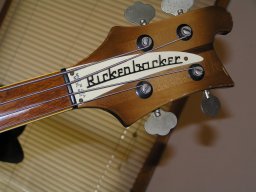







 You guys crack me up. HiFi speaker systems and Bass Cabs are two very different animals, just like a F1 racer and a Baja Buggy are very different cars. When the F1 pit boss tries to tell the Baja Buggy pit crew what's what is where we get our problems. You can't say that because a house cat buries it's poop, a lion has to as well, even though they're both cats.


