• TalkBass has been independent since 1998. Add your voice.
    Create a free account to reply to discussions, view embedded media, and browse with fewer display ads.
    Join freeLog in
    Want zero display ads or expanded classifieds tools? Compare plans.

Unusual Rock Trivia?

During his last days, Benjamin Orr was a member of a supergroup called Big People with left to right Benjamin Orr (The Cars), Jeff Carlisi (.38 Special), Pat Travers, Derek St. Holmes (Ted Nugent), & Liberty DeVitto (Billy Joel).

According to Jeff Carlisi, the band was touring playing songs from each member's previous hits. They were in the process of discussing recording original tunes when Benjamin became ill and passed away at age 53 from pancreatic cancer.

Just imagine what that band could have done.

Here are a couple videos of them live.

View attachment 4112971

View attachment 4112972

View attachment 4112973

View attachment 4112974

View attachment 4112975

View attachment 4112976


In 2009, Adam Schlesinger from Fountains of Wayne, James Iha of the Smashing Pumpkins, Bun E. Carlos of Cheap Trick, and Taylor Hanson of Hanson founded the group Tinted Windows. The result was pure power pop. Tinted Windows released only one album.

The first performance by the band was on March 18, 2009 at Cain's Ballroom in Tulsa, Oklahoma. The band played other live shows across the U.S. and Japan in 2009 and 2010 and appeared on The late Show With David Letterman and Late Night With Jimmy Fallon.
In a similar fashion, The Empty Hearts..


Named after an early Stones tune, the band features...
Elliot Easton(Cars)
Wally Palmar(The Romantics, Ringo’s All-Starr Band)
Andy Babiuk(Chesterfield Kings, author of Beatles Gear and Rolling Stones Gear)
Clem Burke(Blondie, etc)
The late Ian McLagen was also involved.
 
For the second single off of Oasis’ Definitely Maybe record, “ShakermakerNoel Gallagher “borrowed” the melody for “I’d Like to Teach the World to Sing” (the song made famous from its use on Coca-Cola commercials in the 1970’s) by Roger Cook, Roger Greenaway, Bill Backer and Billy Davis.

Oasis was successfully sued for the unlicensed use by The New Seekers and they had to pay out $500,000 (Australian dollars). When asked about the incident, Noel Gallagher said, “We drink Pepsi now.”

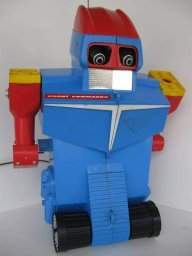
The title of the song was also taken from this 1970s toy called a Shaker Maker.


574f369da96d358225ee30be8e3e02ea.jpg


You know your band is old when you are sponsored by AARP and also do contests with them.

AARP was the presenting sponsor for classic rock band Foreigner’s “Feels Like the First Time Tour,” in 2008.

As part of the AARP sponsorship with Foreigner in 2008, the world's largest advocacy organization for the 50+ crowd also conducted the Air Guitar for My Guitar national air guitar competition. Linda Frey, age 50, from Allentown, PA was named the victor after more than 7,000 votes were cast online by the public to determine the outcome. She received the grand prize of a trip for two to Honolulu, Hawaii to meet Foreigner on New Year's Eve at their last tour stop, as well as an autographed custom Gibson guitar from lead guitarist and the band's founder, Mick Jones.

 
For many years, Stax Records publicity releases stated that the initials in the band's name Booker T. & The M.G.s stood for "Memphis Group", not the MG sports car. However, this has proved not to be the case.

Musician and record producer Chip Moman worked at Stax Records when the band was formed and claimed the band was named after his sports car. Moman had played with Jones and Steinberg in an earlier Stax backing group called the Triumphs, which was also named after his car. Booker T. Jones has confirmed Moman's story in many interviews.

Stax historian Rob Bowman has stated that the reason the label obscured the story of the meaning of the name M.G.'s (and concocted the "Memphis Group" explanation) was to avoid claims of trademark infringement from the manufacturers of the car. In a 2019 interview with The Guardian, Steve Cropper confirmed the motor car origin and "Memphis Group" explanation, but added, "We were being interviewed and someone asked: “What does MG actually stand for?” Duck Dunn said: “Musical geniuses!”
 
I found out a while ago that a customer of my parents pub many years ago when I was a teenager was Leslie Duncan, we became friends, I knew she sang backing vocals on some records (we had a couple on our juke box) but little did I know just how big a singer/songwriter she was, (pre internet days, harder to find thing out), she sang backing vocals on Dark side of the the moon, sang with Dusty Springfield, wrote songs for some guy called Elton John. Sang with Ringo Starr, Alan Parsons, Kate Bush... the list just goes on and on.
She was the kindest most down to earth person I think I ever met, she encouraged me in my art and music when I was at school.
I wish I could of thanked her for everything before she died.
 
There was actually more then 1 piano used to strike that final chord on “A day in the Life” by the Beatles.
On 22 February 1967, John Lennon, Paul McCartney, Ringo Starr and the Beatles’ assistant Mal Evans sat at three different pianos, and George Martin sat at a harmonium, and they all played an E major chord simultaneously. This took nine takes to get right, because the players had a hard time hitting the note at the exact same moment. The last take was dubbed best, and then overdubbed thrice, so the effect is that of nine pianos played by 12 men. Engineer Geoff Emerick kept lifting the volume faders, and it is possible to hear the studio’s heating system on the finished recording.
Beatles' 'A Day in the Life': 10 Things You Didn't Know
 
Everybody knows that Fleetwood Mac was named as a combination of Mick Fleetwood and John McVie's names. However, Peter Green came up with the name. Green, Fleetwood, and McVie were all members of John Mayall & The Bluesbreakers. Mayall gave Green some free recording time and Fleetwood, McVie and Green used it to record five songs. The fifth song was an instrumental that Green named after the rhythm section, "Fleetwood Mac" ("Mac" being short for McVie).

Green wanted to form a new band with Fleetwood and McVie and call it Fleetwood Mac but McVie decided to keep his steady income with Mayall rather than take a risk with a new band. Green and Fleetwood then recruited guitarist Jeremy Spencer and bassist Bob Brunning. Brunning was in the band on the understanding that he would leave if McVie agreed to join. The Green, Fleetwood, Spencer, Brunning version of the band made its debut on August 13, 1967 at the Windsor Jazz and Blues Festival as 'Peter Green's Fleetwood Mac, also featuring Jeremy Spencer'. Within weeks of this show, John McVie agreed to join the band as permanent bassist. Brunning played only a few gigs with Fleetwood Mac and recorded bass on the song "Long Grey Mare" that appears on their debut album.

Here is a recording of Peter Green's Fleetwood Mac on August 13, 1967 at the Windsor Jazz and Blues Festival.

 
Everybody knows that Fleetwood Mac was named as a combination of Mick Fleetwood and John McVie's names. However, Peter Green came up with the name. Green, Fleetwood, and McVie were all members of John Mayall & The Bluesbreakers. Mayall gave Green some free recording time and Fleetwood, McVie and Green used it to record five songs. The fifth song was an instrumental that Green named after the rhythm section, "Fleetwood Mac" ("Mac" being short for McVie).

Green wanted to form a new band with Fleetwood and McVie and call it Fleetwood Mac but McVie decided to keep his steady income with Mayall rather than take a risk with a new band. Green and Fleetwood then recruited guitarist Jeremy Spencer and bassist Bob Brunning. Brunning was in the band on the understanding that he would leave if McVie agreed to join. The Green, Fleetwood, Spencer, Brunning version of the band made its debut on August 13, 1967 at the Windsor Jazz and Blues Festival as 'Peter Green's Fleetwood Mac, also featuring Jeremy Spencer'. Within weeks of this show, John McVie agreed to join the band as permanent bassist. Brunning played only a few gigs with Fleetwood Mac and recorded bass on the song "Long Grey Mare" that appears on their debut album.

Here is a recording of Peter Green's Fleetwood Mac on August 13, 1967 at the Windsor Jazz and Blues Festival.


The second song, "I'm Going Home," (starts about 4:00) sounds like an early version of "Black Magic Woman."
 
Not a rock song; but, an unusual story.

"Take Me Out to the Ball Game" is a 1908 song by Jack Norworth and Albert Von Tilzer, which has become the official anthem of North American Baseball. Interestingly, neither of its authors had attended a game prior to writing the song. The song's chorus is traditionally sung during the middle of the seventh inning of a baseball game. Fans are generally encouraged to sing along, and at most ballparks, the words "home team" are replaced with the home team's name.

Jack Norworth was riding a subway train and was inspired by a sign that said "Baseball Today – Polo Grounds". In the song, Katie's boyfriend calls to ask her out to see a show. She accepts the date, but only if her date will take her out to the baseball game.

Below are the lyrics of the 1908 version.

Katie Casey was baseball mad,
Had the fever and had it bad.
Just to root for the home town crew,
Ev'ry sou1
Katie blew.
On a Saturday her young beau
Called to see if she'd like to go
To see a show, but Miss Kate said "No,
I'll tell you what you can do:"

Chorus

Take me out to the ball game,
Take me out with the crowd;
Buy me some peanuts and Cracker Jack,
I don't care if I never get back.
Let me root, root, root for the home team,
If they don't win, it's a shame.
For it's one, two, three strikes, you're out,
At the old ball game.

Katie Casey saw all the games,
Knew the players by their first names.
Told the umpire he was wrong,
All along,
Good and strong.
When the score was just two to two,
Katie Casey knew what to do,
Just to cheer up the boys she knew,
She made the gang sing this song:

800px-3077_take_me_out_to_the_ball_game_LOC.jpg
 
Pardon me if someone has mentioned this already:

"Nazareth had a hit with this Joni Mitchell song that they covered called ‘This Flight Tonight’ that kind of had that riff, so we kind of borrowed that and we made it into ‘Barracuda.’" In an interview with Nancy Wilson.
"Guys from Nazareth were pissed"
Yes, it was previously mentioned. And after listening to that Nazareth song, I don't think it and "Barracuda" sound alike at all.
 
Yes, it was previously mentioned. And after listening to that Nazareth song, I don't think it and "Barracuda" sound alike at all.

Heart "borrowed" a so called similar riff for their song "Black On Black II" from their 1993 album Desire Walks On. The song was a #4 U.S. rock chart hit. However, the song does not sound like "Barracuda" or Nazareth's cover of "This Flight Tonight".

 
The Gibson Firebird Guitar was designed by a guy who had designed cars.

Raymond Dietrich was an automobile designer who had a career creating and building car bodies, both mass produced and custom, under Dietrich, Inc. for Ford (& Lincoln), Packard, Franklin, Erskine, Studebaker, and others.

After Dietrich retired to Kalamazoo, Michigan, Ted McCarty of Gibson Guitars, which was also in Kalamazoo at the time, asked Dietrich to come out of retirement in 1962 to design a new solid-body Electric guitar that would not be limited by the traditional ways of designing and engineering an electric guitar. The result was the classic, "reverse" Gibson Firebird, released in 1963, one of the most iconic and recognizable electric guitar designs ever.

GIE0824_1963_Gibson_Firebird_VII.jpg
 
The King Biscuit Flower Hour was an American syndicated radio show presented by the D.I.R. Radio Network that featured live concert performances by various recording artists.

The program was broadcast on Sunday nights from 1973 until 2005, although new programming ceased in 1993 and previous shows were repeated from that point. During its prime, the program was carried by more than 300 radio stations throughout the United States. The show's name was derived from the influential blues radio show King Biscuit Time, which was sponsored by the King Biscuit Flour Co., combined with the hippie phrase "flower power". The first show was broadcast on February 18, 1973, and featured Blood, Sweat, & Tears, The Mahavishnu Orchestra, and Bruce Springsteen. The long-time host of the show until the mid-1990s was Bill Minkin.

The concerts were usually recorded with a mobile recording truck, then mixed and edited for broadcast on the show within a few weeks. Originally, they were sent to radio stations on reel-to-reel tapes and then LP format and eventually CD format.

th?id=OIP.jpg
 

Latest posts