• TalkBass has been independent since 1998. Add your voice.
    Create a free account to reply to discussions, view embedded media, and browse with fewer display ads.
    Join freeLog in
    Want zero display ads or expanded classifieds tools? Compare plans.

Double Bass Upright bass learning curve

I wouldn't say that at all. Once you use your body correctly, the double bass is much easier. The OP is still likely using too much hand and tendon to try to play the double bass.
Not only do you have to look at where you need to put energy into the instrument, you need to look at where not too. The tension of the strings make the bass like a giant bow as in bow and arrow. There is a lot "potential energy" already in the bass, you only have to get it started.
It will take some time before and instrument you've played for a few years sounds as good as one you've played for many years.
Maybe I should have said "demanding" instead of "difficult". I have had to spend a lot more time getting my entire body used to DB than I remember having to do with electric. It's amazing how many aches and pains I've had to endure to arrive at a place where things flow more easily. Having said that, I've really been neglecting my DB as of late and should get back to it.
 
Maybe I should have said "demanding" instead of "difficult". I have had to spend a lot more time getting my entire body used to DB than I remember having to do with electric. It's amazing how many aches and pains I've had to endure to arrive at a place where things flow more easily. Having said that, I've really been neglecting my DB as of late and should get back to it.


IMHO it's more physically demanding, even if you know how to play properly. The string tension and action on any upright that is setup for acoustic play will be way higher than the typical bass guitar. You also have to pluck harder to generate volume. More strength is required in both hands.

Some players do set the action on bass guitar super high and use a lot of force, but IMHO it's not necessary.
 
  • Like
Reactions: bass12
IMHO it's more physically demanding, even if you know how to play properly. The string tension and action on any upright that is setup for acoustic play will be way higher than the typical bass guitar. You also have to pluck harder to generate volume. More strength is required in both hands.

Some players do set the action on bass guitar super high and use a lot of force, but IMHO it's not necessary.
BG was my main professional instrument for several years and then DB was with a fair amount of doubling thrown in. For many years now it's probably 95% DB. IMO DB is not really harder physically with good technique because you can use more of your body when playing it: core, big muscles, back, legs, all that. It's easy with BG to concentrate too much energy in just small muscles and combined with the tendency to bend wrists can be tiring and potentially damaging. I'm not saying every player does that but the danger is there. JMO
 
  • Like
Reactions: Wasnex
If you use hand strength to play, then yes. Hand stregnth should really just be reserved for fast pizz and then only the right hand. The rest should come from arm weight and the upper body.
I understand arm weighting and pulling from the core. Although it makes a huge difference, it does not totally take the muscles supporting the fingers out of the equation. They still have to maintain an arch, which requires strength. Don't believe me, try an upright with drastically different neck profile and you will see.

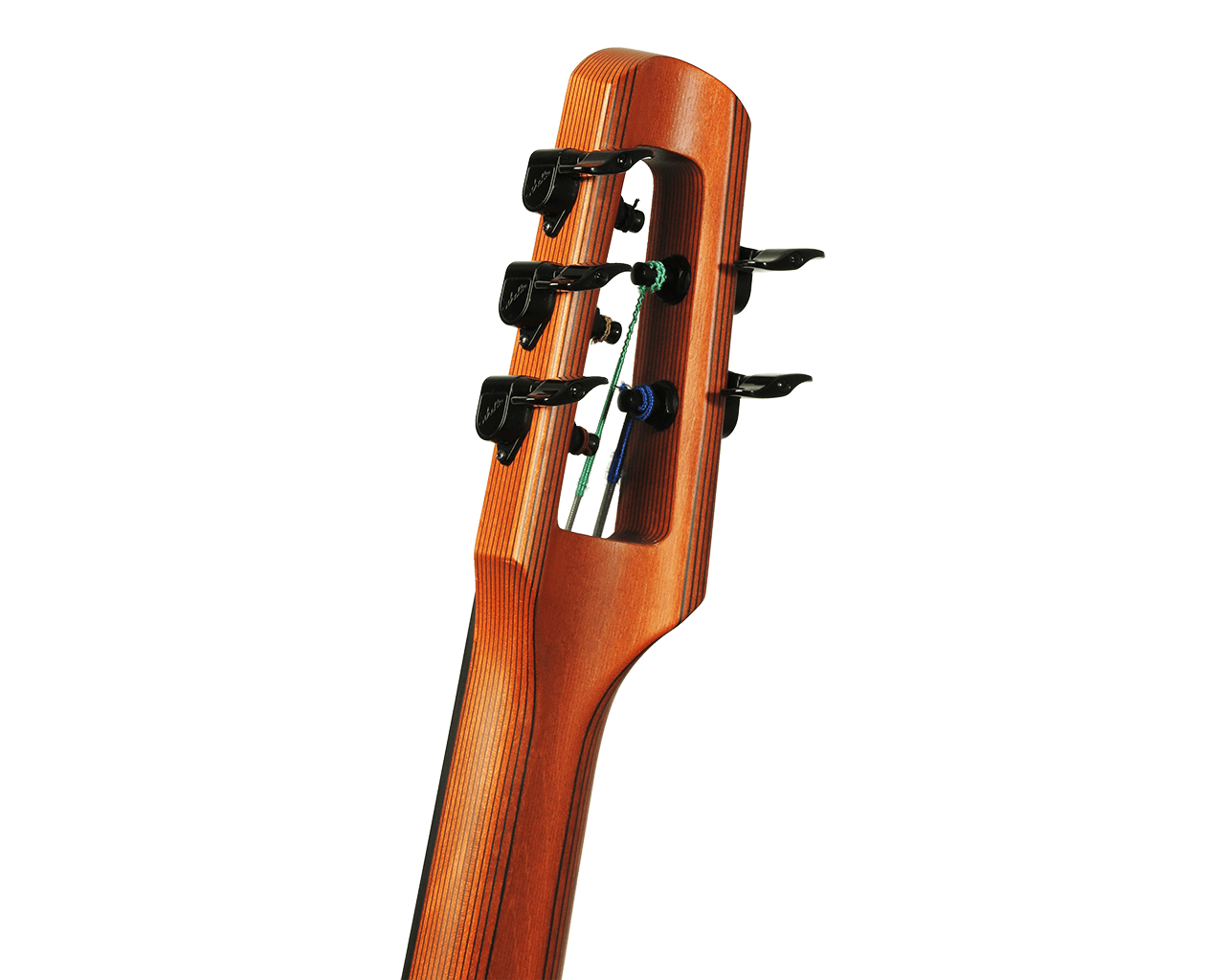
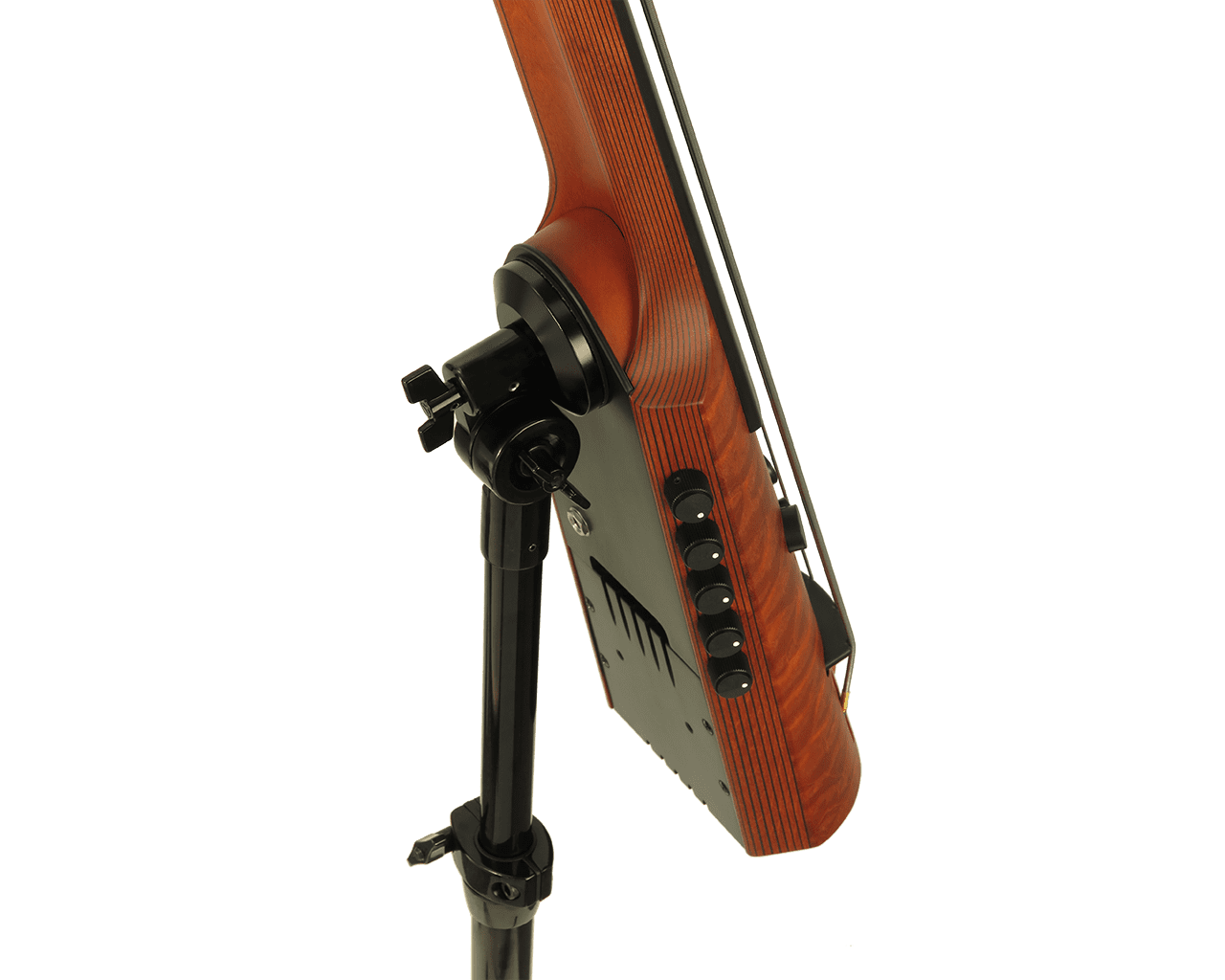
The neck profile on the NS Design US series bass I played was concave. The following images are from the current EU6, but AFAIK the neck profile is the same.

eu_3.png


eu_1.png


This neck shape is supposed to make it less labor intensive to play, but because my hand was conditioned for the profile of a standard upright neck, I found that my endurance on this instrument was very limited.

IMHO, upright still requires more hand strength than bass guitar.
 
I understand arm weighting and pulling from the core. Although it makes a huge difference, it does not totally take the muscles supporting the fingers out of the equation. They still have to maintain an arch, which requires strength. Don't believe me, try an upright with drastically different neck profile and you will see.
The arch is its own strength - we use it because it is strong. Some don't. It sounds to me like you are still using too much hand strength. The double bass takes very little effort for me to play. The bass guitar has far less potential energy in it - or I was never able to tap into it. The bass guitar is all hand and tendon strength.
 
Last edited:
  • Like
Reactions: Wasnex
BG was my main professional instrument for several years and then DB was with a fair amount of doubling thrown in. For many years now it's probably 95% DB. IMO DB is not really harder physically with good technique because you can use more of your body when playing it: core, big muscles, back, legs, all that. It's easy with BG to concentrate too much energy in just small muscles and combined with the tendency to bend wrists can be tiring and potentially damaging. I'm not saying every player does that but the danger is there. JMO

If you use proper technique on both instruments, BG requires less force and energy. Pulling from the core is still relevant for BG IMHO. There is no need to continually pinch the string between your fingers and thumb.

I agree that bent wrists are problematic with BG. Making a good choice on how high you wear the instrument can help with this, but IMHO not totally mitigate the problem. Raise the bass and it helps one wrist and makes it worse for the other. IMHO, all you can do is try to find the best compromise.

I don't see the wrist issue as related to the amount of strength required to play the instrument. In my experience, keeping the wrist bent for too long cuts off blood supply and/or impinges nerves, so you get tingling and numbness.

Unfortunately, I have done a few gigs where the band leader made us play three sets none-stop. About 90 minutes into it, I started having problems. My impression is the damage is cumulative, because after the marathon gig, it seemed like I would start to experience symptoms sooner.

Playing upright bass nonstop for too long is not necessarily a picnic. Playing non-stop for three sets would be brutal....I am not talking orchestral lit where you spend a fair amount of time sitting on your stool counting rests. I mean thumping the bass non-stop.

IMHO there can be issues with the wrists and elbows, but it's not the same problem and possibly causes less of a cumulative damage when you overdo it.
 
Last edited:
The arch is its own strength - we use it because it is strong. Some don't. It sounds to me like you are still using too much hand strength. The double bass takes very little effort for me to play. The bass guitar has far less potential energy in it - or I was never able to tap into it. The bass guitar is all hand and tendon strength.

You don't even seem to consider that you are actually putting too much energy into the bass guitar. Learn to play it properly and your opinion is likely to change.

Yes, I struggled to maintain the arc in my fingers after hours and hours on upright. Sometimes I rehearsed 6 hours on upright and then went off and gigged for a few more hours. I don't think it's possible to complete days like that without reasonably efficient technique.
 
There are bass players and there are bass owners. Bass owners outnumber players 40 to 1. The double bass exponentially increases those numbers…
It’s easier to BS on an electric than on the DB. It will depend on your commitment to it.. I personally believe that the work is aural and mental more than physical. Taste doesn’t require virtuoso technique, just an individual with something to say… IMHO.
BUT… You’ll need a certain level of technique to avoid injury and play in tune…
 
There are bass players and there are bass owners. Bass owners outnumber players 40 to 1. The double bass exponentially increases those numbers…
It’s easier to BS on an electric than on the DB. It will depend on your commitment to it.. I personally believe that the work is aural and mental more than physical. Taste doesn’t require virtuoso technique, just an individual with something to say… IMHO.
BUT… You’ll need a certain level of technique to avoid injury and play in tune…
A leader I worked for called them "bass holders". :)
 
I do not agree that the bass guitar is simpler than the double bass. It all depends on your goals. If you want to play the maximum number of notes per second, BG might be better, and mandolin is even better.* But if you're looking for sound, double bass is much richer! I need to play the full passage before BG gives me the pleasure of the sound. To enjoy the double bass, I only need to play one note!
This is especially true for listeners. Rhythm and solo on the bass guitar is not heard by anyone except the bass players. Most listeners hear what they see! They don't differentiate between lead guitar, rhythm guitar, and bass guitar until the guitarist takes a step forward. Double bass is visible everywhere, always and immediately. And so it takes less effort to be heard!
I will give another example. If you work outdoors, bass guitar requires a lot of effort and skill! I play fast breaks, solos and slaps to earn one coin. Most passers-by are not interested. It is better to take an acoustic guitar to sing a popular song - then you will earn more. But if I go outside with a double bass, I'm in the spotlight! The double bass is a magnet for passers-by. You can not play at all and be with income!
I am writing this message with irony and partly this is a joke, but still this is my opinion.
* I know double bassists who play as fast as I have never played bass guitar.
 
The people who are saying to treat them as separate instruments could not be more correct. They may share commonalities such as they role they play, register they occupy and tuning but that’s about it.

I’ve said time and time again. Some of the very worst EB players are DB players who pick it up and have put minimal hours on it and think it’s easy

Most of the worst DB players I’ve heard are EB players picking up thinking it’s similar.

Don’t compare the two. Both instruments demand a lot of time and practise. Each one has its own set of problems and benefits but don’t compare them. They are just two different instruments over all. Go practise both!
 
  • Like
Reactions: Alexis Duntov
The physical problem I've had with the electric bass is the pressure of the strap on my left shoulder/trap. Sitting helps that, but it's not always an option and that puts my left wrist in a position I find uncomfortable.
 
That's probably a further advantage of the Vance approach. By starting in thumb position you never think that it's like a BG and you have to use weight and not muscle because muscle doesn't work in thumb position. No death grip available. Also from the beginning it gets you used to playing from your ear.
 
When I first started on DB I could hardly make a sound. It was physically daunting. Two things helped me: adding dots to the fingerboard as reference points using a electric bass format; and learning to bow which gave me loud rich tones to hear the pitch.

playing DB has improved my hand strength and ‘hipped me’ to the strengths of the walking bass lines with a very unique woody tone. The best of my DB experience is the appreciation of pitch and it’s variations. Unexpected DB requirements, the right hand and plucking requires strength and texturing. I mostly use a single finger.

the worse part is transporting the beast. I use gig bags and the bridge is so vulnerable and the large instrument is unwieldy at times.

I have to say that I feel like a real bassist playing both upright and slabs!
 
To further underscore the differences - last night I had a band rehearsal in a band where I play both bass guitar (about 60%) and upright bass. I had only brought my fretless electric with me. The band leader called one of the tunes that I always play on DB and I really had to stop and think for a minute about how to translate the bass line to bass guitar (it involves some pull-offs and open strings so converting from vertical to horizontal playing took me a moment).
 
  • Like
Reactions: sean_on_bass
To further underscore the differences - last night I had a band rehearsal in a band where I play both bass guitar (about 60%) and upright bass. I had only brought my fretless electric with me. The band leader called one of the tunes that I always play on DB and I really had to stop and think for a minute about how to translate the bass line to bass guitar (it involves some pull-offs and open strings so converting from vertical to horizontal playing took me a moment).

When I did so, I had to return home for the double bass.