• TalkBass has been independent since 1998. Add your voice.
    Create a free account to reply to discussions, view embedded media, and browse with fewer display ads.
    Join freeLog in
    Want zero display ads or expanded classifieds tools? Compare plans.

Double Bass Upright bass learning curve

I played BG in college, but gave my BG/amp to my dtr some years back. I've only picked up BGs a couple of times in the last decade+, and when I do, I'm surprised and disappointed at how unfamiliar they feel. I always seem to think it will feel "easy" compared to upright, but I realize I'd have to put in some time and effort to regain my BG chops. It is pretty clear that at this point I am an upright player.

I've posted previously, that about 3 yrs ago, I realized how old many of the folk I jam with are. At age 60, I realized a time would come that I didn't feel like hauling my bass around, so I decided to pick up clawhammer. I figured if I started now, in 10 years I wouldn't completely suck at it. 3 yrs in, well - I don't COMPLETELY suck... :laugh:

I play way more than I practice, and I have never stuck with a teacher. But in an average week I play in a 4-5 hr jam, 2-3 hrs w/ my band, and I play 3-4 hrs w/ our classical ensemble. I beat myself up about not practicing more, but I do realize that I am able to do things today that I couldn't do even 6 months ago.

After last week's jam at the farmer's market (which can be an overlarge cluster f***), as I was packing up, one of the regular listeners came up to me and said, "I LOVE to hear you play bass!" Now, I wasn't doing anything special, and I generally have a kinda low expectation of the level of expertise of our listeners - but darned if that didn't make my day!
 
I had a lesson on BG a few years ago with Damian Erskine(great player and very nice guy,BTW). It was the first (and only) lesson on the slab that I have ever had, and was a real eye-opener. I've known a lot of good BG players, but when you get to see, hear, and learn from one of the true greats, it's inspirational. It will always be a secondary instrument for me, but a great musician is a great musician no matter the instrument. It also demonstrated how much difference there is between the two basses, especially when you get to that level.
 
I had an interesting breakthrough in DB playing recently. My background is EB on and off since 1987, owning a poorly setup DB between 2016-2018 which I never played and later sold, to trading a 5-string for an old Kay in 2019, determined to learn because of that sound and the jazz I aspired to.

I took lessons for about 6 months before the pandemic learning Simandl and arco along with the jazz I was seeking. Since then, my DB playing might be a week of having an actual practice routine then a couple weeks of just playing the bass for 10-15 minutes multiple times a day (3-4x/week) because it's in my office. Slowly, my stamina got better and I was feeling more comfortable but nothing like an electric bass.

The crazy part was a month ago I got Covid and quarantined for 2.5 weeks. After the first week of feeling miserable, I started playing DB every day, trying different things and experimenting. Alot of it was because my body was in bad shape from being bed-ridden so I felt like I was just trying to make the bass work for my situation - sitting, standing, changing strings, using a pickup, etc... So, for about 1.5 weeks I probably played DB 3-4 hours a day and wow, what a difference.

I can say for the first time in 3 years I feel just as comfortable playing DB as EB. I'd even say I walk way better on DB than EB. Thumb position still needs a ways to go but I've never felt as comfortable up there as I do now. So, for me, really getting in "tune" with the instrument was a big thing. Once my body was feeling good, I ended up standing again but now my endpin was a few inches lower than it had been. I also went from full guts to synthetics and went through different string heights. My body positioning/stance is now a little different as well.

So, really knowing my instrument was important but that goes for just about everything I do though - I fix my own bikes that I ride daily and I built surfboards for years while I lived on the coast and surfed as much as possible... WIth this Kay I also had to take the top off and repaired the bass bar since the cost to get it done was 3/4 the price I traded it for - that happened a few months after I got it but that was just another thing to learning about my instrument. I don't know if you'd have to do all that but experimenting and getting intimate with your bass in more than just playing it "traditionally", might open doors...
 
Last edited:
I do not agree that the bass guitar is simpler than the double bass. It all depends on your goals. If you want to play the maximum number of notes per second, BG might be better, and mandolin is even better.* But if you're looking for sound, double bass is much richer! I need to play the full passage before BG gives me the pleasure of the sound. To enjoy the double bass, I only need to play one note!
This is especially true for listeners. Rhythm and solo on the bass guitar is not heard by anyone except the bass players. Most listeners hear what they see! They don't differentiate between lead guitar, rhythm guitar, and bass guitar until the guitarist takes a step forward. Double bass is visible everywhere, always and immediately. And so it takes less effort to be heard!
I will give another example. If you work outdoors, bass guitar requires a lot of effort and skill! I play fast breaks, solos and slaps to earn one coin. Most passers-by are not interested. It is better to take an acoustic guitar to sing a popular song - then you will earn more. But if I go outside with a double bass, I'm in the spotlight! The double bass is a magnet for passers-by. You can not play at all and be with income!
I am writing this message with irony and partly this is a joke, but still this is my opinion.
* I know double bassists who play as fast as I have never played bass guitar.
I play both... I've been playing EB since 1977. I love playing electric bass, but I always wanted to play and NOT need voltage to be heard. I played off the coast of Africa for 3 years, and every time there was a power outage (a lot of outages too..) everyone could continue and be heard except me. That bothered me...
I also lost work in London because a lot of band leaders wanted to see an upright instead of EB. It didn't matter about my skillset, they demanded an upright to play jazz. I understand now, after the fact. It looks better and adheres to tradition... So, I decided to get with tradition and learn both.. AND piano. Not for them, but for me. I know the music inside and out now. There is no greater feeling than telling a pianist the voicing I want or sitting behind the drum kit and showing a drummer... Writing out the charts and controlling the ensemble from behind the bass.
But, I suspect a lot of folks don't remember the atmosphere for bassists that occurred on the pop scene after Prince did "When Doves Cry." I remember a substantial arrogance keyboardists threw out after that, and a lot of bassists were replaced with KB bass or samplers. I wanted to make sure I had control over the bass in whatever incarnation that took... And I do. Whenever "I" decide to be bothered...

You don't get what you deserve as a musician. You get what you negotiate. If you have the skills and courage, you can dictate better deals... IMHO...

But the joy is in hearing a nice CLEAN note for me. Electric or Acoustic. They're just different...
 
  • Like
Reactions: Wasnex
I played electric for ten years before becoming serious about acoustic bass. I was in my late teens and devastated that my teacher (Dave Young) told me it would take me at least 5 years to feel as proficient on acoustic as I felt on electric. He was right though. I now think of playing the two as being bilingual. They are similar languages in some ways but I have to think of each one as its own physical and tonal language.
 
The physical problem I've had with the electric bass is the pressure of the strap on my left shoulder/trap. Sitting helps that, but it's not always an option and that puts my left wrist in a position I find uncomfortable

Link Removed, $18.82 (works for my BG):

Invalid Link Removed

Slider strap, $25.99
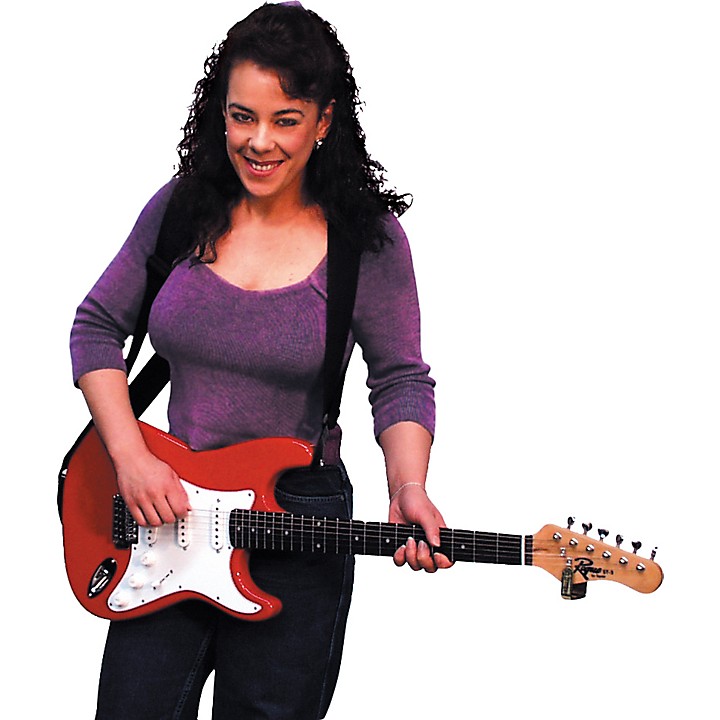
365260000001000-00-720x720.jpg


Listen to your body.
There's no need to beat yourself up when you could be having fun playing instead.
 
  • Like
Reactions: Joshua and lurk
I would like to ask you about your experiences with the upright bass "learning curve", specifically those of you who switched to upright later in your musical journey, after already being proficient on another instrument.

I learned bass guitar in the 1980s in high school, but only to a minimal level - playing 8-quaver bars on rock covers. Then picked it up and put it down for the next 30+ years. I played a couple of gigs doing 1980s rock covers, but I'd not say I was particularly good. I turned to double bass during the pandemic. The day they fork-lifted (!!) my new bass from Thomann out of the trunk was a day I won't forget in a while, mostly thinking "what have I done?!".

For about a year it seemed like it was fighting me. I went through three teachers before I found one that suited me, but after a while it just kind of 'clicked', how to hold it, how to play with less effort, letting the left hand just find the notes without concentrating on pitch too much. Some of that was practice and tuition, but changing to a larger instrument, changing to synthetic strings (and making a conscious decision to not progress with arco), making space for a dedicated practice area, and so on all made little positive changes.
 
I wouldn't say that at all. Once you use your body correctly, the double bass is much easier. The OP is still likely using too much hand and tendon to try to play the double bass.
Not only do you have to look at where you need to put energy into the instrument, you need to look at where not too. The tension of the strings make the bass like a giant bow as in bow and arrow. There is a lot "potential energy" already in the bass, you only have to get it started.
It will take some time before and instrument you've played for a few years sounds as good as one you've played for many years.
This is an interesting point and I've experienced exactly this.

I'm coming from a very different place than Damon, having played upright for only 10 years (practicing with great intensity at first, but nowadays much less so). But what I find is that most of the time "pulling harder" doesn't yield more sound, it just makes you tired. There seems to be a sweet spot where the energy you put in gets the maximum out of the bass. It's not just about how loud, it's also about how the bass lines come out of the instrument, it's about how fast you can play things, it's about how you can generate intensity of timekeeping, it's even about playing well in tune! I find that when I forget about the mechanics and just play what I hear, it comes smoothly, and when I'm focused on the mechanics I struggle more. I suppose that's typical of all instruments.

Because I'm still a relative newcomer to bass (though not to music or jazz playing, where I've been performing on saxophones for over 40 years), finding the sweet spot is still a matter of chance for me whereas I expect for really experienced players they're able to find it quickly. (That's the way it is for me on saxophone, I know exactly where to put myself physically and mentally to get into the sweet spot quickly.)

The other point I'd like to make comes from my experience which is that I did NOT start out on electric bass. Upright bass was the first stringed instrument I've ever played with any degree of focus (yeah, like everyone I owned an acoustic guitar and I knew a few cowboy chords). I think there's a different approach to PLAYING BASS (not "playing upright bass" or "playing electric bass" or "playing tuba") that each different bass instrument tends to push you toward; the electric seems to lead you toward a busier style of playing. So if you find that you can't play the kinds of patterns easily on upright that come naturally and easily to you on electric, that's not a shortcoming of upright; that's because it's the upright. Football players can be linebackers or wide receivers. You don't expect that a linebacker can run the same kind of 50 yard times as a WR, but you don't expect a WR to be able to move a house off its foundation, either. Yet they both fulfill the role of "football player" - which is very different from the role of "gymnast" or "marathon runner" or "fencer".
 
We've been through this before. There is no getting around hand and tendon stress in the BG, especially if you want any sort of tone.
There is a way to use a bit of upper body for the left hand of the BG, but there is no way to use primarily upper body and arm weight the same way as you can with the double bass.
Also, a bass on a stand is going to be different.

You don't even seem to consider that you are actually putting too much energy into the bass guitar. Learn to play it properly and your opinion is likely to change.

Yes, I struggled to maintain the arc in my fingers after hours and hours on upright. Sometimes I rehearsed 6 hours on upright and then went off and gigged for a few more hours. I don't think it's possible to complete days like that without reasonably efficient technique.

It is very true about how hard you pull and the actual sound. Pulling hard can get you a stronger percussive thump, but it will also distort the note - something that can be desirable in free jazz and not much else. There is a good sweet spot for a normal good sound that will fill the room. With a nice bass even softly plucked notes can fill the room.

This is an interesting point and I've experienced exactly this.

I'm coming from a very different place than Damon, having played upright for only 10 years (practicing with great intensity at first, but nowadays much less so). But what I find is that most of the time "pulling harder" doesn't yield more sound, it just makes you tired. There seems to be a sweet spot where the energy you put in gets the maximum out of the bass. It's not just about how loud, it's also about how the bass lines come out of the instrument, it's about how fast you can play things, it's about how you can generate intensity of timekeeping, it's even about playing well in tune! I find that when I forget about the mechanics and just play what I hear, it comes smoothly, and when I'm focused on the mechanics I struggle more. I suppose that's typical of all instruments.

Because I'm still a relative newcomer to bass (though not to music or jazz playing, where I've been performing on saxophones for over 40 years), finding the sweet spot is still a matter of chance for me whereas I expect for really experienced players they're able to find it quickly. (That's the way it is for me on saxophone, I know exactly where to put myself physically and mentally to get into the sweet spot quickly.)

The other point I'd like to make comes from my experience which is that I did NOT start out on electric bass. Upright bass was the first stringed instrument I've ever played with any degree of focus (yeah, like everyone I owned an acoustic guitar and I knew a few cowboy chords). I think there's a different approach to PLAYING BASS (not "playing upright bass" or "playing electric bass" or "playing tuba") that each different bass instrument tends to push you toward; the electric seems to lead you toward a busier style of playing. So if you find that you can't play the kinds of patterns easily on upright that come naturally and easily to you on electric, that's not a shortcoming of upright; that's because it's the upright. Football players can be linebackers or wide receivers. You don't expect that a linebacker can run the same kind of 50 yard times as a WR, but you don't expect a WR to be able to move a house off its foundation, either. Yet they both fulfill the role of "football player" - which is very different from the role of "gymnast" or "marathon runner" or "fencer".
 
We've been through this before. There is no getting around hand and tendon stress in the BG, especially if you want any sort of tone.

This is equally true of upright. Using proper technique and finding the sweet spot with force and intensity helps reduce the stress on hands and tendons, but it does not totally eliminate it. If it did totally eliminate the problem, one would essentially be able to play nonstop indefinitely without experiencing any sort of fatique in the hands...and that is not what I have observed. Even the hands of top professionals get gassed over the course of really long days.

Ultimately this is a he said, he said situation. You believe one thing, and I believe something. Without some sort of definitive scientific study, there is really no point in discussing it further because we are just defending our personal beliefs which are based on our own techniques, experiences, and biases.

Good Day.
 
  • Like
Reactions: Alexis Duntov
This is equally true of upright. Using proper technique and finding the sweet spot with force and intensity helps reduce the stress on hands and tendons, but it does not totally eliminate it.
TB/DB (and @Ed Fuqua in particular) showed me that DB has many, many sweet spots of force and intensity, and that musicians can use a wide variety of them musically. I had played DB for 20 years, coasting along on the large end of the rear sprocket and relying heavily on the amp for volume and tone, before Mr. PukeSpray hipped me to the fact that I could pull a LOT more sound if I let myself do it.

If you're only focusing on "the sweet spot" consider looking for more. If your technique only favors "the sweet spot" ponder on that. Or don't; I'm just some goob on the interweb.
 
Last edited:
TB/DB (and @Ed Fuqua in particular) showed me that DB has many, many sweet spots of force and intensity, and that musicians can use a wide variety of them musically. I had played DB for 20 years, coasting along on the large end of the rear sprocket and relying heavily on the amp for volume and tone, before Mr. PukeSpray hipped me to the fact that I could pull a LOT more sound if I let myself do it.

If you're only focusing on "the sweet spot" consider looking for more. If your technique only favors "the sweet spot" ponder on that. Or don't; I'm just some goob on the interweb.

Agreed. IMHO the sweet spot with force and intensity varies continuously with what you are doing and what you hope to achieve.
 
Thanks everyone for your comments so far! There is a lot of input for me to consider, but if I had to summarize my main takeaways, those would be
  • Upright is simply more physically demanding than BG, even with correct technique. It also sounds very different than electric bass. So there's no point in asking "when will I be able to play as many notes on upright as a can on electric", if your goals on upright are musical and not athletic
  • Being forced to play less notes on upright, to think about fingerings, to "pre-hear" notes before shifting etc - gives my ears and my brain a chance to catch up with my "flying fingers" (something all too easy to do on electric bass)
  • The learning curve is steeper, but technical proficiency will come - most people (also in other "transition stories" theards here on TB) say it took them "a few years" to feel comfortable on the instrument, so best to stay patient and just keep practicing
  • Play with other people more. When you get compliments / called back, you will know why that happened (probaly not because you played a lot of notes, but because you did your job and played supportive lines, locked in, had good intonation, listened and reacted to others etc). This in turn will motivate you to practice the right things
 
  • Like
Reactions: AGCurry and Wasnex
. . . my main takeaways, those would be
  • Being forced to play less notes on upright, to think about fingerings, to "pre-hear" notes before shifting etc - gives my ears and my brain a chance to catch up with my "flying fingers" (something all too easy to do on electric bass)
Please reconsider.
Those types of limitations are entirely self-imposed.
You can play anything you let yourself, any time you let yourself.
The DB can do anything you let it do.

 
Because you use so much more of your body, playing fast is actually easier on the double bass than BG. Speed is only a matter of precision. Once you have your movements clear speeding it up will be no problem. I can play faster on the double bass than I ever could on BG. It is more physical, but has the potential to be less demanding if you use your body efficiently. In some ways, the learning curve is more straight forward since the pedagogy is a few centuries old. If you work through Simandl or a comparable method, though Simandl is still the most proven, arco with a teacher, you will get there.
In terms of music, there is a weight and volume of a double bass note that can make it "worth more" than several typical bass guitar notes, so that is something to work on. However, if you are hearing more notes, then work on that as well.

Thanks everyone for your comments so far! There is a lot of input for me to consider, but if I had to summarize my main takeaways, those would be
  • Upright is simply more physically demanding than BG, even with correct technique. It also sounds very different than electric bass. So there's no point in asking "when will I be able to play as many notes on upright as a can on electric", if your goals on upright are musical and not athletic
  • Being forced to play less notes on upright, to think about fingerings, to "pre-hear" notes before shifting etc - gives my ears and my brain a chance to catch up with my "flying fingers" (something all too easy to do on electric bass)
  • The learning curve is steeper, but technical proficiency will come - most people (also in other "transition stories" theards here on TB) say it took them "a few years" to feel comfortable on the instrument, so best to stay patient and just keep practicing
  • Play with other people more. When you get compliments / called back, you will know why that happened (probaly not because you played a lot of notes, but because you did your job and played supportive lines, locked in, had good intonation, listened and reacted to others etc). This in turn will motivate you to practice the right things
 
I might be ruffling some feathers here but the use of the term "upright bass" has always bothered me. To me it is a term that describes the DB is relation to the BG, which for me is putting it the wrong way around. We don't refer to the BG as the HB(horizontal bass), nor should we. Double bass, string bass(not so good anymore), doghouse, big violin, etc. I personally prefer double bass, but that's just me. It might make sense to use UB to describe our instrument to someone who hasn't seen one or only knows the BG, but among ourselves I don't feel we need to. JMO
 
I might be ruffling some feathers here but the use of the term "upright bass" has always bothered me. To me it is a term that describes the DB is relation to the BG, which for me is putting it the wrong way around. We don't refer to the BG as the HB(horizontal bass), nor should we. Double bass, string bass(not so good anymore), doghouse, big violin, etc. I personally prefer double bass, but that's just me. It might make sense to use UB to describe our instrument to someone who hasn't seen one or only knows the BG, but among ourselves I don't feel we need to. JMO
So if an “upright bass” really should be referred to as a “double bass,” what would a “single bass” be?