Over the past few months, I have been shopping around for a C-Extension, and about a month and a half ago, I decided to go with an extension from Upton Bass in Mystic, CT. A few weeks ago, my extension was completed and I brought my bass back home.
During my extension search, I couldn't find very much information about Upton's extensions anywhere online except for a few odd photos found on Talkbass and of course the product page on Upton Bass' website.
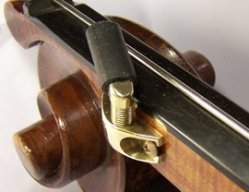
From my initial discussions to gather information to the day I took delivery of my extension, the team at Upton has always been very friendly and generous with their time and were able to answer all of my questions. When putting in my order with Eric we had the opportunity to discuss options in materials and configurations (maple with an ebony cap vs solid ebony, number of gates, C or B extension etc.), and any possible issues that could come up with playing due to the geometry of my bass' scroll that I may not have thought of. In the end, I decided to go for the maple C-extension (with their double-pulley system) with an ebony cap and gates at the E and D. In addition to the extension, I also asked them to make me a set of leather-capped ebony bumpers.
Since I was travelling to Mystic to get this work done, scheduling was very important to me. Upton was very flexible in accommodating my schedule and I was able to book a drop-off date within a month from the date I put in my order which worked perfectly with my busy summer schedule.
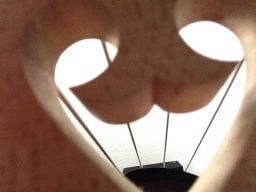
The work only took a bit under a week to complete for both the extension and the bumpers. When returning to Mystic the next week to pick up my bass, I was very impressed by the extension Jack and Eric built for me. They went beyond my expectations by making the extension both functional and aesthetically attractive with some additional artistic carving on the underside of the extension. The curve below the extension is in the perfect spot so that when my thumb is resting against it, my first finger is in the right place to play the D flat much like your first finger would be in the right place to play a D on the G string when your thumb is at the bottom of the neck (with a D neck of course). As for the bumpers, they did a great job in measuring them to be the perfect heights and shaping them to look good as well. My bass is quite "twisted", and has very narrow shoulders (like a Quenoil pattern) and would never be able to rest on the floor on its side without tipping over onto the top. This was a huge source of frustration for me as I would always have to find a chair to prop the bass up against. Now the bass rests perfectly balanced on its own and the leather caps add a nice touch to the look of the bumpers and also gives the bass a bit of cushion when on the floor which helps to prevent scuffing the floor with the bumpers.
Visiting the shop was also an awesome experience and it was really impressive to see the team hard at work building some of these Upton basses we see all the time on Talkbass. The upstairs showroom was really cool to visit as well as Upton has a great collection of both new and old basses. I had the opportunity to look at some of their completed basses and I really enjoyed playing on the Upton basses. In the future, I will definitely consider making an order for a new bass from the guys at Upton because they are doing a great job on these instruments.
After having the bass back and getting to know the extension for some time, I am glad I made the choice to go with Upton. The extension plays very well when the C is engaged. At first we were afraid that the string height would be very high on my bass when the C was engaged, but the guys did a fantastic job adjusting it so that in the end, the height difference between the open E and open C is really not much at all, and the low string is super playable. Playing on the extension is easy as they made sure I always had a comfortable place to rest my thumb and shifting in and out of the extension is a breeze. When the gates are closed, there are no rattles and the closed notes are very well in tune. Finally, the extension is very lightweight and the bass feels the same as it did before the extension was installed.
I would definitely recommend any bass player to go down to Upton for an extension as they are very affordable and the guys at Upton really deliver a high quality product with many options so that it can really be customized to how you want it to be.
If anybody has any additional questions about my experience, I'd be glad to help answer them, just post a reply or send me a PM!


During my extension search, I couldn't find very much information about Upton's extensions anywhere online except for a few odd photos found on Talkbass and of course the product page on Upton Bass' website.
From my initial discussions to gather information to the day I took delivery of my extension, the team at Upton has always been very friendly and generous with their time and were able to answer all of my questions. When putting in my order with Eric we had the opportunity to discuss options in materials and configurations (maple with an ebony cap vs solid ebony, number of gates, C or B extension etc.), and any possible issues that could come up with playing due to the geometry of my bass' scroll that I may not have thought of. In the end, I decided to go for the maple C-extension (with their double-pulley system) with an ebony cap and gates at the E and D. In addition to the extension, I also asked them to make me a set of leather-capped ebony bumpers.
Since I was travelling to Mystic to get this work done, scheduling was very important to me. Upton was very flexible in accommodating my schedule and I was able to book a drop-off date within a month from the date I put in my order which worked perfectly with my busy summer schedule.
The work only took a bit under a week to complete for both the extension and the bumpers. When returning to Mystic the next week to pick up my bass, I was very impressed by the extension Jack and Eric built for me. They went beyond my expectations by making the extension both functional and aesthetically attractive with some additional artistic carving on the underside of the extension. The curve below the extension is in the perfect spot so that when my thumb is resting against it, my first finger is in the right place to play the D flat much like your first finger would be in the right place to play a D on the G string when your thumb is at the bottom of the neck (with a D neck of course). As for the bumpers, they did a great job in measuring them to be the perfect heights and shaping them to look good as well. My bass is quite "twisted", and has very narrow shoulders (like a Quenoil pattern) and would never be able to rest on the floor on its side without tipping over onto the top. This was a huge source of frustration for me as I would always have to find a chair to prop the bass up against. Now the bass rests perfectly balanced on its own and the leather caps add a nice touch to the look of the bumpers and also gives the bass a bit of cushion when on the floor which helps to prevent scuffing the floor with the bumpers.
Visiting the shop was also an awesome experience and it was really impressive to see the team hard at work building some of these Upton basses we see all the time on Talkbass. The upstairs showroom was really cool to visit as well as Upton has a great collection of both new and old basses. I had the opportunity to look at some of their completed basses and I really enjoyed playing on the Upton basses. In the future, I will definitely consider making an order for a new bass from the guys at Upton because they are doing a great job on these instruments.
After having the bass back and getting to know the extension for some time, I am glad I made the choice to go with Upton. The extension plays very well when the C is engaged. At first we were afraid that the string height would be very high on my bass when the C was engaged, but the guys did a fantastic job adjusting it so that in the end, the height difference between the open E and open C is really not much at all, and the low string is super playable. Playing on the extension is easy as they made sure I always had a comfortable place to rest my thumb and shifting in and out of the extension is a breeze. When the gates are closed, there are no rattles and the closed notes are very well in tune. Finally, the extension is very lightweight and the bass feels the same as it did before the extension was installed.
I would definitely recommend any bass player to go down to Upton for an extension as they are very affordable and the guys at Upton really deliver a high quality product with many options so that it can really be customized to how you want it to be.
If anybody has any additional questions about my experience, I'd be glad to help answer them, just post a reply or send me a PM!