• TalkBass has been independent since 1998. Add your voice.
    Create a free account to reply to discussions, view embedded media, and browse with fewer display ads.
    Join freeLog in
    Want zero display ads or expanded classifieds tools? Compare plans.

Using two amps.

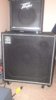
Ok, I want to use both of these to play through at same time. I ordered a y splitter should be here tomorrow. The big amp is a Ampeg BA 115Hp the little one is a 15 watt Peavy 10" speaker just a basic practice bass amp. Both have three band equalizers. Ampeg has more to it with 6 setting. One being a cleani channel or dry channel. The other five I really am not sure what they are gives me a basic description in the book. I want to use the little one for highs and the big one for Lows. Somebody told me to take all the highs out of the big ones and all of lows out of the little one. My question is the mids. Do I wipe them out of either amp or do I keep them in. As far as some setting in there. Because both sound really good. At the current time I'm using just a box stump lab IB multi-effect. Though I do have a boss OD. I think together they would sound awesome. FB_IMG_1611174794307.jpg FB_IMG_1611174785026.jpg
FB_IMG_1611174794307.jpg
FB_IMG_1611174785026.jpg
 
Ok, I want to use both of these to play through at same time. I ordered a y splitter should be here tomorrow. The big amp is a Ampeg BA 115Hp the little one is a 15 watt Peavy 10" speaker just a basic practice bass amp. Both have three band equalizers. Ampeg has more to it with 6 setting. One being a cleani channel or dry channel. The other five I really am not sure what they are gives me a basic description in the book. I want to use the little one for highs and the big one for Lows. Somebody told me to take all the highs out of the big ones and all of lows out of the little one. My question is the mids. Do I wipe them out of either amp or do I keep them in. As far as some setting in there. Because both sound really good. At the current time I'm using just a box stump lab IB multi-effect. Though I do have a boss OD. I think together they would sound awesome.View attachment 4135958 View attachment 4135959 View attachment 4135958 View attachment 4135958 View attachment 4135959

The real answer is going to be fiddle with the knobs until it sounds nice.

My guess is the big amp will be better at producing highs and lows than the little amp. The BA115HP is 220W and has a 15" and a tweeter. It should be way able to play way louder than the little Peavey.

The idea you seem to be exploring is called biamping. Biamping uses an electronic crossover to break the frequency spectrum into two frequency bands. Then you send each frequency band to whichever speaker is optimal. I doubt the Peavey is optimal for either.

Instead I suggest you explore a technique called multiamping. Both amps are run full range. You can simulate the idea of biamping by adjusting the tone controls if you like, but unless they line up perfect it won't really work out that well. So just fiddle with the controls and try to find combinations that sound cool.

Something cool that you can explore with this setup is parallel processing. Try running a heavier distortion peal in front of the Peavey and try a compressor in front of the Ampeg. Also I suggest try adding a light OD in line with the Compressor. Try other effects as well.

One potential problem you may have is reverse polarity. There is no guarantee that the output of each amp will be in polarity with the input. If one of the amps inverts the polarity but the other does not, the lows will tend to cancel out. Some pedals invert the polarity as well.

Also digital pedals tend to have a bit of delay (latency) which results from AD/DA conversion and also from the time it takes for digital processing to occur. If one of your signal paths is delayed with respect to the other, you may get audible phasing. So using digital pedals with parallel processing can pose problems.

IMHO this is a great opportunity to experiment, have some fun, and learn for the future. Later you may consider using what you learn by using parallel processing in a different way--I.E. break the signal into two paths, process the two paths independently, blend the two paths back together, and send the composite signal to one amp.

Good luck!
 
I'm a beginner and I didn't understand half of what you said I'm going to have to Google some of the things you mentioned. Confused me. I appreciate the input though. Gives me some things to explore like you said I just don't like the sound of the highs and the it just sounds off for some reason. We'll see what happens when you give it a shot of it sounds like crap and just keep going with the Ampeg. Which has a dial on the back control the corner and the highs which I'm not really too clear. On exactly what it does I'm a beginner and I just try to figure if it may. Thanks I made a post a few weeks ago showing my gear in my upgrades. That I just bought a brand new base I've been fiddle faddling around for years and never really studied it. Now I'm retired due to health issues. And I figured I would fulfill my dream to learn how to play the instrument knowing my instrument.
The real answer is going to be fiddle with the knobs until it sounds nice.

My guess is the big amp will be better at producing highs and lows than the little amp. The BA115HP is 220W and has a 15" and a tweeter. It should be way able to play way louder than the little Peavey.

The idea you seem to be exploring is called biamping. Biamping uses an electronic crossover to break the frequency spectrum into two frequency bands. Then you send each frequency band to whichever speaker is optimal. I doubt the Peavey is optimal for either.

Instead I suggest you explore a technique called multiamping. Both amps are run full range. You can simulate the idea of biamping by adjusting the tone controls if you like, but unless they line up perfect it won't really work out that well. So just fiddle with the controls and try to find combinations that sound cool.

Something cool that you can explore with this setup is parallel processing. Try running a heavier distortion peal in front of the Peavey and try a compressor in front of the Ampeg. Also I suggest try adding a light OD in line with the Compressor. Try other effects as well.

One potential problem you may have is reverse polarity. There is no guarantee that the output of each amp will be in polarity with the input. If one of the amps inverts the polarity but the other does not, the lows will tend to cancel out. Some pedals invert the polarity as well.

Also digital pedals tend to have a bit of delay (latency) which results from AD/DA conversion and also from the time it takes for digital processing to occur. If one of your signal paths is delayed with respect to the other, you may get audible phasing. So using digital pedals with parallel processing can pose problems.

IMHO this is a great opportunity to experiment, have some fun, and learn for the future. Later you may consider using what you learn by using parallel processing in a different way--I.E. break the signal into two paths, process the two paths independently, blend the two paths back together, and send the composite signal to one amp.

Good luck!

 
I'm a beginner and I didn't understand half of what you said I'm going to have to Google some of the things you mentioned. Confused me. I appreciate the input though. Gives me some things to explore like you said I just don't like the sound of the highs and the it just sounds off for some reason. We'll see what happens when you give it a shot of it sounds like crap and just keep going with the Ampeg. Which has a dial on the back control the corner and the highs which I'm not really too clear. On exactly what it does I'm a beginner and I just try to figure if it may. Thanks I made a post a few weeks ago showing my gear in my upgrades. That I just bought a brand new base I've been fiddle faddling around for years and never really studied it. Now I'm retired due to health issues. And I figured I would fulfill my dream to learn how to play the instrument knowing my instrument. ) maybe you can answer the question for me because the owners manual doesn't tell me much. And what it does tell me I really am not clear on what it means. it's not on the back supposed to control the highs or the horn or whatever. It is plus and minus counterclockwise is less all the way clockwise is more. I really want to try to keep extreme highs out. But here's a photo
FB_IMG_1611180565584.jpg
 
  • Like
Reactions: EatS1stBassist
If you're really looking to split highs and lows you need a crossover, or a crossover pedal. I'm not sure the end value since neither amp is specifically designed for highs/mids vs. lows but if you head over to the effects forum and do a quick search on crossovers you'll get some hits.
So I can do it and it won't damage my amp right..Just might not sound right correct is that when I'm understanding. I posted a picture of my gear that I have I've got a couple bass that were hand-me-downs. I ended up being I guess you could call retired at an early age. and I always wanted to learn how to play your face actually play it I've learned songs. Off of YouTube Just basesines of practice until I got them. I'm just wanting to mess with different configurations and seeing something sounds good not oh well I got a couple patch cables and Y splitter if I need it. I really was just planning on practicing with him but someone suggested me when I first share the picture of the amps to do that. What I asked about in the first point
 

This controls the tweeter level.
upload_2021-1-20_16-23-22.png

I believe the woofer in your amp is run full range, as in there is no crossover to limit the high frequencies sent to the woofer.

The tweeter has a high pass filter. It does exactly what it sounds like...only high frequencies are allowed to pass. This is necessary because tweeters can not handle low frequencies. The control attenuates the signal sent to the tweeter. If you turn it all the way CCW, the attenuation is infinite. In other words the tweeter should be completely cut off.
 
My guess is the big amp will be better at producing highs and lows than the little amp. The BA115HP is 220W and has a 15" and a tweeter. It should be way able to play way louder than the little Peavey.

This is most likely correct. I'm not sure what you are trying to achieve with this setup. Are you trying for more volume or more control of the highs and lows? If it's the former, you might not get much if any more hearable volume as the big one will just be heard. If it's the latter, you'll probably do better just with the big amp.
The biggest risk you run if playing loudly is that the big amp will be so much louder you may not hear the little amp struggling until it is too late and you blow something.

I run two amps but only with my 8-string double course bass because it is very difficult to get the shimmering high's on the bass amp alone while still getting a good fat bottom end. I go through an A-B-Y pedal with A going to the bass amp and then B goes to a guitar amp which has the bottom end wound down and a little reverb and dirt added. This way I get a very full range sound and when I dig in there is a bit of grind and shimmer.
 
So I can do it and it won't damage my amp right..Just might not sound right correct is that when I'm understanding. I posted a picture of my gear that I have I've got a couple bass that were hand-me-downs. I ended up being I guess you could call retired at an early age. and I always wanted to learn how to play your face actually play it I've learned songs. Off of YouTube Just basesines of practice until I got them. I'm just wanting to mess with different configurations and seeing something sounds good not oh well I got a couple patch cables and Y splitter if I need it. I really was just planning on practicing with him but someone suggested me when I first share the picture of the amps to do that. What I asked about in the first point

That bigger amp will go way louder than the little amp. No matter what you do, remember that and that the big Ampeg's volume will make it hard to hear when the smaller amp reaches its limit, the point where you'll need to turn it down or damage its speaker. If you remain sensitive to that possibility, you're solid.
 
  • Like
Reactions: DrThumpenstein
That dial on the back should set the level of the horn in the cab.
Turn it towars + to have more of the horn and - for less.
Go in small increments until you find a setting pleasant for your ears.

I did something very much like that setup when I was younger. I used a guitar combo, though.
The signal went from my bass to my amp, then through the line out to the guitar combo.
I dialed back on the bass on the guitar combo, but left my big rig full range. The combo did add some grit to my signal because it distorted. And keeping the bass down gave it more juice for the higher frequencies, so it got remarkably loud and was able to keep up with the much bigger bass cabinet.

I totally concur with @Wasnex ' advice.
Try everything. Put the big one in front of the small one, put it after the small one, turn the knobs and toy around until you find something you like.
 
  • Like
Reactions: Wasnex
A suggestion... as a beginner your efforts may be (much) better spent if you focused your attention to a single amp and developing/practicing your playing. Sometimes, putting the "cart before the horse" becomes an exercise in futility.
 
I think the disparity between a powerful amp with a 15" speaker and a 10w micro amp are the most dangerous part if this idea.

You're essentially trying to get a weedeater and a Chevy 350 to work together and drive a car down the road, imho.

Are you familiar with Billy Sheehan? He played with David Lee Roth, Mr. Big, Steve Vai, Winery Dogs, Sons of Apollo, Niacin, and a zillion other bands over the last 40+ years... anyway he famously runs a dual/stereo rig doing something similar to what you are attempting. Here's a great video of him explaining the gear and ethos behind what how he gets his sound.

Good luck and have fun!
 
  • Like
Reactions: Omega Monkey
Good luck with it. I tried running two amps just for a couple of gigs and it drove me insane trying to balance and eq. In an acoustically messy live environment it can be very hard to know which one you’re hearing and which one you need to adjust. Also you get some irritating differences in sound depending where you’re standing on the stage. I know you get that anyway with most setups but it was way worse with two amps.

OP: Honestly I would just try to get a rig that you like. But that’s just me - let us know what you decide or how it turns out.
 
  • Like
Reactions: theduke1 and Wasnex
Think you will have more fun with the Ampeg Combo 1x15 by itself.

Using both amps, you will find what works best just playing with the knobs.

The amps can be out of phase, so if it sounds weird. Then there you go.
Input jacks are parallel and the amps have effect sends.
So there is numerous ways to get signal to 2 amps without a splitter cable.

Either way, far as bass. Id just concentrate on playing.
Learn the Major and Minor Scale patterns.
You will get way ahead of the pack just knowing the fretboard.
find Every ABCDEFG on the neck.
You will find guys with " years" of experience and they cant find half the notes.
 
A suggestion... as a beginner your efforts may be (much) better spent if you focused your attention to a single amp and developing/practicing your playing. Sometimes, putting the "cart before the horse" becomes an exercise in futility.
I think we need to think about the positives of this approach. At least if you put the cart before the horse, you don’t stand directly in the path of any gas emissions AND you don’t have to stare at it’s arsehole....just sayin’ :thumbsup: