• TalkBass has been independent since 1998. Add your voice.
    Create a free account to reply to discussions, view embedded media, and browse with fewer display ads.
    Join freeLog in
    Want zero display ads or expanded classifieds tools? Compare plans.

Vintage Craftsman Drill Press - Repairable?

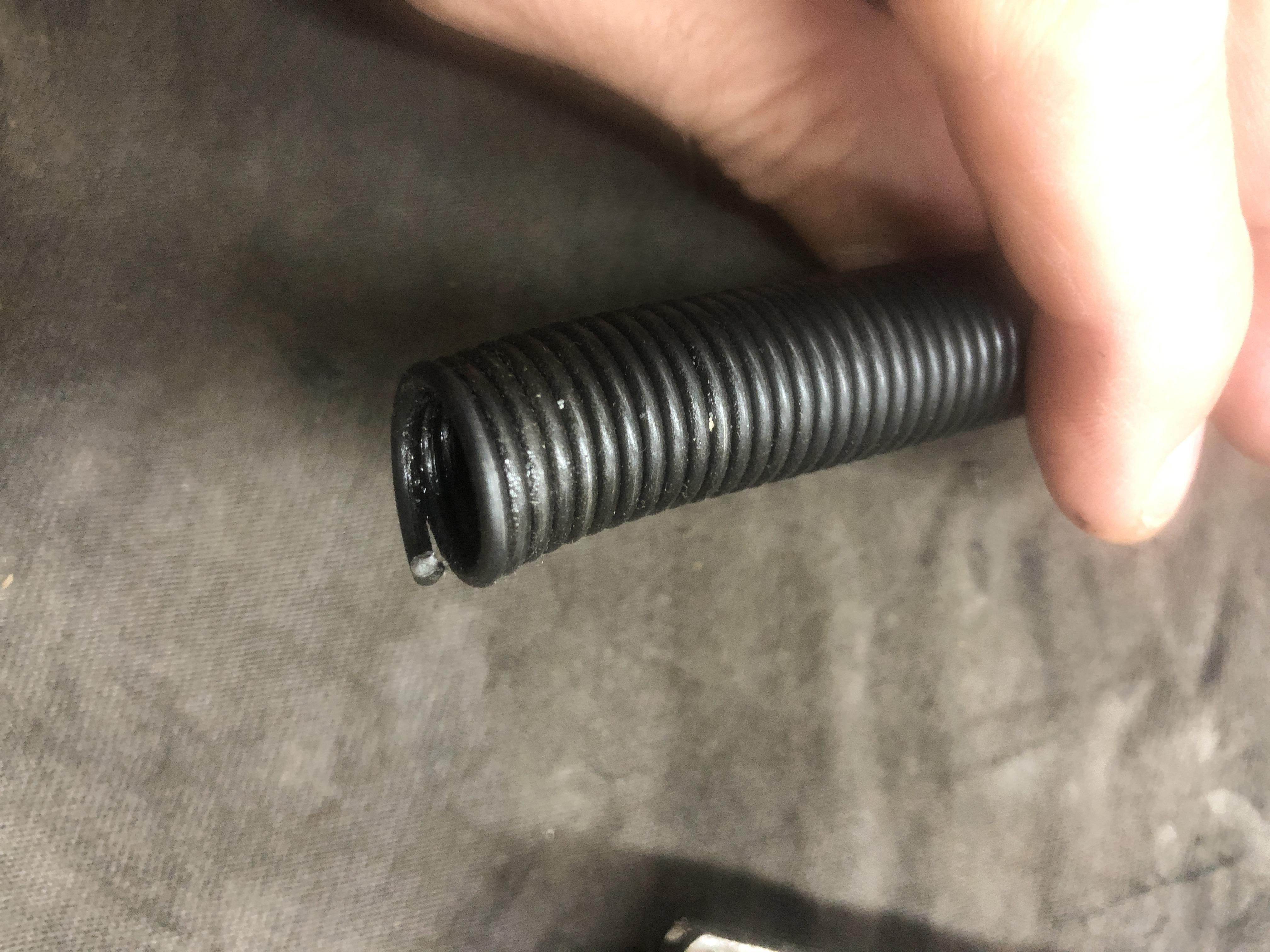
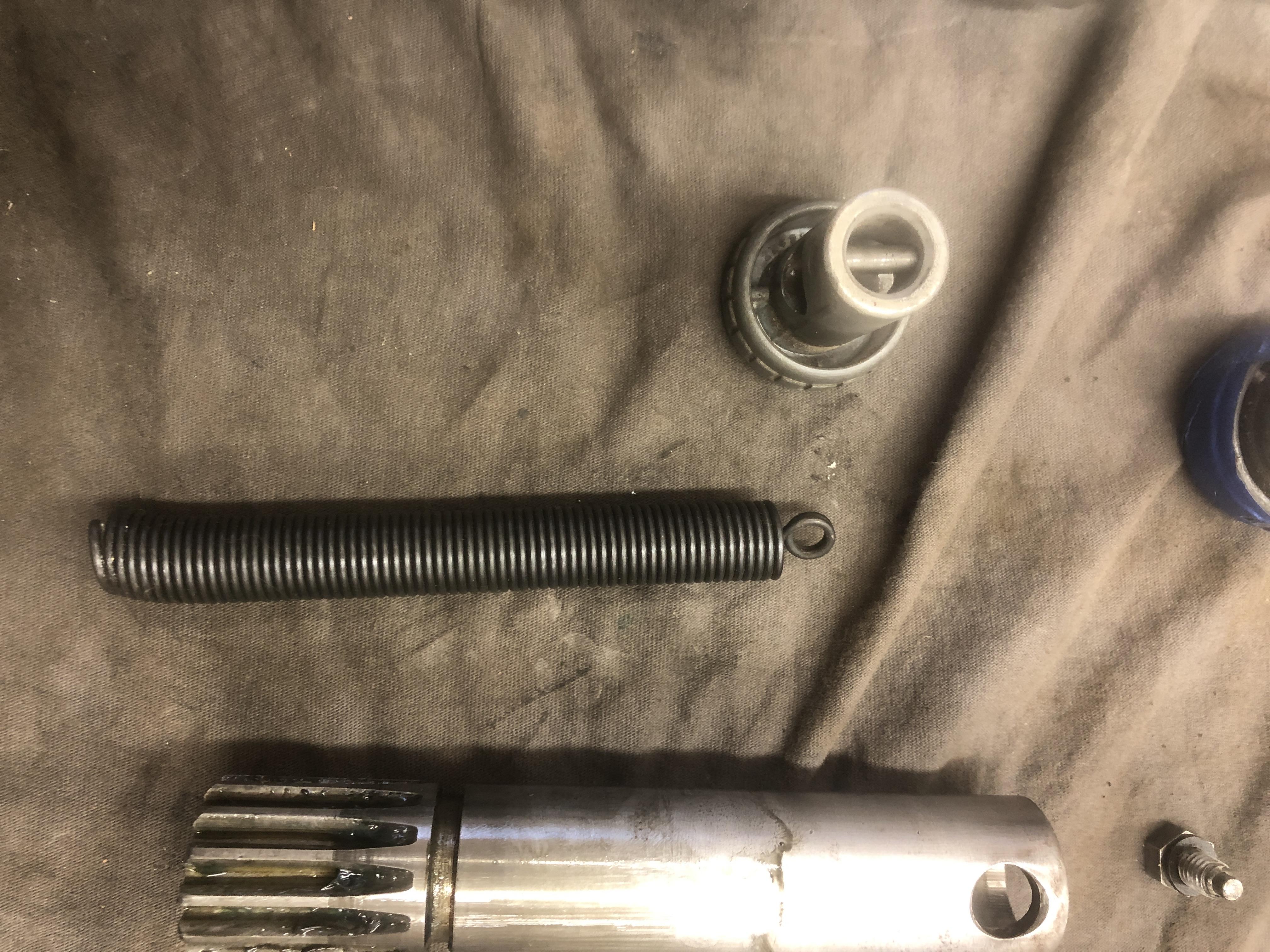
Ok, to the handful of Tool Geeks who find this interesting (me among them), here's the quill return spring removed. Its cross-pinned to the cap that goes on the handle end of the quill pinion, and the surviving loop looks a lot smaller than most of the double-loop extension springs I'm seeing online. Hopefully I'll find something with that small loop. You can see the bright metal where the 90 degree hook on the other end has sheared off.
fTjUQIw.jpg

hRBjh8Z.jpg


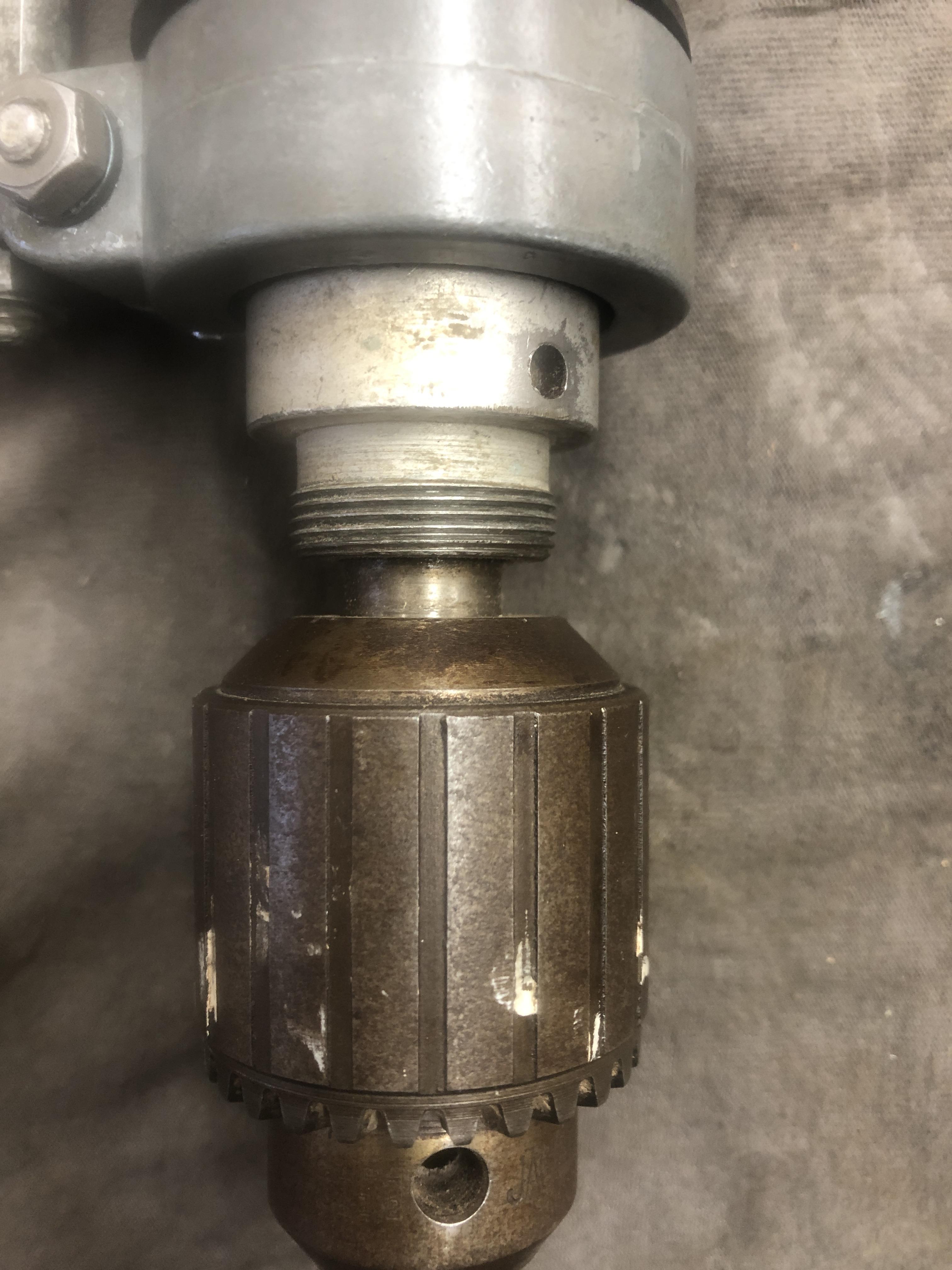
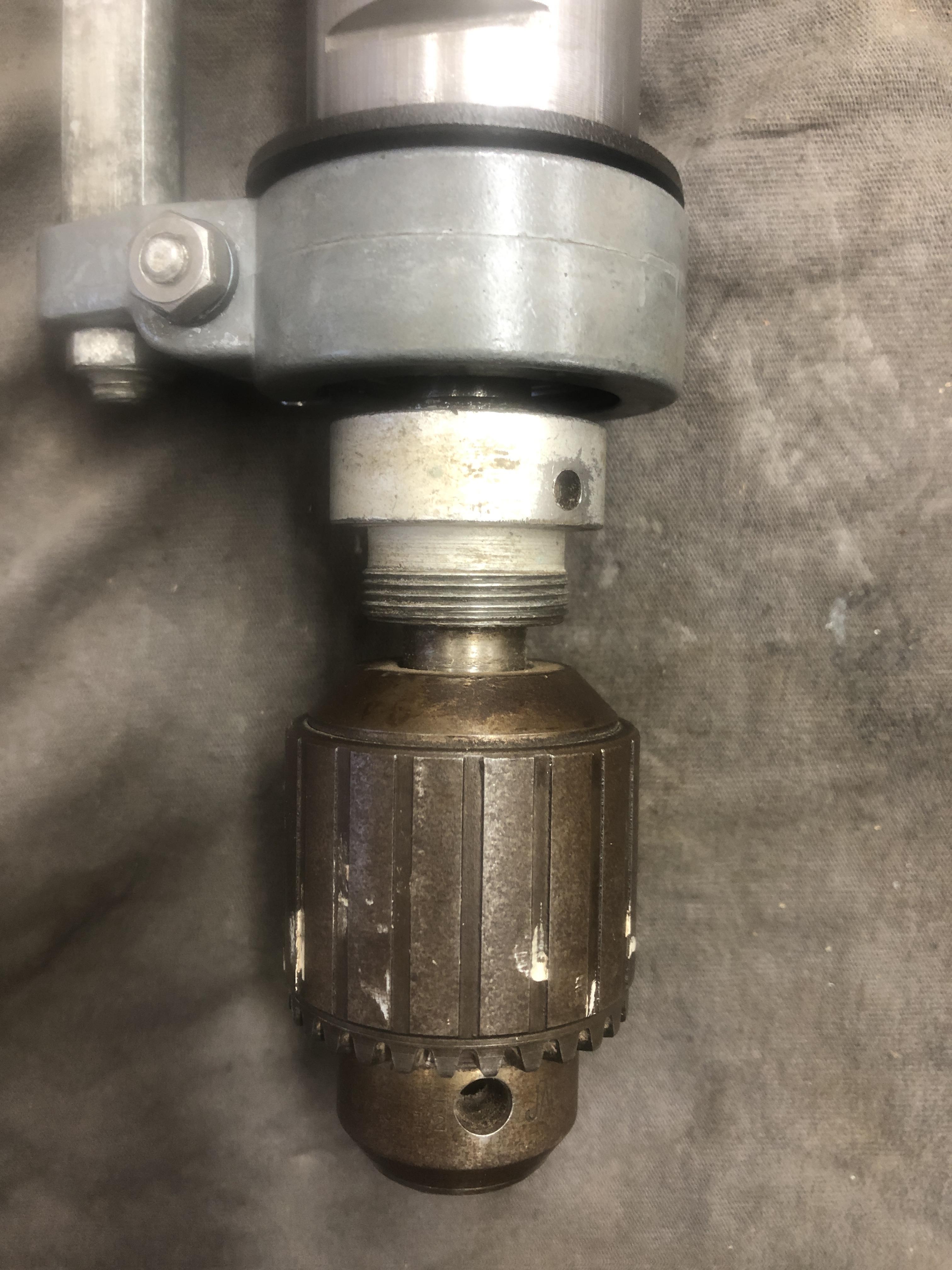
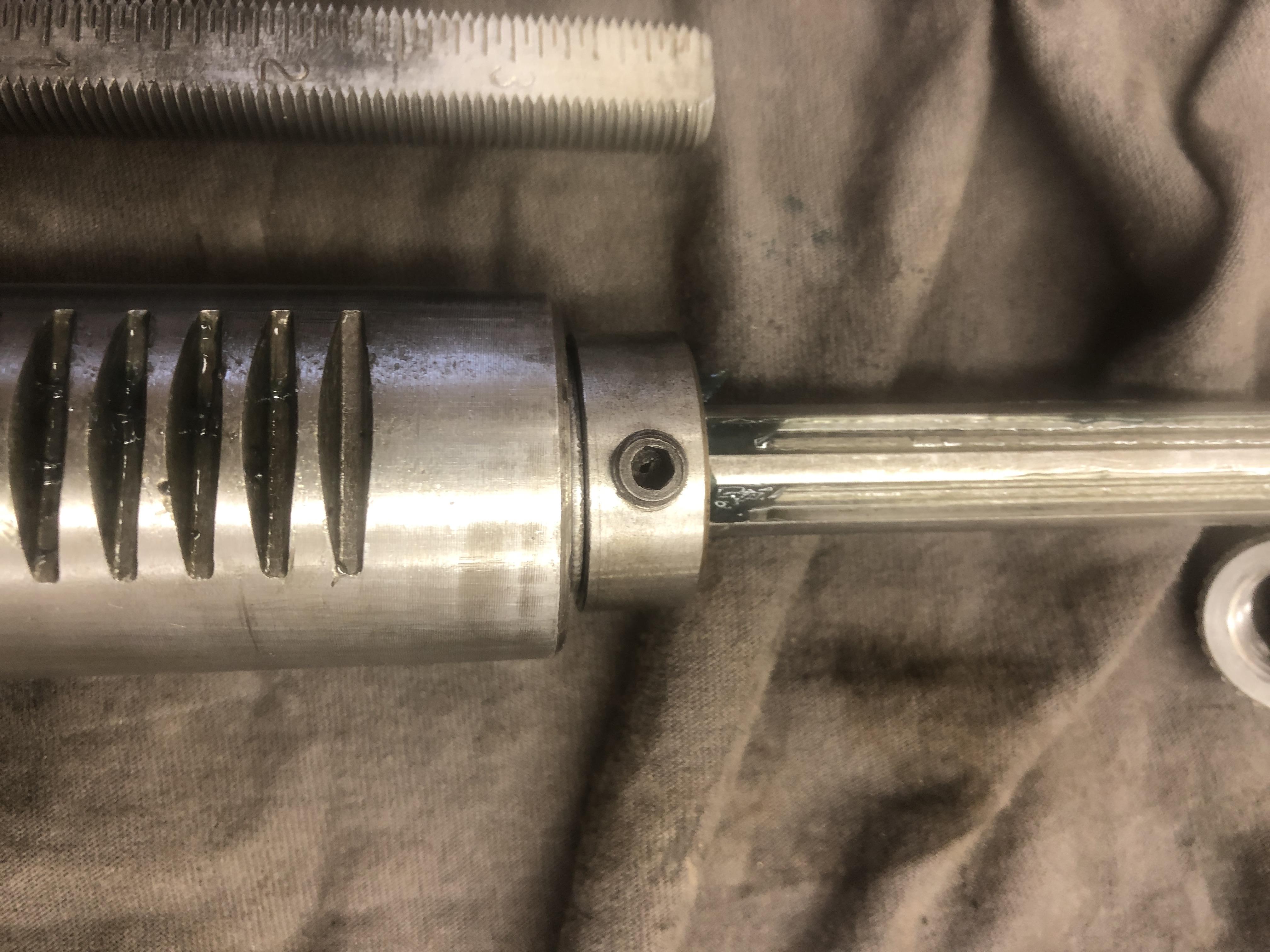
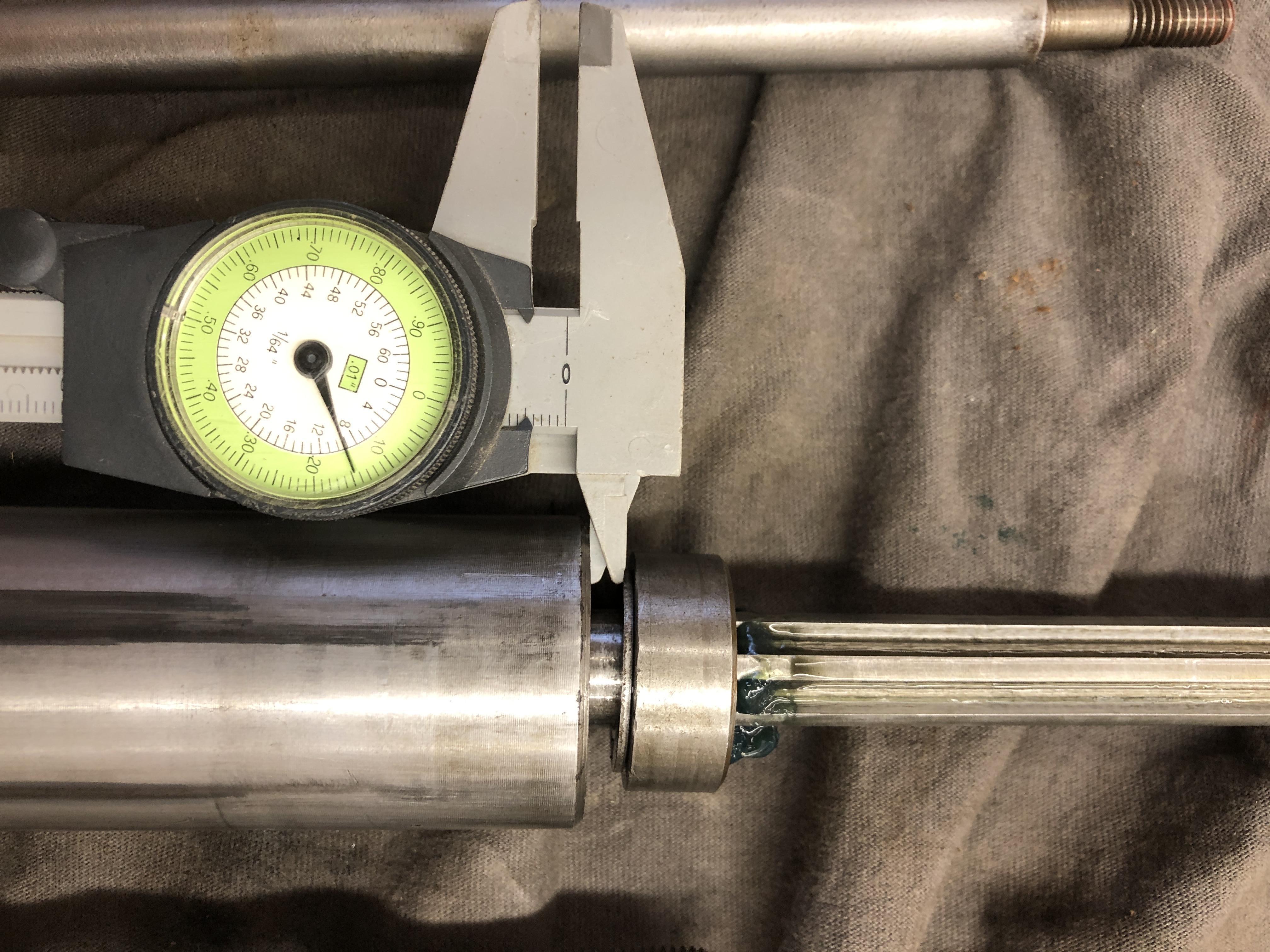
Assuming I can find a replacement spring that will fit, the other issue is the vertical "slop" in the chuck and spindle. Based on the exploded diagrams, I'm missing at least a "fiber spacer" of some sort, maybe one washer, and the knurled collar used to drive the chuck off the Morse (jacobs?) taper. You can see from the photos hOW much vertical slop I have, around .15" using my crappy little plastic woodworking caliper. (I'll re-check with my half-decent digital one later)
HKv5Ugh.jpg

olqbDLu.jpg

XOhlh8O.jpg

iG8EkkV.jpg


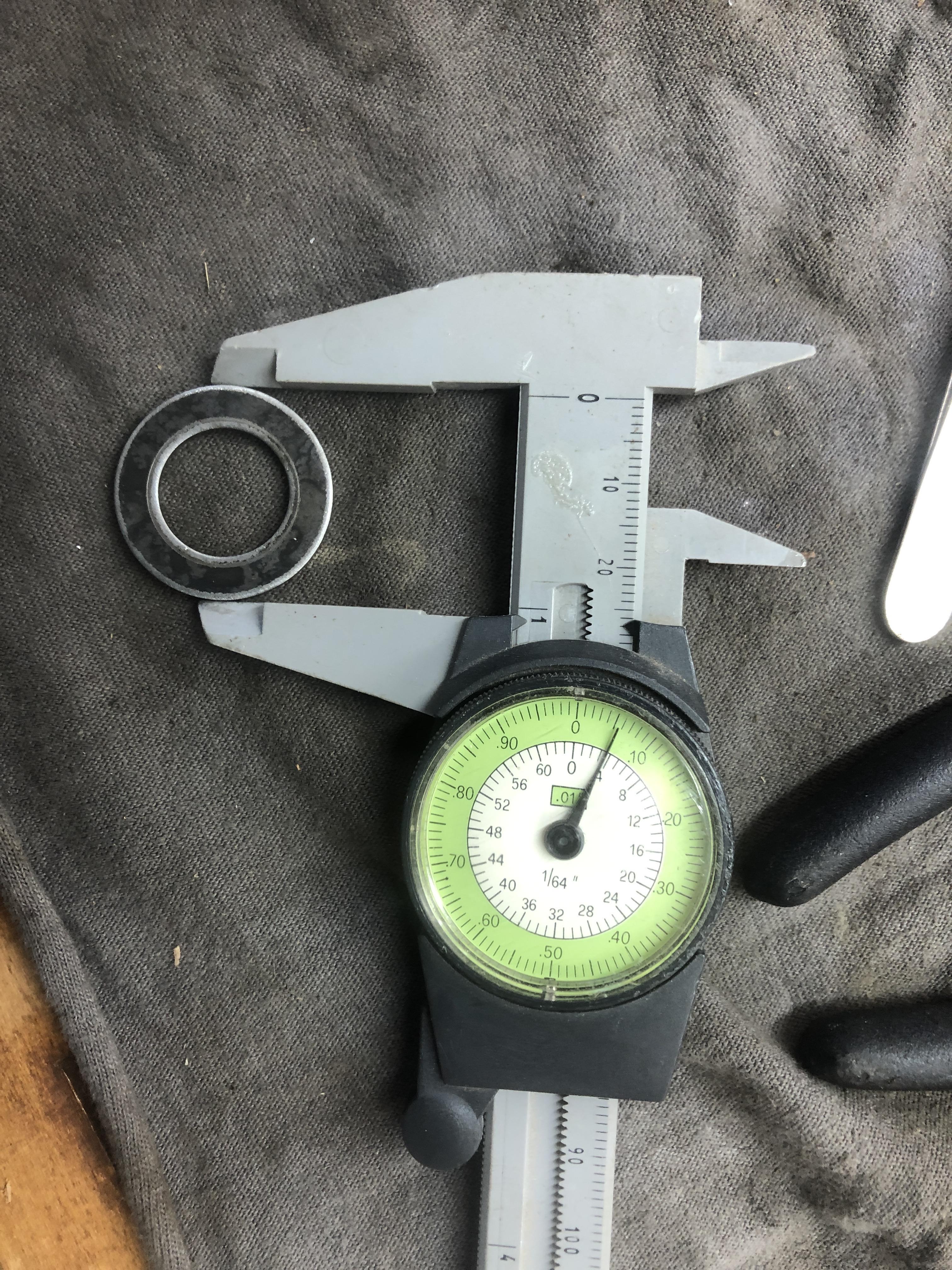
There is only one flat washer between the top of the quill bearings and the stop collar. I'm wondering if I can just find a few of these and stack them, maybe two at the top and two at the bottom of quill to take up the vertical slop? I think my chances of finding the missing spacers or other parts is slim and none, so I have to jury-rig something. Maybe add a bearing?
B1o2f81.jpg
 
The "bodge it" "kludge it" or "fix it quick and perhaps in 40 years fix it right" approach to that spring would be to spread the coils at the broken end, take a torch to it, and bend a new bent end into it. While it will be a hair shorter, it's just a hair, and that can work, where trying to weld on a new end would be (IMHO as a college edumacated welder) darn near hopeless.

Homemade fiber washers are a cereal box and a knife if you don't have a washer cutter for your brace. Or plastics, since we are after the time of The Graduate. Or just buy some not homemade. Or leather if you want to move more backwards in time, or polyurethane leather if you are vegan, but technically that's plastics again.
 
When I was rehabbing mine, I brought the fiber washers down to the local Ace to try to match them up. I was going to replace them “just because.” Turns out that the new ones are just as stiff as the old ones; they’re not flexible at all. And they didn’t have the same size. That being said, it wouldn’t surprise me if, given more of a search than I did, you were able to find new ones. These fiber washers are a dull red color, kind of the same color as a rubber hose washer, but rather stiff.
 
I had thought I might be able to heat it up the last couple spring coils and bend a new hook in the broken end, opinions on doing that and having it still tempered enough to survive are mixed online, so that will be my last resort. My local hardware store has some bronze “thrust washers” that look to be the right ID/OD, might give them a try to infill the vertical slop. It’s not a deal killer either way, I’ve been using this drill for years as-is.
 
  • Like
Reactions: Beej
The spacer washers can be anything; steel, brass, aluminum. They don't need to be fiber. The important thing is the size. The spacers need to seat on the inner race of the bearing, and not touch the outer race. The spacers should spin with the shaft and inner bearing race, and not rub on anything else. The ID of the spacer should be a good sliding fit on the shaft. The OD needs to be larger than the inner race diameter, but smaller than the outer race diameter.

At McMasters, look under Spacer Washers/Ring Shims. These are exactly what you want.

McMaster-Carr

About the springs: On most extension springs, you can easily saw them off to length with a hacksaw and bend the ends around into whatever shape you want. No heating needed. The steel is still soft enough that it's somewhat bendable.

Also, the replacement spring doesn't have to be exactly the same spring rate as the original. All you are doing is winding it up with the knob until it lifts up the spindle and holds it up. There's plenty of range of adjustment for a spring that's weaker or stronger than the original. Just pick one that's the right OD and approximately the same wire diameter, and longer than needed. Cut it to length and bend the ends as needed.
 
Spring: a new ear can be torched and bent out of that thing real quick. it broke because it fatigued, work hardened, and snapped. Likely a small portion of it is still hard to where cold bending might snap off another little piece. still, you have plenty of material to try both methods.

Bearing: is that a set screw poking out of the outer race? is that for a grease port or to plug up a missing zerk fitting?

Washer: as stated, right sized ring spacers -or thrust washers may do also.
 
Last edited:
I'd say it's pretty good odds that the spring is the same as is used on later Craftsman drill presses, possibly still available as a stock and available part.

My Craftsman Commercial from the early 70's looks very similar in the way that it functions. The spring serves to retract the quill upward into the housing when you relax the tension on the handle. My Craftsman is designed so you pull the handle straight outward, disengaging the pinion gear from the rack, and rotate it which ever direction you need to go in before the spring pulls the pinion shaft / handle assembly back into the housing.
 
I had thought I might be able to heat it up the last couple spring coils and bend a new hook in the broken end, opinions on doing that and having it still tempered enough to survive are mixed online.
You want to wedge the last few coils open so that you minimize the area affected by heat. Counterintuitively to most, a hot flame (oxy-acetylene welding torch) will minimize the extent to which you heat more than you want to, as it will heat up the area of interest quickly.
 
  • Like
Reactions: Gilmourisgod
I'd say it's pretty good odds that the spring is the same as is used on later Craftsman drill presses, possibly still available as a stock and available part.

My Craftsman Commercial from the early 70's looks very similar in the way that it functions. The spring serves to retract the quill upward into the housing when you relax the tension on the handle. My Craftsman is designed so you pull the handle straight outward, disengaging the pinion gear from the rack, and rotate it which ever direction you need to go in before the spring pulls the pinion shaft / handle assembly back into the housing.

My floor model Craftsman from the mid- or late-60s works that way. That spring has a loop at each end, rather than the 90-degree bend at one end. I’d be willing to bet that a short bit of the end of the existing spring could be straightened and bent 90 degrees and work just fine.

Re types of washers, on my late-40s Craftsman there are both steel and fiber, sometimes next to each other. I assume there is a reason for fiber in certain locations (do they hold lube better?), else why not just have steel?
 
  • Like
Reactions: Gilmourisgod
I'd say it's pretty good odds that the spring is the same as is used on later Craftsman drill presses, possibly still available as a stock and available part.
Unfortunately not, at least in any version I've seen so far. I've tried searching by the part number (22623) and using the term "quill return spring" with no success on either the Craftsman parts website, Ereplacement parts, etc. I hadn't thought of searching using parts numbers for later drill presses, but that's worth a shot. At some point all the drill press manufacturers switched to the flat coil "clockspring" design, which is nowhere near as durable. This spring lasted 70+ years under constant tension, which is amazing. They truly Don't Make Em' Like they Used To!
 
Thanks for advice All! I ordered the shim washers from McMaster, a pack of (5) 1" OD/5/8" ID. I'll take a shot at bending the existing spring, if that doesn't work, I should be able to find one that will. One last spring question:

In the case of an extension spring that's being used as a torsion spring, the existing one has what I'd call a "left hand" or counterclockwise twist. I assume this means the spring is "unwinding" as it twists counterclockwise in the drill. All the hardware store extension springs I've seen are "right hand" clockwise twist with loop ends. Does it matter, or will a tightening clockwise twist just jam an extension spring coil ever tighter against itself?
hRBjh8Z.jpg
 
In the case of an extension spring that's being used as a torsion spring, the existing one has what I'd call a "left hand" or counterclockwise twist. I assume this means the spring is "unwinding" as it twists counterclockwise in the drill. All the hardware store extension springs I've seen are "right hand" clockwise twist with loop ends. Does it matter, or will a tightening clockwise twist just jam an extension spring coil ever tighter against itself?

I don't think it really matters. There's nothing solid running down inside the spring, so it's just going to squeeze a little smaller in diameter as it winds up. And it's only going to wind up 3-4 turns.
 
Unfortunately not, at least in any version I've seen so far. I've tried searching by the part number (22623) and using the term "quill return spring" with no success on either the Craftsman parts website, Ereplacement parts, etc. I hadn't thought of searching using parts numbers for later drill presses, but that's worth a shot. At some point all the drill press manufacturers switched to the flat coil "clockspring" design, which is nowhere near as durable. This spring lasted 70+ years under constant tension, which is amazing. They truly Don't Make Em' Like they Used To!
I pulled my parts breakdown for my Craftsman Commercial heavy duty 15-1/2" drill press and the spring looks very much identical to what you have.

The drill press Model# is 113.24520 and the part is simply labeled "spring" the diagram shows key # 44 Part# 71109 if that's any help. I'd think that the exploded parts diagram should be available on the web.
 
So after all my agonizing, the actual repair went together pretty easily. I tried bending the spring, NFG, it's nearly impossible to get a grip on it that just doesn't translate into wasted effort twisting the spring. So I broke out this thing:
K22zdHS.jpg

And heated the spring end to just below cherry red. It bent easily, not perfect, but good enough. I let it cool on it's own, no quenching or oil dip. Hopefully it will survive the loss of temper. We'll see how it holds up long term.
qm4N5Cw.jpg

After a bit of fiddling, I got it all back together and.... It works! good return tension on the spindle for the first time in years. I have the flat washers on order from McMaster, nothing like them available locally, has to be 1" OD/5/8" ID washers. I'll try shimming the vertical slop out, then this should be good for another 70 years. the bearings feel fine, my Grandpa must have replaced them at some point. I polished off the worst of the rust, I may eventually do a full restoration. Thanks for help and advice All!
AbTWAQY.jpg

mwVKXSX.jpg