• TalkBass has been independent since 1998. Add your voice.
    Create a free account to reply to discussions, view embedded media, and browse with fewer display ads.
    Join freeLog in
    Want zero display ads or expanded classifieds tools? Compare plans.

Vintage Fenders. Why??

what do you believe is the appeal of classic Fenders versus a new Fender or FSO?

As the owner of a '60 Jazz bass, I have no clue. Some folks just love vintage stuff, whether instruments, vehicles, furniture etc. Better sounding?? Some are, some not. Better feel, build quality and so forth? Again, some yes, some not so much. Regardless, it's all very subjective. Like and play what makes you happy. Anything less, why even own it?

I bought my '68 P-bass used in 1972 for $250 CDN, then played it and only it for 15 of the most important and formative years of my long musical life. (I've played in bands for 53 years steadily.) Its worn form encapsulates a lot of emotional goods for me; another '68 P, nothing really.

Similar story. I bought my 60 in 1971 for $100 usd. I played it exclusively until 7 or eight years ago. That bass was with me for every jam, rehearsal, dive bar gig, recording...everything. We have history. For me that's what makes it special, not the year it was made, but the history/memories made.

Some years ago, I just wanted to know what else was out there. What was I missing? So I bought an active bass. These days, I play 31" & 32" scale 5 string basses for ergonomic reasons, due to a hand surgery on my left hand. Absolutely love 'em. They sound and look great to me. Do I miss playing the '60? Not really. And for those very few times I do, I pull it off the wall and take it to a gig, still gets the call occasionally.
 
  • Like
Reactions: magnaton
It's usually what happens with antiques…

There's no rationale, it's all driven by human behavior & that right there tells you everything you need to know…
Same with art. Collectors and museum buyers spend thousands -- millions even -- for old hand painted pictures when you can get a modern manufactured poster print in the gift shop that looks just the same and only cost a few bucks. Crazy! :thumbsup:
 
I used to think it was all hype until I played my 64 Jazz. It's just a wonderful instrument - the neck and playability are superb, sounds great, feels great, and it's light and easy to play. It doesn't hurt that is looks Uber cool as well.

That being said, my Sadowskys and Fender custom shops are also superb instruments. Still, there is nothing quite like my 64.
 
Great post. That the necks were hand carved is not entirely correct, though there certainly was hand finish/clean up work involved. This was the method:

View attachment 5026166

That said, despite all the CNC advances, it's remarkable how tight a lot of the tolerances were on original pre-CBS examples (all bets are off on refins). Most have really tight neck pockets.

Any machine is only as good as the skill level of the operator. It can be a help or a hindrance.

During the Factory tour they showed us the early production methods used to build the Fender guitars and basses. They'd bandsaw out the rough neck shape and then a line worker would proceed to hand carve out the basic shape using a spoke shaves, chisels, and other shaping tools. Quite a bit of sanding and final shaping was done by hand early on. That would've been the in the 50's . Tadeo Gomez was responsible for the beautiful "soft V " profile of the early Fender necks. He had no formal woodworking experience and taught himself. Amazing when you think about it.

TGneck.jpg


When the popularity of surf music hit and demand rose Leo wanted to speed up production so machines were brought in to help with production. Pin routers, routing tables, drum sanding tables. and other machines. If he couldn't find a machine to do what he needed, he'd design one. The fretting machine Fender used was one example. The worker placed the fret ends into the side of the neck and then used a foot pedal connected to a bar that pushed all the frets in from the side at the same time. Simple and effective but not made for speed. When CBS bought Fender they tried to use that machine and it didn't work well with high speed production. That's one reason why CBS Fenders in the 70's were not the best. They were using Leo's machines that were from the 50's and early 60's and never designed or intended for "speed" production. CBS learned that lesson the hard way.

That factory tour was VERY informative. I could go on and on about the stuff i learned and saw that day. We also toured the Rodgers drum line and Rhodes keyboard line as well.
 
Good point! I also think about the emergence of classic rock radio format in the late 80s, which over the next decade would make it increasingly difficult to hear current music except on college rock stations. In my hometown of Ottawa, the only major radio station playing quality new music made a much-publicized decision to switch definitively to "classics" of the 60s and 70s. Were I born five later, I too might be looking for aging Fenders (instead of Steinbergers)! Our drummer was born in 1977, not 1972 like me, and it's like the 80s didn't exist for him.
Also much of this music fell into legal black holes when labels went under or formats changed. A good example of this is Def Leppard: megastars in the 80's, now virtually nonexistent because they couldn't resolve a contract dispute over streaming rights until they were largely forgotten. So much of the 80's was also driven by MTV and a lot of that was the product of stuff that they could get cheap from the UK.
 
  • Like
Reactions: Green Knight
I have the good fortune of owning a few vintage Fender classics. I purchased them all in the 70's and 80's when they were relatively affordable and available. They have all seen lots of action and are amazing instruments.

Moving forward when the custom builders started to appear I started playing active J Bass from Sadowsky. I slowly transitioned to the modern basses and although the vintage basses do get played.. I use the modern instruments since they sound great and are easy to replace.

I have had several IMHO duds from The Fender Custom Shop but recently acquired one that's very nicely done.

I couldn't afford to buy the vintage basses I own but I'm really glad that I have them and can play them. They're great instruments.
 
  • Like
Reactions: 60bass
You seem to be asserting that older instruments have more problems than newer instruments. I don't think this is necessarily true, not even in general.

Either that or you are asserting that old Fenders were kinda junk.

I think all makes and ages of production have their lemons and gems. Time tends to weed out many of the lemons as they get parted out or thrown in the dumpster or whatever fate awaits them.


Also, not everyone is a player or interested in the setup of the instrument. Some old basses are simply decoration for someone's restaurant wall because they are historical objects.
The basses he mentioned aren't your run of the mill production brands though. So it's highly unlikely that you'd find yourself playing a Nash or an Olinto that can be classified as a lemon.
 
Same with art. Collectors and museum buyers spend thousands -- millions even -- for old hand painted pictures when you can get a modern manufactured poster print in the gift shop that looks just the same and only cost a few bucks. Crazy! :thumbsup:
In the case of art though it's slightly different. Monets, Van Goghs, Picassos you are dropping millions for something that was created by one of the masters centuries ago!

I recognize some might argue that those 50s Fenders were made by Leo (the master) himself and I can get behind that considering we're talking tens of thousands, not millions. and it's your money and what you do with it up to you…
 
  • Like
Reactions: in tune
I worked in a largest local music store back in the '70s. I tried a lot of instruments from the '50s and '60s there being sold as used. The prices were those of used instruments and not one of them seemed to be all that special. They were just run of the mill used instruments.

My personal experience with owning a mid '50s P bass in the mid '90s was abysmal. I ordered it after seeing an ad in a trade magazine and speaking with the seller who had nothing but good to say about it so I bought it. Turns out the neck was warped in a couple of places and couldn't be straightened into playing condition and the body had a refinish that was not very good. I returned it.
 
  • Like
Reactions: Roger W
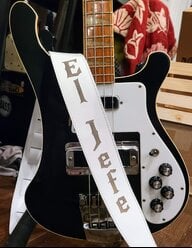
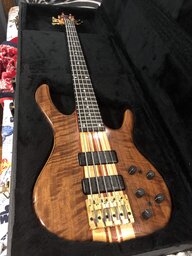
I appreciate reading everyone's honest opinions on this topic. My assessment is this - after my tremendous search through a bunch great modern basses (some of them are attached), I have proven to myself that the early to mid 60's Fenders were the best out of what I tested. Hence why I own and play '63, '65, and '66 P Basses. I got rid of my other more modern basses as they could not compete on feel, sound, balance, and quality. Yes - I said quality. The three 60's basses I have are extremely well built, stable, and require no maintenance. They do not move. Perfect action, neck, and pickups and tons of mojo. So to answer OP's question - the reason why is the 60's Fenders are just straight bad a&$!
 

Attachments

  • 0C3B78E9-DE27-4B86-A2D5-D9C44005EFCC.jpeg
    0C3B78E9-DE27-4B86-A2D5-D9C44005EFCC.jpeg
    325.9 KB · Views: 33
  • 4FC9E258-41CC-4B10-94CC-4FEEAF6B3B55.jpeg
    4FC9E258-41CC-4B10-94CC-4FEEAF6B3B55.jpeg
    541.4 KB · Views: 32
  • B22B1067-6C96-44B0-AFA9-9164A9567155.jpeg
    B22B1067-6C96-44B0-AFA9-9164A9567155.jpeg
    229.4 KB · Views: 38
  • 8603D51C-0D0C-4F82-BC1D-91E202F72E7B.jpeg
    8603D51C-0D0C-4F82-BC1D-91E202F72E7B.jpeg
    96.1 KB · Views: 33
  • 3968F9C6-33BA-40B7-92A0-4E29BE34229B.jpeg
    3968F9C6-33BA-40B7-92A0-4E29BE34229B.jpeg
    91.9 KB · Views: 32
  • 4EF990B1-07DB-42C4-82FF-3BDAB1859AE4.jpeg
    4EF990B1-07DB-42C4-82FF-3BDAB1859AE4.jpeg
    1.6 MB · Views: 41
  • 296A9A31-B455-43E6-B020-E24126335488.jpeg
    296A9A31-B455-43E6-B020-E24126335488.jpeg
    1.5 MB · Views: 33
Last edited:
I agree with the OP. I'm. Huge fan of Leo Fender designs. In fact, looking around my man cave I have four "fender" based basses. none of them are FMIC from any era. Did I own Fender basses? Yes. My erstwhile 65 blocked bound jazz bass is a prime example. Wish I still had the neck, but the rest of that bass was an albatross.
Then there's the 1990s Mexican Urge. I had the urge to throw it down the stairs lol!

My crown jewel is a 5 string fretless real telecaster shaped custom from 3:16 bass guitars in California. Mahogany body. Ebony board. Nordstrand MM. 5 way switch. Passive. Sounds unlike anything FMIC, Music Man or G&L ever made.
I absolutely love what Leo Fender started. I have very little faith in what happened to the product after he sold the company.
 
it's real simple. The early to mid 60's Fenders, at least the good ones, smoke the majority of the junk made today. Overall they were better instruments, from the wood, the components and the attention to detail. Deny all you want - they were better instruments hands down. I've owned a bunch across all eras, the early ones are the best hands down in my opinion.
It's hard to value your opinion when you seem to think Basses made today are junk.
 
  • Like
Reactions: Tanner5382
I mean, yeah, it's cool to hear someone say "this is my '64 jazz" or "this is my '59 precision," but unless you're selling one for $15,000 what do you believe is the appeal of classic Fenders versus a new Fender or FSO?

A while back, I bought a '65 P bass from Chicago Music Exchange for about $7k. It sounded fine and played okay. But the truss rod was maxed and it wasn't nearly as nice as my Nash PB57 or my Olinto P bass (both pricey but significantly less expensive). I've also played a couple of vintage jazz basses that were in good shape, but none came close to my Bluesman Vintage jazz.

Despite all that, I'd still love to own an early 60's jazz someday. Who knows? Maybe I'll stumble across one at an estate sale or something. But with prices now officially at ludicrous levels, I've pretty much stopped looking.

Those of you who own one, why do you love yours?
One big reason for a 61-65 Jazz is the neck. I believe it's what is called a "60's Slim C-shape with a 7.25" radius". That's what my 1965 Jazz that I bought in 1966 had. That bass was stolen in 1976 and in 1985 I finally found a 1982 Jazz with the same neck but in all-maple (my '65 had a rosewood fretboard). Besides playing my '65 through high school and some college, I toured with it for 3-years playing 5-nights a week, 50-weeks a year. I really got used to that neck. When I looked to replace it starting in March of 1976 the Jazz necks were all thicker and really uncomfortable to me. When I picked up my current Jazz in 1985 and played it, it just felt like coming home. I'd have to have the custom shop make one for me now as Fender USA switched to a 9.5" radius in the mid-80's and they even put that same radius on their 60's and 70's re-issues...which of course, none of the originals had. The MIM re-issues usually have the 7.25" radius on their 60's and 70's re-issues, though I don't know how slim they are.

If you've never played a Jazz with the 7.25" radius, you'd probably be fine with the 9.5" radius - it's just a little flatter. But after touring and playing about 750 performances with my '65 in those three years, everything else just feels weird to me. So the neck might be one reason.
 
  • Like
Reactions: wango55
Nobody with any mechanical sense is saying they're "better" instruments across the board. They're simply collectible. Like all old things that are valuable, there's more to the value than the item's utility.
I have a very high level of mechanical sense - and I'm telling you that the 3 examples of 60's Fender P's are every bit "better across the board" than the other 12+ basses I've played from the modern era. Absolutely they are better! That's why I have them and sold the rest of my herd.
 

Latest posts