
Enjoy the benefits of a premium membership!
Upgrade Account
-
TalkBass has been independent since 1998. Add your voice.
Create a free account to reply to discussions, view embedded media, and browse with fewer display ads.
Join free Log in
Want zero display ads or expanded classifieds tools? Compare plans.
You are using an out of date browser. It may not display this or other websites correctly.
You should upgrade or use an alternative browser.
You should upgrade or use an alternative browser.
VT Bass Version 2 Impression
- Thread starter Chrisk-K
- Start date
More options
Who Replied?
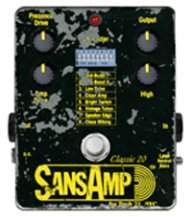
The thing that occurred to me about the speaker sim circuitry is that it's supposed to sound like 10" drivers, but what if you're trying to go for a B-15 sound, with big, woolly 15s? It would seem to make sense to disengage the speaker sim (on the V2) if you're going for that kind of tone, unless I'm misunderstanding how the speaker sim works.
I've got a V1 and I don't plat electric without it, and I sometimes play my upright through it too. Great tone, but I am curious (read: tempted) about the speaker sim button on the V2...
The speaker sim is designed to work with your amp's speaker. The problem people have at times is that the speaker sim does not always work well with the EQ curve of your amp's preamp. Many people like a bright high end that will make the speaker sim sound too bright. It's the interaction of both. If the speaker sim itself was too bright it would be useless for direct recording and we have many examples that point to the contrary.
When the speaker sim is disengaged there is a high end roll off engaged to make it easier to use into the front end of an amp. As has been stated, if you mod the pedal and remove the speaker sim the pedal will be even brighter which is not the sound most are looking for.
From the manual:
SPEAKER SIMULATION*
Built in speaker simulation is an integral part of the Character Series circuitry. Each model is
tuned to match the speaker/cabinet of that amplifier. It is designed for a smooth, even response as
would be achieved by a multiply-miked cabinet, without the peaks, valleys, and notches associated
with single miking.The shape of the speaker curve will not adversely effect or interfere with the
frequency response of your own cabinet.There is no need to defeat the speaker simulation circuit
when using it with a guitar amplifier.The speaker simulation works in tandem with the EQ controls to custom tailor the overall sound.

The speaker sim is designed to work with your amp's speaker. The problem people have at times is that the speaker sim does not always work well with the EQ curve of your amp's preamp. Many people like a bright high end that will make the speaker sim sound too bright. It's the interaction of both. If the speaker sim itself was too bright it would be useless for direct recording and we have many examples that point to the contrary.
When the speaker sim is disengaged there is a high end roll off engaged to make it easier to use into the front end of an amp. As has been stated, if you mod the pedal and remove the speaker sim the pedal will be even brighter which is not the sound most are looking for.
Thanks for contributing to the thread!
I'm still unclear about the effect of the speaker simulation circuit. Is it brighter when the sim is bypassed, or is it darker?
I have the first version VT Bass and it can be quite difficult to dial in the highs - often setting the treble control at 9:00 or lower. IMO, the voicing with all of the EQ knobs at at 12:00 is way too bright.
Has Tech 21 changed the treble response on version 2 of the VT Bass? Some reports suggest that it is not nearly as difficult to tame the highs on the new version.

bongomania
Commercial User
Interesting... I would have sworn the point of speaker simulation was to take the edge off the highs--not to make the highs brighter!
That's what I don't understand... if you run a fuzz pedal direct, it sounds all harsh and buzzy. But if you run it through a 15" speaker, the natural roll-off of the speaker causes the fuzz to sound darker and smoother, losing that harsh, raspy, edge.Interesting... I would have sworn the point of speaker simulation was to take the edge off the highs--not to make the highs brighter!
So, one would quite reasonably expect that engaging a speaker simulator would have a similar effect - rolling off some of those buzzy highs above 5 kHz.

I was confused on the speaker emulation also, but if you look at the old thread herer where the VT is scoped, you'll see that there is a sharp peak in the highs around 3 or 3.2 khz on the original VT, and then after that there is a sharp roll-off. That roll-off on the v2 is still there, though perhaps not quite as aggressive. However, defeating the speaker sim really pull that 3khz peak out, which is what gets that clanky, string noise thing going that some love and others hate. As Tech21 has mentioned here, it's really a matter of your rig (or the PA) and how it sounds as to whether the clankiness will be too extreme for your tastes.
I think what many people were expecting with the speaker sim defeat was that the highs would become extended and glassy, which is not the case at all. It really just tames that peak so that the pedal will work better with other gear that might over emphasize it a bit.
I wish Tech21 would implement that speaker sim defeat on the Deluxe version, and make it's setting programmable also. That would be super duper killer!
I think what many people were expecting with the speaker sim defeat was that the highs would become extended and glassy, which is not the case at all. It really just tames that peak so that the pedal will work better with other gear that might over emphasize it a bit.
I wish Tech21 would implement that speaker sim defeat on the Deluxe version, and make it's setting programmable also. That would be super duper killer!
I think the issue with your theory is that you are assuming that all the speaker sim is emulating is a high-end roll off. However, all cabinets have their own voice that contributes to lots of changes in frequencies across the spectrum. Tech21 has stated that they based the VT off of American-style 10" speaker cab, which of course is the Ampeg 810 fridge. It follows that the speaker simulation would emulate that cabinet, not a 15" loaded B15 cabinet.That's what I don't understand... if you run a fuzz pedal direct, it sounds all harsh and buzzy. But if you run it through a 15" speaker, the natural roll-off of the speaker causes the fuzz to sound darker and smoother, losing that harsh, raspy, edge.
So, one would quite reasonably expect that engaging a speaker simulator would have a similar effect - rolling off some of those buzzy highs above 5 kHz.
Regardless, I think the key to using the pedal is to know that the character knob acts like a second mid control, but once you get above noon it adds a whole lot of harmonics, so use it sparingly. When dialed up, it makes the treble response of the original VT more harsh as there is so much harmonic content layered on top of it. To de-emphasize treble, definitely dial it down to 9 o'clock, and adjust the character knob to 10 o'clock or so. Then use the Mid knob to put the mids that the character knob removed back into the tone, and then go even higher to dial up a warmer sound. Then add low-end to get the fullness you want. The end result will be anything other than a clanky treble. In short, active EQ controls are always interactive, so you there are ways to change the treble response without ever having to touch the treble knob.
In the end, it doesn't matter where the knobs are set as long as the sound is good.

The speaker sim does tame the highs but we use a more mild EQ curve and not the brick wall type of filter that some manufacturers use. This was intentional so the pedal would have more flexibility in different situations.
The speaker sim is designed to emulate a mic'd cab. When you put the pedal through a mixing console in the studio you generally will leave the tone EQ on the board flat. When you run into an amp you are going through an EQ section which is usually not flat response or best optimized for another preamp or distortion pedal. This is why some people will like a certain distortion pedal through their amp and others will hate it. There is no way for any designer of a pedal to anticipate exactly what how a player will have their amp set up. If you run a distortion pedal into an Ampeg B-15 you will have a much different result that running into a modern bass rig with a full range cab.
There is a mod we can do to add the speaker sim switch on the VT Bass Deluxe but it can't be stored as a preset. It's either on or off.
The speaker sim is designed to emulate a mic'd cab. When you put the pedal through a mixing console in the studio you generally will leave the tone EQ on the board flat. When you run into an amp you are going through an EQ section which is usually not flat response or best optimized for another preamp or distortion pedal. This is why some people will like a certain distortion pedal through their amp and others will hate it. There is no way for any designer of a pedal to anticipate exactly what how a player will have their amp set up. If you run a distortion pedal into an Ampeg B-15 you will have a much different result that running into a modern bass rig with a full range cab.
There is a mod we can do to add the speaker sim switch on the VT Bass Deluxe but it can't be stored as a preset. It's either on or off.
I still have to dial back treble and character (and some mids too) when going direct to my sound card with VT. It easilly gets too clanky with or without an amp to fight over EQ. I noticed the treble is not that much of a problem at around 9:00, but it's the mids (I had them around 2:00) that also intruduce clank even when character is well below 12:00 (usually mine is around 9:00 or 10:00 max). I really wanna try the v2 to see how mids behave.
FWIW, my example wasn't meant to be exact analogy... just a quick example. One thing for sure is that running a fuzz pedal through a woofer is not going to make the sound brighter than running direct into a console.I think the issue with your theory is that you are assuming that all the speaker sim is emulating is a high-end roll off. However, all cabinets have their own voice that contributes to lots of changes in frequencies across the spectrum. Tech21 has stated that they based the VT off of American-style 10" speaker cab, which of course is the Ampeg 810 fridge. It follows that the speaker simulation would emulate that cabinet, not a 15" loaded B15 cabinet.
Regardless, I think the key to using the pedal is to know that the character knob acts like a second mid control, but once you get above noon it adds a whole lot of harmonics, so use it sparingly. When dialed up, it makes the treble response of the original VT more harsh as there is so much harmonic content layered on top of it. To de-emphasize treble, definitely dial it down to 9 o'clock, and adjust the character knob to 10 o'clock or so. Then use the Mid knob to put the mids that the character knob removed back into the tone, and then go even higher to dial up a warmer sound. Then add low-end to get the fullness you want. The end result will be anything other than a clanky treble. In short, active EQ controls are always interactive, so you there are ways to change the treble response without ever having to touch the treble knob.
In the end, it doesn't matter where the knobs are set as long as the sound is good.
I've spent some time with the pedal and am familiar with how the various controls interact. I know that the Character control varies the scoop/boost in the midrange and adds harmonics when set above 12:00 at high gains. What I've found, however, is that if I set it too much below 12:00, I have difficulty dialing in the midrange the way I want. I find the VT Bass a very finicky pedal to adjust. There are some great tones in there, but one tiny accidental adjustment can knock things out of whack. Further, now that I have a fEARful, I'm hearing that upper midrange clank more than ever. My Eden cabinet does a better job of hiding it.....
BTW, I just tried out a similar Tech 21 v2 British pedal and noticed that the sound is "flatter" with the speaker sim switch up and "brasher" (more ~ 3 kHz) with the switch pushed down.
Further, now that I have a fEARful, I'm hearing that upper midrange clank more than ever. My Eden cabinet does a better job of hiding it.....
BTW, I just tried out a similar Tech 21 v2 British pedal and noticed that the sound is "flatter" with the speaker sim switch up and "brasher" (more ~ 3 kHz) with the switch pushed down.
Yup, my GK NEO 412 is quite open and bright and definitely shows that high mid clank so it's not easy to dial it down and hide it.
Just got my VT Bass v2, and from what I've tried - the speaker defeat button is exactly what I wanted! No more clank from that emphasized 3khz peak.
One thing I noticed right away though - the pedal looks a bit different, it's not as brightly colored and blue, but has more of a greenish tone mixed into it, and the print on the front is not as detailed as my v1 was, it's a bit more grainy but it's only noticeable up close. It almost looked like a copy of VT. Completely irrelevant I know, but I found it to be quite interesting. It sounds great and it feels really well made.
One thing I noticed right away though - the pedal looks a bit different, it's not as brightly colored and blue, but has more of a greenish tone mixed into it, and the print on the front is not as detailed as my v1 was, it's a bit more grainy but it's only noticeable up close. It almost looked like a copy of VT. Completely irrelevant I know, but I found it to be quite interesting.
It sounds great and it feels really well made.
I'll ad my 2 cents. I have had 2 VT bass pedals in the past, I liked them but ended up not quite satisfied with the mid scoop & the inherent brightness of the treble at any setting except when the treble was almost totally rolled off as to not be harsh. I also found it made it harder to adjust the bass & mids with a balance, I fought with the settings to compensate the treble cut needed to tame it, even the character knob. Having only played witht the V2 for less than two hours I tried my old preferred settings with the speaker sim disabled & found the tone was improved & was able to ad more treble than previous. I then tried the fliptop setting & found the sound I envisioned out of this pedal. I have it in front of a GK 400rb3 currently & with the treble just around 1030 or 11 oclock on the Vt It sounds great in front of the GK, I tried it in the effects loop position & at the effects return bypassing the GK's preamp, it sounds best to me in front, with the GKs input volume around noon as well as the boost, with a high & high mids as well as some bass attenuated on the GK. It's about a 70/30 Ampeg to Gk type tone & seems like a great jumping off point for slight variations of solid bass tones of the variety I'm after. I definitely reccomend trying a V2 version of the pedal & starting with the fliptop setting for starters, if you were previously dissapointed with some of the harshness of the highs & fought with the eq in the original version. It still has maybe a slight midscoop but It is not nearly the same with the bass, treble & mids way higher than previous it sounds like more midrange energy is covered in bass friendly frequencys.
Update, I have been playing it through my amps effects return again, bypassing the GK's preamp section. It sounds maybe a little clearer & defined, not clashing with another layer of eq. I might just stick with it this way & play around some more around the fliptop setting starting point. I have a recording session on Saturday & will bring just the pedal & bass no amp. I am satisfied that I can get a great bass tone on the fly that I can be happy with either at a gig or recording with just the VT V2. I think the way the pots graduate changes more evenly & interact is more predictable or intuitive on this version. I think the original would have been even better received by the masses if the default was speaker sim defeat only. I dont see how those clanky high frequencies with the speaker sim would be useful for recording or otherwise for a majority of players, you can get all the highs you need with the treble & character nob in a more natural balance without the sim.

It sort of makes sense to me to have the sim defeat function, especially for the fliptop setting. The B-15 is a 15, after all, not 10s. The defeat button gives more versatility, I'd think... if you want the sound of 10s in the SVT settings, you've got 'em. If you want the B-15 tone, and you're actually playing through a 15 cab, why would you want it to simulate 10s? Just my take. I've got the original, but I think I'll save up some shekels for the V2.
V2 totally works better for me, I found the sweetest tone yesterday during band practice, going in front of my GK 700RB II. No more clank, and I actually found I have to back down on the mids a bit. Now it's all smooth, warm and round, but gives me a great aggressive breakup when I dig in. No more clank hells yea!
The SansAmp circuit portion of the Character Series pedals including the VT Bass is the "Character" and "Drive" controls. The level, low, mid and high controls are all post SansAmp.
The sound of the SansAmp circuit is the pre-shape filter, tube emulation and speaker emulation. The idea behind the design is to emulate the sound of a "mic'd or recorded" amplifier. This is the same idea behind modeling technology as well. Don't get too caught up in 10" vs 15" speakers. While speakers are an obvious component of the sound of an amp, another big component is the cabinet itself which a close mic'd speaker can't fully capture. The "amp in the room" sound. Because the EQ controls on the VT Bass are post SansAmp, this facilitates fine tuning the sound of the pedal to get the "thump" of the speaker cab or to even the response if desired.
When you plug into the front of a bass or guitar amp, the host amp will have it's own tonal curve and that may make the pedal's EQ curve seem more pronounced than it really is. You can dial the host amp to be more tonally "neutral" or use the efx return to bypass the preamp circuit (in most amps.)
You can also use an A/B switch with certain amps to use the VT Bass and your bass amp's preamp independently.
The sound of the SansAmp circuit is the pre-shape filter, tube emulation and speaker emulation. The idea behind the design is to emulate the sound of a "mic'd or recorded" amplifier. This is the same idea behind modeling technology as well. Don't get too caught up in 10" vs 15" speakers. While speakers are an obvious component of the sound of an amp, another big component is the cabinet itself which a close mic'd speaker can't fully capture. The "amp in the room" sound. Because the EQ controls on the VT Bass are post SansAmp, this facilitates fine tuning the sound of the pedal to get the "thump" of the speaker cab or to even the response if desired.
When you plug into the front of a bass or guitar amp, the host amp will have it's own tonal curve and that may make the pedal's EQ curve seem more pronounced than it really is. You can dial the host amp to be more tonally "neutral" or use the efx return to bypass the preamp circuit (in most amps.)
You can also use an A/B switch with certain amps to use the VT Bass and your bass amp's preamp independently.

Do you guys plug in to the effects return or straight into the amp?
I use my VT Bass Pedal V2 as a standalone preamp into the effects return, poweramp in, or line in patch points of my various amp heads. I have a nice little stable of bass preamps including an Alembic F-1X, Trace Elliot V-Type, Ampeg SVP Pro, Ampeg SVP CL, Aguilar DB659 as well as a Tech 21 RPM and the VT can hang with any of them ... particularly in B-15 mode. I have not been able to get a good sound with the VT Bass going into the front end of any of my amps ... I guess I'm just a plug & play kinda guy so simple and straight forward are best path to good tone for me.
When you plug into the front of a bass or guitar amp, the host amp will have it's own tonal curve and that may make the pedal's EQ curve seem more pronounced than it really is. You can dial the host amp to be more tonally "neutral" or use the efx return to bypass the preamp circuit (in most amps.)
.
That's all nice and all, but the fact remains that there's a 3kHz (approx) peak with the speaker sim on, that is still there whether you're going in front of amp or into effects out, or even straight into PA, or straight into whatever (computer for example). It gives it a more aggressive bite, and works cool with dirt pedals in front of VT, but the clank and string noise is sometimes hard to overbear. A friend of mine noticed the clank last time I used my VT V1 live, and I found it impossible to dial it out. I think it really depends on what kind of cabs you're running it through. Or maybe flats is the way to go with V1.
That's all nice and all, but the fact remains that there's a 3kHz (approx) peak with the speaker sim on, that is still there whether you're going in front of amp or into effects out, or even straight into PA, or straight into whatever (computer for example). It gives it a more aggressive bite, and works cool with dirt pedals in front of VT, but the clank and string noise is sometimes hard to overbear. A friend of mine noticed the clank last time I used my VT V1 live, and I found it impossible to dial it out. I think it really depends on what kind of cabs you're running it through. Or maybe flats is the way to go with V1.
As long as you are able to get the sound you like that's great. The fact is our pedals emulate "vintage amps" that used passive speaker cabs. We don't emulate GK's, SWR, Eden and amps that were designed for flat response with full range cabs. The VT Bass with the speaker sim engaged is doing what it is designed to do. That may not be the exact sound you like but it is a representation of what those old amps sound like when mic'd. The speaker sim defeat button turns off the speaker emulation but in its place is a 6 dB per octave high roll off filter to make the pedal easier to use with a bright amp.
It's a bit confusing but if the speaker sim were merely turned off the pedal would actually be brighter. You can pretty much dial out the speaker sim with the on board EQ of the VT Bass. You cannot duplicate the 6 dB per octave high roll of filter. For that you need the V2 pedal that has that circuit.


