

Enjoy the benefits of a premium membership!
Upgrade Account
-
TalkBass has been independent since 1998. Add your voice.
Create a free account to reply to discussions, view embedded media, and browse with fewer display ads.
Join free Log in
Want zero display ads or expanded classifieds tools? Compare plans.
You are using an out of date browser. It may not display this or other websites correctly.
You should upgrade or use an alternative browser.
You should upgrade or use an alternative browser.
More options
Who Replied?
That’s the loveliest flaming on the shedua!Here is my 1987 Mk1 (2932). Came to me almost 3 years ago - and my affection is still growing...
By the way, that year of manufacture is also when i began to play bass and discovered Jonas Hellborg with his Wal. Since then, i wanted one. But it
took nearly 30 years to get my first Wal.
I‘m watching this thread for a longer time and learned so much from this community. Thanks
View attachment 3281650 View attachment 3281652 View attachment 3281653 View attachment 3281660 View attachment 3281662
Could i have a # please?

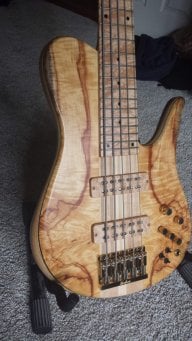
I'm like a kid on Christmas Eve. UPS just delivered my Wal to work!!! I will be there at 1:30 my plan is to open the box make sure the bass arrived in one piece, take a quick pic then back in the box for 24 hours to acclimate! 


So you did get it after all!! sweet!
club# 167 GHOST AT
club# 167 GHOST AT
Last edited:

Funny, I thought you were already on this list. You can really see the excitement in the photos. Keep taking more pictures for us!
Sorry for the crappy and multiple box pics LOL it was very busy at work I looked at the Wal for a minute and back in the box my boss took this picView attachment 3285581 View attachment 3285581 View attachment 3285581 View attachment 3285585 View attachment 3285586 View attachment 3285581 View attachment 3285585 View attachment 3285586 Sorry wanted to post this earlier but got busy at work! Unveiling and back in case and box to acclimate..
Question for everyone tomorrow evening I plan on putting on new strings adjusting the neck as flat as possible and lowering the action does anyone think this is too early? When I pulled the bass out of the box three hours after it arrived it was cool not cold to the touch.
I will take some better pics I promise. I had fifteen minutes between customers to open and inspect. I was on the list I previously had a Black MK35 formerly owned by Bassballs.Funny, I thought you were already on this list. You can really see the excitement in the photos. Keep taking more pictures for us!

Question for everyone tomorrow evening I plan on putting on new strings adjusting the neck as flat as possible and lowering the action does anyone think this is too early? When I pulled the bass out of the box three hours after it arrived it was cool not cold to the touch.
Nice looking piece, congrats!
The purpose of the so-called "acclimatization period" is to protect a bass with a fragile finish or a troublesome neck from rapid changes in temperature and humidity that it might experience when it travels long distances and is exposed to a new environment. We are particularly sensitive to the idea here in the Wal Club because these are particularly expensive basses and we sure don't want to take any chances.
Basically the idea is that by keeping the bass in its case after it arrives, it is insulated against its new environment, meaning that it will reach those new environmental conditions slowly, which is easier on the finish and neck. Much like ice in an insulated cup will melt more slowly than it would if it were taken out of a freezer and simply left setting on the countertop.
The need for acclimatization is reduced when the bass's current temperature and/or humidity and the new environment's temperature and humidity are not that different. Or when the finish isn't fragile or the neck isn't troublesome.
Not to rain on your parade... but when you took the bass out its packaging for just a few minutes right away to take pictures, it is likely that any damage that might have occurred due to not acclimatizing would have already occurred, and sticking the bass back in the case really wouldn't do any further good. If the bass didn't feel to hot or too cold when you took it out... and you don't live in the desert or a tropical rain forest... then it's more likely that acclimatization wouldn't have been needed anyhow and you'd have nothing to worry about. By and large, today's poly finishes are pretty durable, and you'd only likely run into trouble if there was a huge swing in temperature between the bass and its delivery point and/or there was budding damage to the finish already in-place.
Hopefully this helps shed some light on why we torture ourselves when our new bass arrives.
Last edited:
Thank you 2112 when I opened the case the Wal was cool not cold to the touch. This MK3 is a 2013 so the neck some time to stabilize.Nice looking piece, congrats!
The purpose of the so-called "acclimatization period" is to protect a bass with a fragile finish or a troublesome neck from rapid changes in temperature and humidity that it might experience when it travels long distances and is exposed to a new environment. We are particularly sensitive to the idea here in the Wal Club because these are particularly expensive basses and we sure don't want to take any chances.
Basically the idea is that by keeping the bass in its case after it arrives, it is insulated against its new environment, meaning that it will reach those new environmental conditions slowly, which is easier on the finish and neck. Much like ice in an insulated cup will melt more slowly than it would if it were taken out of a freezer and aimply left setting on the countertop.
The need for acclimatization is reduced when the bass's current temperature and/or humidity and the new environment's temperature and humidity are not that different. Or when the finish isn't fragile or the neck isn't troublesome.
Not to rain on your parade... but when you took the bass out its packaging for just a few minutes right away to take pictures, it is likely that any damage that might have occurred due to not acclimatizing would have already occurred, and sticking the bass back in the case really wouldn't do any further good. If the bass didn't feel to hot or too cold when you took it out... and you don't live in the desert or a tropical rain forest... then it's more likely that acclimatization wouldn't have been needed anyhow and you'd have nothing to worry about. By and large, today's poly finishes are pretty durable, and you'd only likely run into trouble if there was a huge swing in temperature between the bass and its delivery point and/or there was budding damage to the finish already in-place.
Hopefully this helps shed some light on why we torture ourselves when our new bass arrives.
I think it would be ok to play tonight but I will wait until tomorrow before I change strings setup and play!
While I only acclimate a few hours...for the neck I'd give it a few days to settle before changing strings because of the humidity difference. The neck curvature will change in a very different climate.
You even wore fitting apparel! 
The bass looks great, congratz man.
The bass looks great, congratz man.

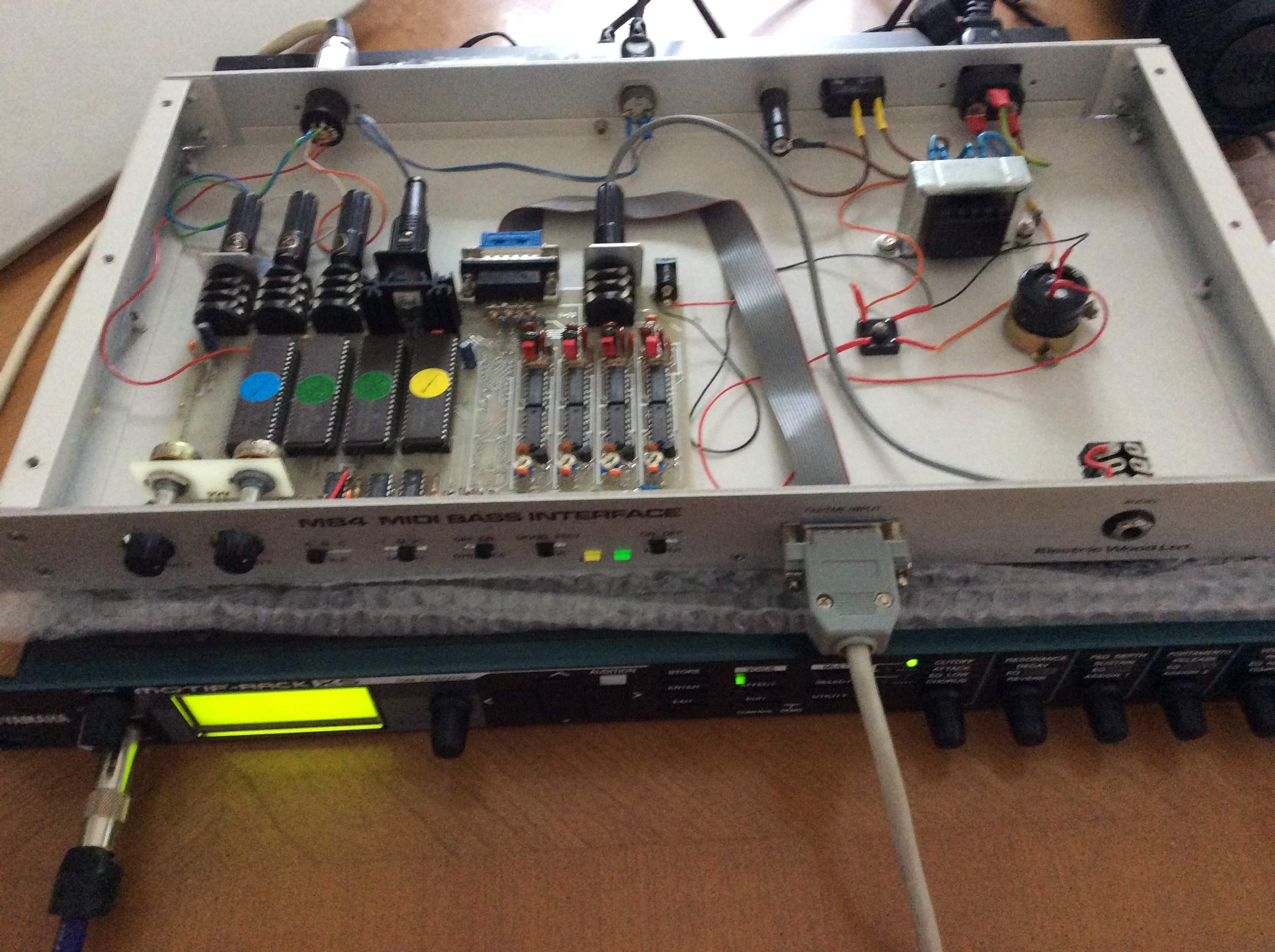
Hey everybody... I seem to be having a little trouble getting my Wal midi bass to work. Caca de Kick and I tried to troubleshoot countless different potential reasons as to why it isn’t getting signal.... possibly the 15 pin cord connecting the bass to the mb4 midi system? The midi light on the front of the mb4 rack is not lighting up...meaning it isn’t getting a signal. It only flickers when I turn the system off.
I can press “audition” on the Yamaha motif rack and samples come through the amp... but never the bass notes I play.
Does anyone else have experience with the mb4 Wal midi system?? Any other possible troubleshooting ideas?
Any information if greatly appreciated.
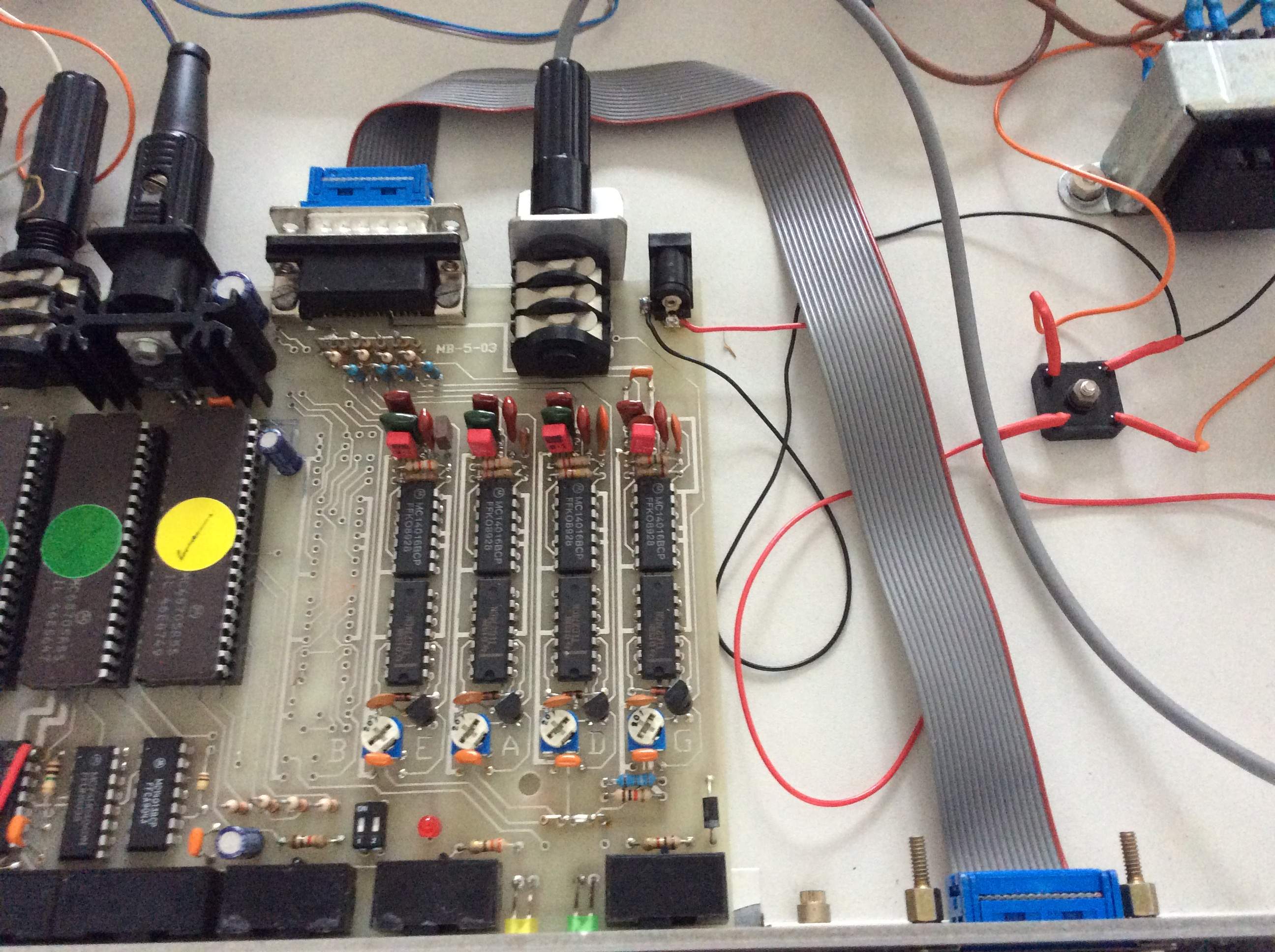
I can press “audition” on the Yamaha motif rack and samples come through the amp... but never the bass notes I play.
Does anyone else have experience with the mb4 Wal midi system?? Any other possible troubleshooting ideas?
Any information if greatly appreciated.
Since it seems it's the signal side from bass to module. Since you have the lid off; I would unplug that ribbon harness and make sure the connectors on both ends are correctly contacting each wire on that ribbon. I would probably just use my multimeter to very each wire passes signal.
I brought my midi bass and data cable to work with me today, so I can remove the connectors and try to document the wiring placement & pinouts.
I brought my midi bass and data cable to work with me today, so I can remove the connectors and try to document the wiring placement & pinouts.
Last edited:
They seemed snug....I reconnected them and about every other connection I could think of. It’s starting to take its toll on me...not being Able to diagnose the problem. I feel like I have the absolute worst luck when it involves receiving a Wal bass. Almost always complications and usually never shipped properly with enough care and attention to potential damage spots.
While I only acclimate a few hours...for the neck I'd give it a few days to settle before changing strings because of the humidity difference. The neck curvature will change in a very different climate.
While I'm thinking about it... acclimatization also eases the stress on the electronics. All those metal-to-metal connections and even metal-to-non-metal interfaces experience significantly more stress under large, rapid environmental changes, making them more prone to failure. In the end, the expansions and contractions of the materials will be the same regardless of the acclimatization period... but acclimatization will slow these processes down and ease the stress on those materials, making them less prone to failure.
To illustrate, think about it this way... how do you break a piece of taffy? if you pull it apart quickly, it breaks, but if you pull it apart slowly it stretches and doesn't break. This is not to say that the electronics inside your bass are stretching... rather it's illustrating that slower, more gradual changes are easier on the materials and are less likely to result in faults down the road.
They seemed snug....I reconnected them and about every other connection I could think of. It’s starting to take its toll on me...not being Able to diagnose the problem.
What I mean is, this style of connectors pierces thru the wire jacket to contact the core wire when the factory assembled it. So I'm saying make the each pin is correctly contacting the wires in that ribbon. Yeah it's a huge pain, and harder if you don't have tools for it.
You can always ship the cables and module to me (without the bass), and I can go thru it and try my bass in it.

A Wal being used to play Midi? Blasphemy! ( says this Lightwave Saber idiot )
( says this Lightwave Saber idiot )
A Wal being used to play Midi? Blasphemy!
i think you meant to say heavenly!!


