I stand corrected. That's pretty wild!I'm with @BassToGoGo. Carvin did totally, positively make stuff like the doubleneck in the OP:
View attachment 3974279
^ Depicted on the cover of their 1959 catalogue, samples of their models #4-BS (bass/Spanish) and #1-MS (mandolin/Spanish); alternatively, they could be the #5-BS and #2-MS, with non-adjustable pickups.
[Invalid or Expired Link Removed]
The control panel is at an odd location, the body shape is missing the violin-style corner,* and the lower bout is the less pronounced one that the BS had (as opposed to the MS), and so it may have been a prototype, but I'm actually thinking custom order in this case: a bass/mandolin doubler must have contacted Carvin about having a tailored instrument made, using parts that they offered anyway, albeit not in that exact configuration. Basically, Keisel ante litteram. Not surprisingly, at that!

Enjoy the benefits of a premium membership!
Upgrade Account
-
TalkBass has been independent since 1998. Add your voice.
Create a free account to reply to discussions, view embedded media, and browse with fewer display ads.
Join free Log in
Want zero display ads or expanded classifieds tools? Compare plans.
You are using an out of date browser. It may not display this or other websites correctly.
You should upgrade or use an alternative browser.
You should upgrade or use an alternative browser.
Well... this is different
- Thread starter tb-player
- Start date
-
- Tags
- bass carvin double-neck mandolin
More options
Who Replied?
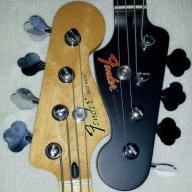
I think that the tiny pick guards and the tug bar completes this decent into madness nicely.


My first bass, back in the mid 60's, was a Carvin, with that same bass neck and pickups. The neck, which Carvin got from Hofner, was 25" scale. It got me by.
Carvin in that period used the same necks and pickups for their guitars and basses.
Carvin in that period used the same necks and pickups for their guitars and basses.
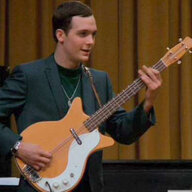
So if this is a bonafide Carvin... and Carvin eventually morphed into Kiesel... is this thing good for metal???I'm with @BassToGoGo. Carvin did totally, positively make stuff like the doubleneck in the OP:
View attachment 3974279
^ Depicted on the cover of their 1959 catalogue, samples of their models #4-BS (bass/Spanish) and #1-MS (mandolin/Spanish); alternatively, they could be the #5-BS and #2-MS, with non-adjustable pickups.
[Invalid or Expired Link Removed]
The control panel is at an odd location, the body shape is missing the violin-style corner,* and the lower bout is the less pronounced one that the BS had (as opposed to the MS), and so it may have been a prototype, but I'm actually thinking custom order in this case: a bass/mandolin doubler must have contacted Carvin about having a tailored instrument made, using parts that they offered anyway, albeit not in that exact configuration. Basically, Keisel ante litteram. Not surprisingly, at that!
* [Points 1 and 2 may be related: the customer may have decided they preferred having the controls up there, so the violin corner, normally out of arm's way when picking both sides on both "normal" models, would have possibly hurt when moving the hand to the controls. Or maybe (s)he just didn't like the corner.]
Speaking of Carving doublenecks: paging @RDB3, who used to own one, and is interested in vintage ultra-short-scale basses.
Ultra short scale bass round up
Yep: the bass side of the OP instrument has a scale length of 25.125".


Looking at the control panel, and I see the knobs and toggles, but I got to complement the builder for the cigarette lighter next to the bass bridge.
I can't take "instruments" like this seriously. But, it would be strangely interesting if it actually sounded good.
the bass is short scale, and maybe you could tune it to a baritone which could be useful. Other than that, A Mandolin, and A bass would be better than this combo. What are the odds one would ever need this configuration in a live performance?

yuckI'm with @BassToGoGo. Carvin did totally, positively make stuff like the doubleneck in the OP:
View attachment 3974279
^ Depicted on the cover of their 1959 catalogue, samples of their models #4-BS (bass/Spanish) and #1-MS (mandolin/Spanish); alternatively, they could be the #5-BS and #2-MS, with non-adjustable pickups.
[Invalid or Expired Link Removed]
The control panel is at an odd location, the body shape is missing the violin-style corner,* and the lower bout is the less pronounced one that the BS had (as opposed to the MS), and so it may have been a prototype, but I'm actually thinking custom order in this case: a bass/mandolin doubler must have contacted Carvin about having a tailored instrument made, using parts that they offered anyway, albeit not in that exact configuration. Basically, Keisel ante litteram. Not surprisingly, at that!
* [Points 1 and 2 may be related: the customer may have decided they preferred having the controls up there, so the violin corner, normally out of arm's way when picking both sides on both "normal" models, would have possibly hurt when moving the hand to the controls. Or maybe (s)he just didn't like the corner.]
Speaking of Carving doublenecks: paging @RDB3, who used to own one, and is interested in vintage ultra-short-scale basses.
Ultra short scale bass round up
Yep: the bass side of the OP instrument has a scale length of 25.125".



The pickups during this era came from MosriteAm I the only one bothered by the gigantic screws on the pickups?
Am I the only one bothered by the gigantic screws on the pickups?
They're guitar pickups so only the outer poles can line up under the strings. I assume the bigger screwheads were used to get more of the center poles under the A and D strings. That doesn't explain the big screwheads under the E, but then again there's a lot I don't understand about this instrument so I should probably stop here.The pickups during this era came from Mosrite
Carvin used the same pickups for 6 string and bass, removing two pole screws and plugging the holes with cardboard plugs. I never had problems with uneven string response. Now, finding strings for a 25.5" scale bass was another matter.They're guitar pickups so only the outer poles can line up under the strings. I assume the bigger screwheads were used to get more of the center poles under the A and D strings. That doesn't explain the big screwheads under the E, but then again there's a lot I don't understand about this instrument so I should probably stop here.
Originally Carvin used a higher tuning for their basses, with a G instead of a low E.


