• TalkBass has been independent since 1998. Add your voice.
    Create a free account to reply to discussions, view embedded media, and browse with fewer display ads.
    Join freeLog in
    Want zero display ads or expanded classifieds tools? Compare plans.

What are some lesser-known bassguitar techniques?

Decades ago (I think it was in 1998 or something) a french bassist, Jean-Luc Gastaldello, released a method about a mix of all the percussive techniques and named that "Step technique". There's some things Jaco used, Doug Wimbish of course, Abe Laboriel or even Hadrien Feraud from times to times. He even codified the notation, I still have it at my family's house. It's mostly replicating what you would do with traditional percussions instruments, but on bass.

Love the French bassplayers: Alain Caron

 
Rudy Sarzo too?

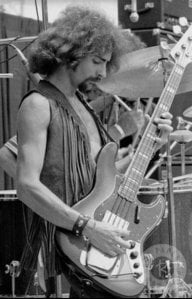
Sarzo is also a known innovator and practitioner of the delightful licking of the bass technique:

IMG_6674.jpeg
 
You can glissando a pinch harmonic really well on fretless. That's a pretty deep bass technique.

I have also started doing a right hand technique that is similar to classical guitar. I use thumb on a down stroke and fingers 1,2,3 on upstrokes. I've seen lots of bassist doing something similar on YouTube, and that's where I picked up up, but I'm not sure of it's an established technique with a name.

EDIT: just saw it at #6 on the thread, it is apparently called "four finger picking" - so it is now an established thing. The more you know!
 
Last edited:
  • Like
Reactions: scott sinner
What are some lesser-known bassguitar techniques that can elevate a bassist's playing to the next level?

Over the years I know and use the most familiar playing techniques and sometimes I use them all interchangeably: Fingerstyle, Slap and Pop, Using a Pick, Tapping, Palm Muting, Harmonics, Slides and Glissandos, Double Stops, Walking Bass and Raking. (no Makita for me ;-)

Am I missing anything?

Understatement, simplicity, good dynamics, the ability to "own" the time and drive/steer the band, subtlety, exquisite listening skills, serving the song...
 
Chuck Rainey was my first exposure to one finger back and forth for repeated notes.

Another guitar technique I rarely see in bass: A regular volume pedal for fade ins, done right it suggests a bowed sound. BOSS tried this in the 80's with their Slow Gear, but it failed as the tracking was glacially slow.

For effects, a guy I knew used one of those BOSS latching pedals as a Master Effects On/Off between his pedals and the amp.

And of course with that cello-like bass that Ned Steinberger sells, it can be played like a conventional electric (the curved frets on the fretted model look crazy) or played
with a bow due to the cello-like nut, fingerboard, and bridge radius.

There's still lots of other ways to skin the cat.
 
OP, Ok so I’ve had my fun saying goofy stuff in your thread and I should probably contribute something of value (hopefully).

I don’t think I saw anyone mention this yet because it’s not a bass guitar technique, but I found Simandl and open string technique, both DB techniques, pretty useful on bass guitar. This can be done without even touching a DB, but I also would recommend getting yourself a cheap upright and only playing that for a period of time. You’ll be amazed how different the fretboard appears once you return to the BG. You’ll also be shredding runs and grooves that include open strings, something that was missing in my prior technique.

You may already play DB, if so ignore my blather. Have fun!
 
One of the lesser used techniques is leaving space by not playing. I’m serious here. Obviously it’s not a physical playing technique, but it’s still one of the more effective techniques to use to create some changes of dynamics of the overall band, and also creates some tension & release to some degree.

I know this isn’t anything new, but it’s definitely worth repeating occasionally.

Here’s one of thousands of examples.
 
One of the lesser used techniques is leaving space by not playing. I’m serious here. Obviously it’s not a physical playing technique, but it’s still one of the more effective techniques to use to create some changes of dynamics of the overall band, and also creates some tension & release to some degree.

I know this isn’t anything new, but it’s definitely worth repeating occasionally.

Here’s one of thousands of examples.

Definitely something I need reminding of for sure.
 

Latest posts