• TalkBass has been independent since 1998. Add your voice.
    Create a free account to reply to discussions, view embedded media, and browse with fewer display ads.
    Join freeLog in
    Want zero display ads or expanded classifieds tools? Compare plans.

What are you reading Chapter 4

Not outraged. Maybe a bit tired of, even from historians, the implication that the U.S. exists only due to conquest, genocide, slavery, or colonization, which implies all the people that came here participated in those things. My point was we benefit from those that came before, and there was also bravery and honor. Not just bad things. Your rape example doesnt apply because we dont bring it up to vilify the victim.

Professional historian here, PhD and all, teaching college. VERY few people in the profession see history, American or otherwise, as you describe it. I often tell my students that humans exist in time, and whatever is a part of human experience, is part of history; history = people + time. That's everything, good and bad.

There's some difference of approach, but most professional historians are critical of making their job about moral judgments. The core of the job is to understand what happened and, most importantly, why. I tell my students you could do an analysis of, let's say, Nazi taxation policies and practices, and come away with a completely objective and analytical understanding of how they set up the system, quite apart from the reality that those taxes were intended to pay for the most evil regime of recent history.

But by the same token, we're cautious about choosing "good guys" in history and acting as their cheerleaders. People are more complicated than white hats and black hats. Take someone like Frederick Douglass, for instance; a towering figure in the struggle against slavery, but he also was perfectly willing to thumbs-up the annihilation of Native Americans and threw his suffragette allies under the bus when enfranchisement of blacks was at stake. Most every major figure in history is complex and ambiguous that way, because human beings are that way. And this is equally true of Lincoln or Jefferson (or just about any president) or any other public figure.

To be sure, there's a sector of the profession that does more of what I would call "advocacy scholarship," and they tend to make a lot of noise. Howard Zinn's People's History of the United States (this is the thread about books, after all) kind of charted that path in US history. Zinn was writing around the time of the Vietnam War, when patriotic myths were being used to justify sending young men to die in what he saw as a pointless conflict. A couple of years ago there was an uproar in the American Historical Association when its president wrote an article advocating for the value of disinterested scholarship, not harnessed to current controversies. There was a lot of backlash, but I suspect most practicing historians thought he had a point.

The fact is, people become historians because we love the past - not that we wish we lived in it, but because as we got to "know" these long-dead people and learned their stories, we came to love them, in a sense. We want other people to know them and love them as we do. But when we see people try to turn them into paragons and heroes, for patriotism or some moral crusade or whatever other cause, we cringe; because those moralizing cutouts aren't really them, and they often imply justifying the harm that their darker sides may have caused towards others of their time.

To go back to your post, it isn't that the US (or anything else) exists only because of the various atrocities you mention. But it also didn't come to exist without those things. They are part of the story, alongside the admirable aspirations and achievements. And so we try to tell the whole story, as fully as we can, within the parameters of the page count of a book, classroom time in a semester, and the capacity and curiosity of the student.
 
Professional historian here, PhD and all, teaching college. VERY few people in the profession see history, American or otherwise, as you describe it. I often tell my students that humans exist in time, and whatever is a part of human experience, is part of history; history = people + time. That's everything, good and bad.

There's some difference of approach, but most professional historians are critical of making their job about moral judgments. The core of the job is to understand what happened and, most importantly, why. I tell my students you could do an analysis of, let's say, Nazi taxation policies and practices, and come away with a completely objective and analytical understanding of how they set up the system, quite apart from the reality that those taxes were intended to pay for the most evil regime of recent history.

But by the same token, we're cautious about choosing "good guys" in history and acting as their cheerleaders. People are more complicated than white hats and black hats. Take someone like Frederick Douglass, for instance; a towering figure in the struggle against slavery, but he also was perfectly willing to thumbs-up the annihilation of Native Americans and threw his suffragette allies under the bus when enfranchisement of blacks was at stake. Most every major figure in history is complex and ambiguous that way, because human beings are that way. And this is equally true of Lincoln or Jefferson (or just about any president) or any other public figure.

To be sure, there's a sector of the profession that does more of what I would call "advocacy scholarship," and they tend to make a lot of noise. Howard Zinn's People's History of the United States (this is the thread about books, after all) kind of charted that path in US history. Zinn was writing around the time of the Vietnam War, when patriotic myths were being used to justify sending young men to die in what he saw as a pointless conflict. A couple of years ago there was an uproar in the American Historical Association when its president wrote an article advocating for the value of disinterested scholarship, not harnessed to current controversies. There was a lot of backlash, but I suspect most practicing historians thought he had a point.

The fact is, people become historians because we love the past - not that we wish we lived in it, but because as we got to "know" these long-dead people and learned their stories, we came to love them, in a sense. We want other people to know them and love them as we do. But when we see people try to turn them into paragons and heroes, for patriotism or some moral crusade or whatever other cause, we cringe; because those moralizing cutouts aren't really them, and they often imply justifying the harm that their darker sides may have caused towards others of their time.

To go back to your post, it isn't that the US (or anything else) exists only because of the various atrocities you mention. But it also didn't come to exist without those things. They are part of the story, alongside the admirable aspirations and achievements. And so we try to tell the whole story, as fully as we can, within the parameters of the page count of a book, classroom time in a semester, and the capacity and curiosity of the student.

Very cool, I didn’t know you were a historian. What’s your area of specialty?
 
  • Like
Reactions: hrodbert696
Professional historian here, PhD and all, teaching college. VERY few people in the profession see history, American or otherwise, as you describe it. I often tell my students that humans exist in time, and whatever is a part of human experience, is part of history; history = people + time. That's everything, good and bad.

There's some difference of approach, but most professional historians are critical of making their job about moral judgments. The core of the job is to understand what happened and, most importantly, why. I tell my students you could do an analysis of, let's say, Nazi taxation policies and practices, and come away with a completely objective and analytical understanding of how they set up the system, quite apart from the reality that those taxes were intended to pay for the most evil regime of recent history.

But by the same token, we're cautious about choosing "good guys" in history and acting as their cheerleaders. People are more complicated than white hats and black hats. Take someone like Frederick Douglass, for instance; a towering figure in the struggle against slavery, but he also was perfectly willing to thumbs-up the annihilation of Native Americans and threw his suffragette allies under the bus when enfranchisement of blacks was at stake. Most every major figure in history is complex and ambiguous that way, because human beings are that way. And this is equally true of Lincoln or Jefferson (or just about any president) or any other public figure.

To be sure, there's a sector of the profession that does more of what I would call "advocacy scholarship," and they tend to make a lot of noise. Howard Zinn's People's History of the United States (this is the thread about books, after all) kind of charted that path in US history. Zinn was writing around the time of the Vietnam War, when patriotic myths were being used to justify sending young men to die in what he saw as a pointless conflict. A couple of years ago there was an uproar in the American Historical Association when its president wrote an article advocating for the value of disinterested scholarship, not harnessed to current controversies. There was a lot of backlash, but I suspect most practicing historians thought he had a point.

The fact is, people become historians because we love the past - not that we wish we lived in it, but because as we got to "know" these long-dead people and learned their stories, we came to love them, in a sense. We want other people to know them and love them as we do. But when we see people try to turn them into paragons and heroes, for patriotism or some moral crusade or whatever other cause, we cringe; because those moralizing cutouts aren't really them, and they often imply justifying the harm that their darker sides may have caused towards others of their time.

To go back to your post, it isn't that the US (or anything else) exists only because of the various atrocities you mention. But it also didn't come to exist without those things. They are part of the story, alongside the admirable aspirations and achievements. And so we try to tell the whole story, as fully as we can, within the parameters of the page count of a book, classroom time in a semester, and the capacity and curiosity of the student.

That was my point. We arent just the bad things but also good things.
 
  • Like
Reactions: hrodbert696
Very cool, I didn’t know you were a historian. What’s your area of specialty?
Medieval Europe. The dissertation and what scholarly articles I've published are related to the development of Christianity in 8th century Bavaria. History is very small at my institution - for full-timers it's just me, two Americanists (one of which is in a mainly administrative role now), and a Social Studies Education specialist (we mostly train teachers). So I teach very broadly rather than doing a lot of research-focused stuff.

This is me, from a while ago... Invalid Link Removed
 
All this talk of history and disease only begs the question - which diseases DID come from the "New World" to the "Old World"? Certainly something must have gone that way.
Well now, I'm going to have to go reread that chapter of the book. I can't remember specifically diseases coming back the other way, but I do remember that the overall picture is a kind of globalization of the disease environment in the tropics and subtropics. The Columbian Exchange included things like malaria becoming endemic in Latin America, for instance.
 
  • Like
Reactions: kleinenenten
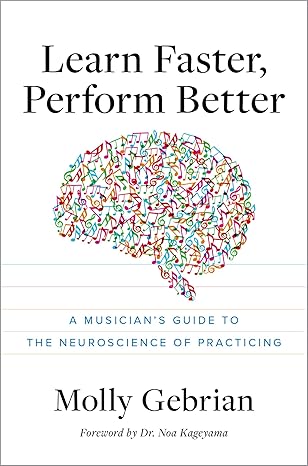
This eye-opener, already discussed in another topic.
My practice sessions will never be the same.

716NrIHP0jL._SY466_.jpg
 
Medieval Europe. The dissertation and what scholarly articles I've published are related to the development of Christianity in 8th century Bavaria. History is very small at my institution - for full-timers it's just me, two Americanists (one of which is in a mainly administrative role now), and a Social Studies Education specialist (we mostly train teachers). So I teach very broadly rather than doing a lot of research-focused stuff.

This is me, from a while ago... Invalid Link Removed
Very cool! Abstract sounds very interesting, wish academic writing wasn’t so stupidly expensive to access.
 

Attachments

  • IMG_3366.png
    IMG_3366.png
    246.6 KB · Views: 7
The Woman in White - Wilkie Collins

Classics book club picked this one. It's longer than I expected a monthly book club to go for, so I have my work cut out for me. My wife tapped out of this one after just a few chapters, so that should make finishing it in time a little easier. It's been on my to-read list for ages after I added a bunch of books from a list of "essential" reads. I know next to nothing about the plot itself and I hope it doesn't end up feeling like a chore.
 
  • Like
Reactions: Eli_Kyiv
The Woman in White - Wilkie Collins

Classics book club picked this one. It's longer than I expected a monthly book club to go for, so I have my work cut out for me. My wife tapped out of this one after just a few chapters, so that should make finishing it in time a little easier. It's been on my to-read list for ages after I added a bunch of books from a list of "essential" reads. I know next to nothing about the plot itself and I hope it doesn't end up feeling like a chore.
I've read it in my early teens (translated to Russian of course). It seemed OK for the time. Not sure if I would be able to finish it now.
1749731309379.png
 
  • Like
Reactions: Frosteeman
I'll be finishing my book on the Civil War in Missouri tonight. I can't even pretend to keep track of the countless personalities, leaders, locations, and battles presented in this text, but I do find it astounding how little of this theater is widely known, especially given how many relatively important names pop up as important. Whether it is some of President Lincoln's cabinet having direct ties to Missouri, to various Civil War leaders beginning in or having ties to Missouri (besides the most obvious - General Grant), it's amazing how many of the names I do recognize. As a Missourian myself, I am glad to have read it, and plan to incorporate the basics (because I can't keep up with all of the details!) into my own thoughts and discussions on the time period. It makes me want to go visit some of these places, and re-visit other places I've already been. Numerous seemingly small, unimportant towns (at least, in most areas of history) that I am fairly familiar with make appearances as well. In a nutshell, Missouri in many ways was a microcosm of the rest of the Civil War, and had the 3rd most battles of any state, behind Virginia and Tennessee. And yet hardly anybody knows of any of it. An eye-opening text for me for sure.

I think I'll return to my literal college textbook of the Norton World Anthology next, and keep catching up with some of the classics. I believe the next section is early Asian poetry?
 
Very cool! Abstract sounds very interesting, wish academic writing wasn’t so stupidly expensive to access.
So this post sent me down a rabbit trail in dusty old Google Drive folders I hadn't opened in years. And stupidly, I failed to date the dozen or so drafts that are in there, so I only have the "last modified" date, which is the same for everything because I uploaded the whole folder at once off an old computer. But I BELIEVE this may be the final draft of that particular article as it was published... maybe. If not, it's close to the final. This is in case you have any masochistic itches you're trying to scratch...
 

Attachments

Last edited:
So this post sent me down a rabbit trail in dusty old Google Drive folders I hadn't opened in years. And stupidly, I failed to date the dozen or so drafts that are in there, so I only have the "last modified" date, which is the same for everything because I uploaded the whole folder at once off an old computer. But I BELIEVE this may be the final draft of that particular article as it was published... maybe. If not, it's close to the final. This is in case you have any masochistic itches you're trying to scratch...
Awesome thank you!
 
  • Like
Reactions: hrodbert696
So this post sent me down a rabbit trail in dusty old Google Drive folders I hadn't opened in years. And stupidly, I failed to date the dozen or so drafts that are in there, so I only have the "last modified" date, which is the same for everything because I uploaded the whole folder at once off an old computer. But I BELIEVE this may be the final draft of that particular article as it was published... maybe. If not, it's close to the final. This is in case you have any masochistic itches you're trying to scratch...
Masochism in academic form? Why thank you! I'll gladly read that.

In other news, I believe it was a member of this thread who mentioned a book called "Fatherland: A Memoir Of War, Conscience, And Family Secrets". I just received a copy, and it will likely be read very soon. Looking forward to it, as I recently finished a book on the usage of drugs in the Third Reich.
 
  • Like
Reactions: hrodbert696
Masochism in academic form? Why thank you! I'll gladly read that.

In other news, I believe it was a member of this thread who mentioned a book called "Fatherland: A Memoir Of War, Conscience, And Family Secrets". I just received a copy, and it will likely be read very soon. Looking forward to it, as I recently finished a book on the usage of drugs in the Third Reich.

That may have been me - at least, I read it a couple of months ago. Excellent book.
 
  • Like
Reactions: kleinenenten