
At least they weren’t bought out by fender!
Yes that would for sure be the kiss of death

TalkBass has been independent since 1998. Add your voice.
Create a free account to reply to discussions, view embedded media, and browse with fewer display ads.
Join free Log in
Want zero display ads or expanded classifieds tools? Compare plans.
At least they weren’t bought out by fender!
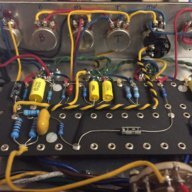

Occasional re-designs can be beneficial. The CL was a re-design and it worked out quite well IMHO. Give it a cosmetic makeover if you want, too. I got no problem with that as long as it still sounds like an SVT.I think the real key as to what Yamaha plans to do with Ampeg is their analysis of who (i.e., demographically) they see as their future customers while still trying to keep the current customer base at least somewhat happy.
A number of years ago, Cadillac founds themselves in a position where their average customer was 71 years old. It was clear that they couldn't survive on the current customer base since they were dying out. That's when Cadillac went about completely redesigning their line in an effort to appeal to those in their mid to late 40's. It worked extremely well and Cadillac is on better shape today than have even been.
Why do that when you can own the company outright? It's Yamaha...they have the money. Besides, LOUD wasn't licensing Ampeg...they put it up for sale. Either you buy the whole thing or not at all.Enough about Cadillac...
If one want to know what Yamaha will do, one would need access to their internal research documents that say who the upcoming intended group of customers are post acquisition.
Lastly, if Yamaha just wanted to "look good" in selling bass amps, it would have been far cheaper and entailed less risk to do a licensing deal with Ampeg and subsequently sell Yamaha bass amps with Ampeg designed guts. That is not the direction they chose to follow.
You should go tell them how to do business, man! Why, if you ran things, it would be the most awesome success ever!Well if they get all jiggy with the research they will find out playing musical instruments is on the way out quickly shut down operations and cut their losses.
IMO in this shrinking market the best strategy is to down size and increase quality while keeping the price affordable but no one and I mean absolutely no one seems to be doing this. They are all trying to make larger production numbers of inexpensive crap. IMO this is a recipe for a longer term failure. Quality is what builds a brand.

You should go tell them how to do business, man! Why, if you ran things, it would be the most awesome success ever!
This thread is a real hoot!

I'm not sure what you're talking about. Your link goes to the Nikkei which is a stock market index, much like the Dow Jones and doesn't own anything. Yamaha is self owned. It is the flag brand for the Nippon Gakki group.So this is who owns Yamaha FYI.
Invalid Link Removed
Not exactly a small company.


I have been a clinician with Yamaha(trombone) since 93’ and they have always really pushed wind and percussion instruments big time, Piano, Keyboard and a Recording studio stuff too.. back in 88’ Yamaha had Mike Soldano on staff to design awesome tube amps I have two of them 50 watt combo and 100 watt head.. . Yamaha at that time also had Carlos Santana playing their SG batwing guitar which was so close to a Gibson that Yamaha was sued by Gibson forcing Yamaha to make changes.
.IMO, Yamaha Guitar’s and amps have never been able to keep up with the Big Boys of guitar, Fender, Martin, and Gibson..even though what they do make is really great quality...the Yamaha Corp. just may be too big! Too big to push a line of instruments that have been perceived as also rands. If you look back at Yamaha Guitar’s, basses and amps, they’re all versions of the big three..but they were very affordable...you have to go way back to the late 60,s and early 70’s to find really different designs..some really wacky stuff.
Buying Line 6 and Ampeg means a built in customer base of products that are original and established. No need to emulate instruments from another maker...and I’m sure the price was right too.
The old buy some potatoes and we'll sell you some steak deal?What I'm actually wondering about here, thinking about the Ampeg acquisition again, is if it will affect what we see in retail. It has always bugged me that Yamaha seems to have a number of bass models but I rarely see them in stores, except recently for the TRBX line that GC seems to have taken to. I wonder if Yamaha holding Ampeg will mean more distribution deals with retail stores to push more Yamaha basses, as linkage to the better-established Ampeg demand.
The old buy some potatoes and we'll sell you some steak deal?
I think the big box sellers hold too many of the cards for that to fly across brand / product lines.
Mesa wound up limiting stockists to those who played Mesa's game. It didn't hurt Mesa. Maybe Yamaha plays it similarly.

Well if they get all jiggy with the research they will find out playing musical instruments is on the way out quickly shut down operations and cut their losses.
IMO in this shrinking market the best strategy is to down size and increase quality while keeping the price affordable but no one and I mean absolutely no one seems to be doing this. They are all trying to make larger production numbers of inexpensive crap. IMO this is a recipe for a longer term failure. Quality is what builds a brand.

And that is why Ampeg also makes combos.You are missing one huge piece of the puzzle.
Old guys with disposable income buy used amps. Young people just starting out buy new, inexpensive amps with bells whistles on them.
Old guy get in TalkBass and say "Mesa is dumb. If they put a tuner on the front of their $2,000 amp I would buy it in a second!" (But they rarely buy new and won't buy that amp with a tuner on it either.)
Young people say "You give be bluetooth on my amp and downloadable sounds for it and I'm in!" And Fender sells thousands of them.
What is "inexpensive crap" to you makes up a much larger part of the market than "high quality" amps.
For reference, I worked in musical instrument sales for a decade. This is not just anecdotal ramblings. The music industry makes MILLIONS more off of starter packs and Boss pedals than it ever will from the other end of the spectrum. The Fender Rumble combo will always sell more than the Ampeg SVT-CL. Period.
And that is why Ampeg also makes combos.

Occasional re-designs can be beneficial. The CL was a re-design and it worked out quite well IMHO. Give it a cosmetic makeover if you want, too. I got no problem with that as long as it still sounds like an SVT.
Why do that when you can own the company outright? It's Yamaha...they have the money. Besides, LOUD wasn't licensing Ampeg...they put it up for sale. Either you buy the whole thing or not at all.

More like vice versa.Yamaha equipment with an Ampeg badge on them?


