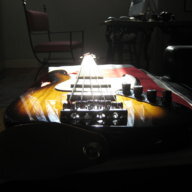
Having to switch to flatwound strings. Not too big of a fan of how they sound and feel. I got used to it, but rounds will always be my preference as far as I can tell.

TalkBass has been independent since 1998. Add your voice.
Create a free account to reply to discussions, view embedded media, and browse with fewer display ads.
Join free Log in
Want zero display ads or expanded classifieds tools? Compare plans.

You don't need to use flats on a fretless.Having to switch to flatwound strings. Not too big of a fan of how they sound and feel. I got used to it, but rounds will always be my preference as far as I can tell.
You don't need to use flats on a fretless.
With good fretless technique that is rarely an issue. (How do you do your vibrato?) Yes, eventually there will be some wear marks, but in the 40 some years I've been playing fretless bass it never got to the point of needing to dress the board. Of course, avoiding rough feeling strings (for example, Rotosounds) make a big difference; D'Addario Xls work well (I have not tried many other brands on fretless basses, other than TI Jazz Rounds). As to the TIS, if you can get along with the very supple feel of them, I highly recommend those strings. Great tone and feel (to me) and they are very gentle on fretless fingerboards.Sorry mate, I could have been more clear. My rounds were chewing threw my fingerboard so it was an easier option to switch to flats.
With good fretless technique that is rarely an issue. (How do you do your vibrato?) Yes, eventually there will be some wear marks, but in the 40 some years I've been playing fretless bass it never got to the point of needing to dress the board. Of course, avoiding rough feeling strings (for example, Rotosounds) make a big difference; D'Addario Xls work well (I have not tried many other brands on fretless basses, other than TI Jazz Rounds). As to the TIS, if you can get along with the very supple feel of them, I highly recommend those strings. Great tone and feel (to me) and they are very gentle on fretless fingerboards.
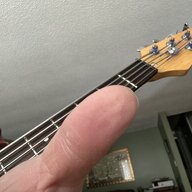
Carpal tunnel syndrome. Made a 6 fretless, played relentlessly, f*cked myself up good.I'm really curious into diving into that realm even though I'm just a novice and wanted some advice from those who play fretless?
Not always successfully, though. Case by case basis.CTS is fixable
That may be. If so, I've been lucky with release surgery on both palms. 100% cure.Not always successfully, though. Case by case basis.
A friend of mine had the surgery on both hands. He can play, but nowhere like he could pre-surgery, even with the pain he was feeling.That may be. If so, I've been lucky with release surgery on both palms. 100% cure.
How long after the procedure are you talking about?A friend of mine had the surgery on both hands. He can play, but nowhere like he could pre-surgery, even with the pain he was feeling.
Makes me wonder if he went after the right problem. Sorry to hear about that.IIRC, he had them done 3 or 4 years ago.
He did. I know you're trying to convince us that CTS is 100% correctable, but that is really not true.Makes me wonder if he went after the right problem. Sorry to hear about that.
I defretted my '59 Jazz (yes they were released in1960 but mine is dated 1959 on the neck so....) in the 70s during the Jaco craze. Now the issue is the old epoxy drying out, and rising up from the fret slot, resulting in an annoying little buzz.....easily remedied by filing with steel wool. Very tiny and intonation challenging on a Jazz neck up top. The hardest thing about playing my bass is NOT sounding like Jaco!I'm really curious into diving into that realm even though I'm just a novice and wanted some advice from those who play fretless?
I'm only relating my own experience. I'd encourage others to seek professional assistance. Nothing to do with fretless, BTWHe did. I know you're trying to convince us that CTS is 100% correctable, but that is really not true.
 .
.
I defretted my '59 Jazz (yes they were released in1960 but mine is dated 1959 on the neck so....) in the 70s during the Jaco craze. Now the issue is the old epoxy drying out, and rising up from the fret slot, resulting in an annoying little buzz.....easily remedied by filing with steel wool. Very tiny and intonation challenging on a Jazz neck up top. The hardest thing about playing my bass is NOT sounding like Jaco!
View attachment 3530370

Yep. Best way to fix sloppy/lazy Fretless technique is to practice playing scales while using a tuner. Develop some muscle memory of knowing where to put your fingers - it makes Fretless sooooo much easier & heaps more fun to play.Regarding sliding, imo it shouldn't be the default way of playing a note on fretless. It should be chosen for expressive purposes where it fits and doesn't interfere with the music. A good fretless player should be able to make the bass sing like we all love with fretless, but should also be able to play such that no one knows they're playing a fretless.
Original board and the dots were removed when it was de-fretted in the '70sIs this an original fingerboard? Why are there no dot markers on it?