• TalkBass has been independent since 1998. Add your voice.
    Create a free account to reply to discussions, view embedded media, and browse with fewer display ads.
    Join freeLog in
    Want zero display ads or expanded classifieds tools? Compare plans.

What do Horns on speaker cabs do?

+1 Different strokes for different folks. I can sure appreciate a 'fridge' also, but would kill myself if I had to play out of one. Pure personal taste and tone goals.

Where things get into trouble is some saying 'this is the way a cab should be designed for everyone'. That leads nowhere IMO.

Your point about the clank region between 800 and 2k is right on. The advantage to mid-driver equiped cabs is the dispersion, yes but there are a couple other things going on there.

1. That uppermid clank doesn't sound so clanky when coming through a speaker that was designed to play in that region. Through a 410 w/ a cheap tweeter, there's plenty of clank. Play the same frequencies through a 6" mid speaker and "clank" becomes "clarity". Different strokes applies here as well.

2. The "character" of the mids/highs. There are always compromises to be made when designing a speaker. Design a 10 to have good enough bottom to sound like a bass and good enough top to sound like a bass and something has to suffer. In the typical 410+tweet you have to let most 10's go as high as they can, that means through the "breakup mode". Maybe a little terminology error there but you're hearing narrowed dispersion on the top end plus the response peaks and valleys most any speaker has in it's upper range. The mid-specific speaker is still in it's "sweet spot" at those frequencies.

Whether it sounds better or not is up to the player. Most judge their sound from their one little spot on the stage and don't think of or take the time to hear what it sounds like to the rest of place. The improved dispersion is something that can be measured, quantified and heard. Whether or not it nails a particular tone is a matter of taste. What it does do is spread more of your sound out to more of the people.

If there was one best solution, there would only be one speaker system available on the market and we would all have to either get that one or be silent.....the ultimate monopoly.

That's not a good arrangement, but I do wish there were more available and accurate info from manufacturers as everybody doesn't have the convenience of going to listen to a dozen different cabs in a useable context and comapring.


What'd my dad used to say? Wish in one hand and %$@# in the other?

 
I sure wouldn't say "clank" starts at 800 Hz. More like 1.6K and up {though sometimes I think peaky 1.2K is a little un-needed ; } ...But it's all dependent on the overall spectral balance and FR reach of a driver (and the particular input signal's spectral distribution).

One driver may have a better balance across its passband so the clank region isn't going to stand out away from the rest of the signal so much unless the input signal (bass and preamp subsystems) exaggerates there. Another driver might be hot there and still climbing compared to lower down.

So it's really more about balance than anything. I suggest people wanting to think about this more look at the datasheets of say the Em 10" and 12" bass guitar drivers and the commonly used neos (Deltalites, Kappalites) to see what really makes certain areas stick up/out in the on-axis signal compared to the general center of those drivers' sensitivities.
 
I sure wouldn't say "clank" starts at 800 Hz. More like 1.6K and up {though sometimes I think peaky 1.2K is a little un-needed ; } ...But it's all dependent on the overall spectral balance and FR reach of a driver (and the particular input signal's spectral distribution).

One driver may have a better balance across its passband so the clank region isn't going to stand out away from the rest of the signal so much unless the input signal (bass and preamp subsystems) exaggerates there. Another driver might be hot there and still climbing compared to lower down.

So it's really more about balance than anything. I suggest people wanting to think about this more look at the datasheets of say the Em 10" and 12" bass guitar drivers and the commonly used neos (Deltalites, Kappalites) to see what really makes certain areas stick up/out in the on-axis signal compared to the general center of those drivers' sensitivities.


In magazine article terms, yeah the word clank would describe a little more upper mids as you say, as would the word twang. The 800-1000hz area I would describe as nasally or honk. With a typical bass cab, still not a pleasant sound. With a well designed cab like the fearful or some variety thereof, that honky sound tends to go away without scooping it out.
 
well i think we can all agree that we've never walked out on a band because they used equipment we didn't care for. and i think that despite a lot of rigs being built around looks and cheapness over sound quality, a lot of them turned out pretty good. a lot of them didn't, though.

but it's never a bad thing to know about the facts of quality audio reproduction. they're not going to change just because you like your rig. i'm still playing the same amp i played back when i knew nothing, but now it's an informed choice and not just because it sounds so pretty right in front of it.
 
In magazine article terms, yeah the word clank would describe a little more upper mids as you say, as would the word twang. The 800-1000hz area I would describe as nasally or honk. With a typical bass cab, still not a pleasant sound. With a well designed cab like the fearful or some variety thereof, that honky sound tends to go away without scooping it out.

+1 All good points in your posts (and of course Greenboy's posts). Lot's of stuff going on that makes one cab sound different than another, and these 12/6 and 15/6's are quite beautiful sounding! My favorite so far has been a 3012LF cab with a Faital mid driver crossed over around 800hz.... very smooth and natural, and from what I understand (and what my ears told me), that Faital mid driver has a bit of a dip in the lower treble that allows it to sound a little more open and a little more airy up top than the 'hit you with a hammer upper mid response of the 18sound mid driver. So, even a lot of variation within these designs, just like more traditional tweeter loaded cabs.

The heads I use (and most all in one bass heads) don't really have the EQ power to 'make one cab sound like another'. Even with semi-parametric mids, the Q is usually set too wide for specific sculpting, so I again am one who would much rather find a cab with an inherent voice that I dig. And again, that space between the top of the driver and start of the tweeter with many two way cabs and good quality tweeters (in that 1K to 2K region) is typically a region where I cut just a touch, so the dispersion issues are pretty minimal... the drivers sound VERY even around the room, as does the top end, and the slight softening in the gank area (again, for my stainless steel roundwound J Bass tone goals) is actually a good thing.

I agree though if you are one using an old school 2 x 15 cab, you get into quite a bit of trouble off axis, even out in the room. That's why most of those guys I've heard using this configuration in a club with no PA support sound like mushy dogs out in the room. I always attributed it to a lack of mid response from the cab, but it is more (from what I learned from all you guys on this thread), the relatively decent mid response being in a relatively tight beam due to those drivers.

Anyone digging a 2 x 15 tone owes it to themselves to hear one of the mid driver cab designs. The Berganinto NV215 wasn't quite up to the task in this area, but was close. The Greenboy type cabs have it NAILED.
 
I played 215's for many years in a horn band. I never really asked anybody in the audience how my mids were sounding, and nobody ever volunteered that info either. On the other hand, nobody ever told me I sounded like " mushy dogs " either, in fact, I used to get compliments on how well I sounded with my JBL loaded 215 in that band configuration. If the darned thing was'nt so cumbersome and heavy, I would still be using it. I have tried the Carvin LS 1503 3 way for bass and after many gigs, did'nt really care for the sound that much. In fact I thought that cab sounded kinda mushy on the low end! I'm wondering now if the Schroeder BFM 215 might be Holy Grail I've been looking for ever since I dumped my old 215. It seems to work in Jorg's 115+ , and he uses the same drivers in the 215, and it is definitely way lighter! I know the gurus here will scoff at the 215/tweeter configuration, but I guess I'm in that camp that actually like that sound.
 
That's because distortion sounds bad through tweeters, and worse, distortion will blow them.

How does distortion blow tweeters exaclty? I knew it was the case but don't know the science. I assume distortion through them sounds bad because at those kinda frequencies is god awfully ear piercing?

Would a mid driver work with a guitar cab given that they extend this high then? Or is that still a little bright for distorted tones?
 
I always figured that horn-loaded cabs were for folks who were looking to add a 'horn section' to their band's sound. Why add more egos and all the problems that entails, when all you need is a horn loaded cab or two. Generally most bands without horn sections or horn loaded cabs are horny enough. I mean, that's why we all started playing, no? :p
 
I am always on the fence with the tweeter thing. It is definitely a preference and could depend on the music you play (even song to song) because a tweeter on full blast might not work for every musical situation, and tweeters can sometimes literally amplify poor hand technique or a noisy amp. I play through a GK800rb and it would hiss really loudly through older SWR cabs w/tweeters, but not a much through newer GK cabs.

Although I loved my GK neo 2x12s (and I think they are by far one of the best all around cab on the market), I missed the classic looks of ampeg, so I am back to tweeterless cabs (svt115 -no tweeter and svt810 fridge -no tweeter), but I play a stingray, so there is sort of a "zing" to the bass sound anyway. But I can really hear how a single 115 cab sounds a bit more muffled as compared to a 2x12 w/tweeter cab.

I just choose to use my fingers for some songs and a pick for others if I want a little bite. I am sort of in the belief that you start with the cleanest full range signal (like an active bass with brand new bright strings), and then remove frequencies. You can dull down a lively bass or amp, but it’s hard to liven up a dull sounding bass or head without it sounding artificial.
 
I played 215's for many years in a horn band. I never really asked anybody in the audience how my mids were sounding, and nobody ever volunteered that info either. On the other hand, nobody ever told me I sounded like " mushy dogs " either, in fact, I used to get compliments on how well I sounded with my JBL loaded 215 in that band configuration. If the darned thing was'nt so cumbersome and heavy, I would still be using it. I have tried the Carvin LS 1503 3 way for bass and after many gigs, did'nt really care for the sound that much. In fact I thought that cab sounded kinda mushy on the low end! I'm wondering now if the Schroeder BFM 215 might be Holy Grail I've been looking for ever since I dumped my old 215. It seems to work in Jorg's 115+ , and he uses the same drivers in the 215, and it is definitely way lighter! I know the gurus here will scoff at the 215/tweeter configuration, but I guess I'm in that camp that actually like that sound.

One man's 'mushy dog' is another man's 'fat and old school'.

Mea Culpa.... I just fell into the trap that all the 'tweeter haters' seem to fall into... 'if I don't like that tone, then it is bad':D

I got a kick out of the post a few posts above that a 'tweeter uncovers hissy amps and bad technique'.... well... that would be true:D:hiding::smug: (Edit: No offense meant to that poster.... his post actually made a lot of sense).

Regarding the Schro BMF215, as you heard on the clip I put up of the 115L+, that is a unique voicing for a 15 cab, and sounds more like a 'really loud, full' 110 cab to me than the classic 15 tone (if there even is such a thing). The tweeter is very subtle (sounds more like a mid driver... maybe has a lo pass or something that cuts off the very tip top of the sizzle.. not sure), and seems to be crossed over very low. That, combined with the 'midrange character' of the neo driver Jorg uses results in a tight punchy tone and VERY good off axis response as far as I can hear... very even to the sides of the stage... haven't heard this one out front though.
 
One man's 'mushy dog' is another man's 'fat and old school'.

Mea Culpa.... I just fell into the trap that all the 'tweeter haters' seem to fall into... 'if I don't like that tone, then it is bad':D

I got a kick out of the post a few posts above that a 'tweeter uncovers hissy amps and bad technique'.... well... that would be true:D:hiding::smug: (Edit: No offense meant to that poster.... his post actually made a lot of sense).
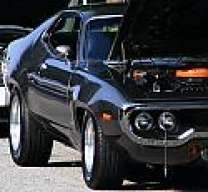
Regarding the Schro BMF215, as you heard on the clip I put up of the 115L+, that is a unique voicing for a 15 cab, and sounds more like a 'really loud, full' 110 cab to me than the classic 15 tone (if there even is such a thing). The tweeter is very subtle (sounds more like a mid driver... maybe has a lo pass or something that cuts off the very tip top of the sizzle.. not sure), and seems to be crossed over very low. That, combined with the 'midrange character' of the neo driver Jorg uses results in a tight punchy tone and VERY good off axis response as far as I can hear... very even to the sides of the stage... haven't heard this one out front though.

Jorg also told me that he also offers a 500 watt neo, British 15 , that sounds " fuller " for the 215. I noticed the tweeter is oddly placed in the middle of the cab on the left side, almost where a port would be. I wish I could find some reviews of this cab, but it must be too new. It's either that or get two 115+ ! Also wondering how much of that tone on your clip came from the Alleva ?
 
Jorg also told me that he also offers a 500 watt neo, British 15 , that sounds " fuller " for the 215. I noticed the tweeter is oddly placed in the middle of the cab on the left side, almost where a port would be. I wish I could find some reviews of this cab, but it must be too new. It's either that or get two 115+ ! Also wondering how much of that tone on your clip came from the Alleva ?

I'll PM you so we don't OT the thread.

K
 
Only if there's a true crossover being used, in most commonly available bass cabs there isn't. The woofers are sent a full range signal and let play up as high as they'll go. The highpass filter, which is kinda 1/2 a crossover only keeps the lows out of the tweeter to keep it from blowing up.

So, I guess it would be cabinet specific if the cab had a tweeter with a crossover or high pass.

I always sort of wondered about this. So (in most cabs) are the woofers in a tweeter filled cab always getting all the frequencies no matter where you have the tweeter's L pad set? i.e. you turned the tweeter completely off, all the frequencies are still going to the woofers even the ones like above 5K that many woofers can produce.

i always thought all frequencies above (usually 3-5K) were routed to the tweeter, and everything below was routed to the woofers. i.e. when the tweeter is turned off the cabinet produces no sound over 3-5K. I guess I was wrong.

I know if you have a GK 1001rb and a matching "horn management" cab you can run specific frequencies to only the woofers and tweeters using the bi-amp w/lo-cut and hi-cut features. supposedly some of the basis for this is to keep the distortion out of the horn.
 
i always thought all frequencies above (usually 3-5K) were routed to the tweeter, and everything below was routed to the woofers. .
That's how they should be, otherwise there's going to be destructive interaction between the woofers and tweeter where their outputs overlap. But many manufacturers don't do it that way, as it saves them five bucks worth of crossover parts. :rollno:
But since the woofer output is often insignificant up in the region where the tweeter works that destructive interaction usually isn't all that bad. Of course, that fact goes to why midrange drivers should be used.
 
So (in most cabs) are the woofers in a tweeter filled cab always getting all the frequencies no matter where you have the tweeter's L pad set? i.e. you turned the tweeter completely off, all the frequencies are still going to the woofers even the ones like above 5K that many woofers can produce.

Yep, the woofers still get the full signal and the L-pad controls the tweeter only. That's what's in most typical 410 or 15 cab that has a tweeter.

The GK and most any other bi-ampable type stereo bass heads do split the signal with a real crossover so there isn't overlap.
 
How does distortion blow tweeters exaclty? I knew it was the case but don't know the science. I assume distortion through them sounds bad because at those kinda frequencies is god awfully ear piercing?

This seemed to get overlooked, so I'll take a crack at it. Distortion increases the harmonic content of a signal, so a higher percentage of the amp's power lies in the region crossed over to the tweeter. This increase in power the tweeter receives is what blows the tweeters.