
Back in my slap-happy days I read that Mark King used a lighter gauge set starting at 035 for the G string, it made slapping easier but I didn't dig the tone and went back to sets starting at 045. I also dig my action a little higher than a lot of cats for that reason.

Enjoy the benefits of a premium membership!
Upgrade Account
-
TalkBass has been independent since 1998. Add your voice.
Create a free account to reply to discussions, view embedded media, and browse with fewer display ads.
Join free Log in
Want zero display ads or expanded classifieds tools? Compare plans.
You are using an out of date browser. It may not display this or other websites correctly.
You should upgrade or use an alternative browser.
You should upgrade or use an alternative browser.
What do I gain (or lose) going to lighter strings?
- Thread starter kesslari
- Start date
More options
Who Replied?
I prefer em to be thick, solid, tight. The stiffer the better. Floppy is the worst. Though too stiff can be a problem too.
But something about the big ones just feels better in my hands.
But something about the big ones just feels better in my hands.

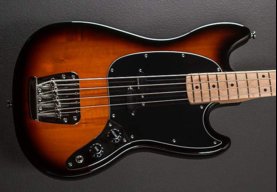
I like Pressurewounds. Going to stick with those, lighter guage.
One thing I've noticed about Pressurewounds is that 102 Pressurewounds feel stiffer and heavier than the 105 Pure Blues that I usually use. If I were using Pressurewounds, I might be using the lightest set.


Last year I switched to a set 40 - 95 (+ 125) from D'Addario after playing 45- 105 + 135 for years. I was blown away by the playability and tone. Light to the touch but still very nice tension and a tight tone. And I think that because the differences between string are slightly smaller they blend a bit better. Instantly ordered some more, love em.
What he said. I've been playing light gauges for years. What I gain is more slidy bendability which translates to easier playing. When I play regular gauges nowadays I feel like they're fighting me. What I have lost? Nothing I can name. They sound great, they're clear and clean and perhaps less fuzzy at the bottom end.I've been on a downward trend for the last few years with my gauge selections.
Gain = playing comfort.
Loss = not much at all. The difference in tonal quality is negligible.
Bigger gauges = bigger tone = myth.
I never really tried comparing same sets on same bass with different gauges. But once went crazy light, rotosound makes 'em, its like 30-85 or something and that thing was nuts. You could bend the living hell out of it, even on first fret on E string . That for me is a pro and con at the same time. Great for soloing and goofing around, but when playing you have to be really carefull not to bend when youre not supposed to. Definitely try bunch of different sets and see what works for you!


Pulling strings out of tune may be also due to high nut slots, but perhaps that is not the case here.You don't need to play with a "feather light touch" to play light strings. To pull even 40-95 gauge string out of tune (I just tried that on my bass here) you're clamping the hell out of the strings - you simply won't be able to play anything well if you're clamping that hard.
There are a lot of good reasons you might want to play heavier strings. This just isn't one of them.
I let my bass pick the gage. As a result, four stringers and shorties have lighter gages and the fiver has 130 105 ...
I play with a light touch and adjust the pup height to suit that. My action is medium high. I like the sound better and I don't think that is just a psychoacoustic illusion.
I hope you find a set that you like on that particular bass.

I was really into heavy gauge strings for quite some time until recently.
After putting them on my MIM Fender Player Series, I noticed a considerable twist in the neck closer to the headstock... no way was I going to put up with that...so off they came and on went a lighter set. Sorry, can't recall the guages.
No twist, easier to play, less finger fatigue and no more cramps, better set up and sounded better for the job I was doing (cover band 1950's-2020's).
Now, I believe, rightly or wrongly, that I've lost some depth in the lower end and gained clarity in the upper end but there's nothing that can't be added or subtracted via my amps eq.
After putting them on my MIM Fender Player Series, I noticed a considerable twist in the neck closer to the headstock... no way was I going to put up with that...so off they came and on went a lighter set. Sorry, can't recall the guages.
No twist, easier to play, less finger fatigue and no more cramps, better set up and sounded better for the job I was doing (cover band 1950's-2020's).
Now, I believe, rightly or wrongly, that I've lost some depth in the lower end and gained clarity in the upper end but there's nothing that can't be added or subtracted via my amps eq.
I've been testing TI .043-.089 (JR344) rounds for months. I'm still not too sure if I like them. They do sound good, but at times they feel like they have too much play and I get an acoustic bass impression for some reason. I like the INFELD IN344 (.045-.105) MUCH better. But I keep the light set on the one bass anyways. Some days I like it, other days I've considered pulling them off.

I refuse to use anything heavier than a 40 set whether flats or rounds. Makes no difference to me sound wise but a big difference feel wise.

years ago, i moved to d'addario super light nickels, and i actually like the tone a lot while my arthritic fingers and tendonitis wrists are much happier. i can play for longer without pain and play harder if i want more attack. when i switched to extra lights, neither i nor my fellow band members in 3 bands heard any difference.

I play Pressurewounds (GHS or Smith) - .044 to .106 (I stick a different B on them because I haven't bonded with the B in the sets).
What do I gain or lose by switching (besides some time resetting intonation)?
I'm intrigued after learning that "thicker strings = better tone" is not necessarily true (from this thread - How does Vic Wooten get such a FULL sound with such THIN strings? )
Talk to me.
FWIW, I find that any changes in either direction, thinner or fatter, can be mitigated with a slight change in your EQ and or volume controls. You can play with your EQ and or volume controls for free. Trying sets of strings looking for pay dirt can be a very expensive proposition. Best wishes on your search.

More knowledgable users will surely chime in shortly, but from what I understand, there's two sides to this: tone and playability. A bit counterintuitive maybe, but from what I understand thicker strings have more overtones, while thinner strings have more fundamental and more sustain (?).
Tanner5382 has the right answer, here. I've only read up through post #10 so forgive me (or, notBigger strings = bigger tone is definitely a myth.
I disagree with the previous comment that says you lose clarity with lighter strings. If anything, I find it to be the other way around. In my opinion/experience, lighter strings sound better. Brighter/clearer, more musical, better tone.
 ) if I am regurgitating what may have already be said here.
Think about how a solid bar of metal sounds when "plucked" compared to, well, a typical bass string.
Another way to actually hear the difference is playing long notes on an E string. How does the tone/sustain/etc. sound when you finger the string at the 12th fret compared to the sound of the open string? As one progresses up the fingerboard, that string is becoming, more and more, like that solid bar of metal.
Overall, lower/thinner gauge strings ring out better/longer and have more overtones/harmonics than higher/thicker gauge strings.
For many years now, I much prefer lower gauge (and tension) strings on my basses. No loss of tone, or anything else for that matter, IME. If anything, it all sounds better to me, plus the lighter touch I use is an advantage for me.

Lighter strings mean less signal from the pickup, although it will vary from manufacturer to manufacturer and string type to string type even if they are all the same gauge.
I'll give a guitar example...my very first electric guitar was a late 1950s old Dano Silvertone I found with matching amp at a yard sale while in college for $20
It needed new strings of course, but I had no car so I went to the only place within walking distance that sold guitar strings. It was a record store and all they had were Fender Silver Bullets .009s. I found that even with the guitar and amp dimed it would only break up slightly. Dano lipsticks are well known to be lower output than most other pickups out there.
When I was able to get to a real music store I found some Dean Markley "Jazz" strings, .012 or .013s. Now the guitar had much more output and I could get the amp to break up.
I'll give a guitar example...my very first electric guitar was a late 1950s old Dano Silvertone I found with matching amp at a yard sale while in college for $20
It needed new strings of course, but I had no car so I went to the only place within walking distance that sold guitar strings. It was a record store and all they had were Fender Silver Bullets .009s. I found that even with the guitar and amp dimed it would only break up slightly. Dano lipsticks are well known to be lower output than most other pickups out there.
When I was able to get to a real music store I found some Dean Markley "Jazz" strings, .012 or .013s. Now the guitar had much more output and I could get the amp to break up.

I find that I need a little heft to my strings.
Where I really have a problem with lighter strings is the B on my 5s.
I like .135s for less floppiness there.
You can't go too light on the others without getting into uneven tension and sound.
Where I really have a problem with lighter strings is the B on my 5s.
I like .135s for less floppiness there.
You can't go too light on the others without getting into uneven tension and sound.
Latest posts
-
 Post a funnier picture than the one above - Parallel Universe Edition
- Latest: 5StringBlues
-

-

-

-
