

Enjoy the benefits of a premium membership!
Upgrade Account
-
TalkBass has been independent since 1998. Add your voice.
Create a free account to reply to discussions, view embedded media, and browse with fewer display ads.
Join free Log in
Want zero display ads or expanded classifieds tools? Compare plans.
You are using an out of date browser. It may not display this or other websites correctly.
You should upgrade or use an alternative browser.
You should upgrade or use an alternative browser.
What do you do with a bass that "died?"
- Thread starter hrodbert696
- Start date
More options
Who Replied?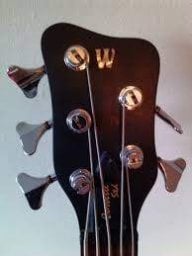
Lots of things are possible, if you wanna invest in trying to revive it. Not that I'm a luthier by any stretch, but I'd think removing the fretboard and potentially reinforcing the neck and swapping the truss rod might be the most practical approach.

It's been about fourteen years since I started playing, and now a new milestone - one of my basses died on me. By which I mean, it needs a repair that I'm unlikely to have done.
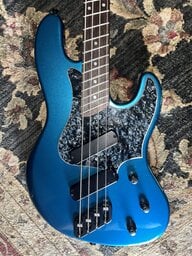
The bass is "Looney Toon" - a 5er made by John Toon out in Kansas City (he used to be on TB, but haven't seen him in a while). It's one of a kind, very light and perfectly balanced, which is part of why I love it. It has a slim 35" scale set neck, which is great to play but is also probably the problem. I had to have it heat-treated to straighten out a warp some years ago already. Now the neck is bowed and the truss rod is frozen. I think it may just be too slim to stay stable at its scale length. Since it's a set neck (and custom) I can't just swap it out, and fixing it would mean disassembling and rebuilding the whole thing. That looks to cost about as much as I paid for it in the first place, and given the history, I'm concerned the problem might just happen again.
So what do you do with a bass that you can't play any more? Throw it in the trash? Make it a wall hanging? Leave it in a gig bag to collect dust in the basement and let your kids throw it out when you die? What?
View attachment 5132807
I actually did work on a similar neck thru bass .... This example was pretty much folding up at the neck/body joint ... I installed 2 carbon fiber rods from the back of the neck and filled them with maple skunk stripes ...worked like a charm and the customer plays it to this day with really low action ... I wish I had a photo of the back !! It looked and worked excellent !!!
Pm me if you want to give it a go !!!
-chop!!!

It's pretty. My vote is wall art. Either that, or turn it into an actual coffee table.
This thread could use a poll.
This thread could use a poll.


Contact Mr Toon and ask what he would recommend. Who knows, he might offer to get it back in shape.





My 'Trash Bin' for items such as this would be an eBay auction, starting at $1.

That looks to be about a $500-600 repair job by a competent Luthier. Rout off the fingerboard, new truss rod, new fingerboard. Not particularly complicated or difficult for someone who has the experience and tools.
If that's too much to spend vs its value to you, then sell it, being honest about the problem and what it will take to fix it. Someone will buy it.
If that's too much to spend vs its value to you, then sell it, being honest about the problem and what it will take to fix it. Someone will buy it.

It's been about fourteen years since I started playing, and now a new milestone - one of my basses died on me. By which I mean, it needs a repair that I'm unlikely to have done.
The bass is "Looney Toon" - a 5er made by John Toon out in Kansas City (he used to be on TB, but haven't seen him in a while). It's one of a kind, very light and perfectly balanced, which is part of why I love it. It has a slim 35" scale set neck, which is great to play but is also probably the problem. I had to have it heat-treated to straighten out a warp some years ago already. Now the neck is bowed and the truss rod is frozen. I think it may just be too slim to stay stable at its scale length. Since it's a set neck (and custom) I can't just swap it out, and fixing it would mean disassembling and rebuilding the whole thing. That looks to cost about as much as I paid for it in the first place, and given the history, I'm concerned the problem might just happen again.
So what do you do with a bass that you can't play any more? Throw it in the trash? Make it a wall hanging? Leave it in a gig bag to collect dust in the basement and let your kids throw it out when you die? What?
View attachment 5132807
I did this with a tele that had too many issues to fix
Fairy lights stuffed in all it’s holes. (Hey now!)


I should clarify with more details - removing the fretboard, heat treating the warp, putting in a new truss rod and reassembling was the solution proposed by the local tech shop. They estimated $600-800 for it. So yes, a lot of you guys are thinking along the same lines.
The reason I haven't done that is 1) although it's a fantastic bass, I actually only paid $800 for it originally so I have some hesitation about paying as much again to repair it, 2) money is tight right now for various reasons, and 3) as I said, this isn't the first time the neck warped and I'm wondering if it's a congenital issue, in which case I wonder if investing in the repair is just going to turn into a money pit that has to be done repeatedly.
The reason I haven't done that is 1) although it's a fantastic bass, I actually only paid $800 for it originally so I have some hesitation about paying as much again to repair it, 2) money is tight right now for various reasons, and 3) as I said, this isn't the first time the neck warped and I'm wondering if it's a congenital issue, in which case I wonder if investing in the repair is just going to turn into a money pit that has to be done repeatedly.

The consensus of the luthiers seems to be it would be expensive but not impossible to repair. So it’s not utterly hopeless.
And you did say it was a fantastic bass.
I’d suggest either putting it away or hanging it in a wall for now if you don’t need to make an immediate decision. Inaction isn’t going to cost you anything in this situation so there’s no need to be in a hurry over making up your mind about it.
I’m in a similar situation with a vintage guitar I own that needs a major repair I can’t responsibly afford to have done right now because we’re in the middle of some major home refurbishments. But I figure the money may eventually become available. And I already own it. So it’s not costing anything to continue hanging onto it. And nobody’s offering to buy it, therefore I’m not passing up an an opportunity to recoup some money off it either. So it sits in its case for the time being. No worries
And you did say it was a fantastic bass.
I’d suggest either putting it away or hanging it in a wall for now if you don’t need to make an immediate decision. Inaction isn’t going to cost you anything in this situation so there’s no need to be in a hurry over making up your mind about it.
I’m in a similar situation with a vintage guitar I own that needs a major repair I can’t responsibly afford to have done right now because we’re in the middle of some major home refurbishments. But I figure the money may eventually become available. And I already own it. So it’s not costing anything to continue hanging onto it. And nobody’s offering to buy it, therefore I’m not passing up an an opportunity to recoup some money off it either. So it sits in its case for the time being. No worries


Perhaps it would work as a piccolo bass?
Tension would be similar
Well, if you paid $800, and you put another $800 in it, you're still well ahead of the cost of having another made.I should clarify with more details - removing the fretboard, heat treating the warp, putting in a new truss rod and reassembling was the solution proposed by the local tech shop. They estimated $600-800 for it. So yes, a lot of you guys are thinking along the same lines.
The reason I haven't done that is 1) although it's a fantastic bass, I actually only paid $800 for it originally so I have some hesitation about paying as much again to repair it, 2) money is tight right now for various reasons, and 3) as I said, this isn't the first time the neck warped and I'm wondering if it's a congenital issue, in which case I wonder if investing in the repair is just going to turn into a money pit that has to be done repeatedly.
I know its not the first time the neck has moved beyond adjustment so maybe a stiffer fingerboard material would help and/or adding reinforcement rods while the fingerboard is off.
Last edited:


