• TalkBass has been independent since 1998. Add your voice.
    Create a free account to reply to discussions, view embedded media, and browse with fewer display ads.
    Join freeLog in
    Want zero display ads or expanded classifieds tools? Compare plans.

What do you think about ebony?

That'd be...uh...heavy.

And "rubbery?" I have a bass with an ebony fretboard, and it sounds bright and ringing. I'm not sure what a "rubbery" tone sounds like, but that's beyond the last word I would use to describe it.
 
And "rubbery?" I have a bass with an ebony fretboard, and it sounds bright and ringing. I'm not sure what a "rubbery" tone sounds like, but that's beyond the last word I would use to describe it.
+1, I have to think anyone describing the tone as "rubbery" has been smoking the sticky stuff. Instead, I'd suggest words like bright, hard, crisp, clear, clacky, singing, etc.

And heavy enough to make even a big macho dude regret thinking they wanted a heavy bass.
 
Ebony for fretboard is nice alternative to rosewood. Gives a little bit harder sound with a bit more treble. The few ebony top basses and guitars Ive handled certainly weighed a good deal more then those with maple top. So ebony body, neck and fretboard bass would be rediculous heavy.
 
You might get a bit more focused sound with an ebony board...it could be debated, of course ;).

An all ebony bass is insanity, I'd totally forget about that idea all together if I were you. Super heavy, super expensive and I can't imagine that it would sound worth a damn.
 
Check out macassar ebony. It is not as heavy as african ebony that is used for fingerboards but it is striped instead of being black. I have seen a couple of fine high end neck through basses with solid macassar ebony wings.

images?q=tbn:ANd9GcR2MBvtvWwVE7BbXYcDD7QY5S3_PSeRj_Uw7DLkns27hBI4N4Az.jpg


images?q=tbn:ANd9GcQifKpEoGAfUBBTKZTgOKeQ1_IrwHPfHATvcJbjAXFTBLl_kDnfIQ.jpg


images?q=tbn:ANd9GcTJ-IQlj-gg5mMsNlBjNk-gw68BKIRzz9DgNc6u6OGMVr0pdl7N.jpg


A neck and body made of it would be heavy but still comparable to the bubinga and ovangkol used by Warwick. It also looks fantastic and is not as expensive as african ebony.

Here is a quick link that might help. http://www.guitarbench.com/2010/09/22/macassar-ebony-tonewood-database/
 
So I think I'm ready to have anotha bass made. I know I want a spalted maple top and a maple fingerboard. I wanna know what you guys think about an ebony body and neck. All feedback is welcome.

Ebony neck = The second* best neckdive for Metal ;)

*Ironwood being #1 of course


Ebony would be very heavy for sure. My GUESS is 18-22lbs. for a bass built like you describe. I am really curious about what it would it would weigh.
I do love the spalted maple but I could not dream of covering up what has become a rare exotic, as is the case with ebony.
I would also start lookin at buying the wood while you still can get it :eek:
 
Mahogany body for warmth, maybe?

And if its a neck-thru build, a certain ultra high end bass builder claims using an ebony stringer as a lam in the neck build will strengthen the fundamental tone of each note.
I think that would give you more low-end in your overall sound. And more low-end probably means more warmth.
 
my other choices would be Myrtle, rosewood, or black limba. Not really looking for a bright sound on this build more warm deep tones but with clarity is essentially what I'm lookin for
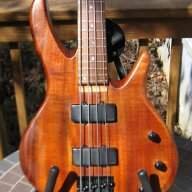
Couple of thoughts. A Fender J with old strings and the right EQ is going to give you tremendous warm deep tones but with clarity... so that may suggest something to you about questing after an "all one exotic tonewood" bass. OTOH, I have an all-maple bass (a Ric clone) that has fantastic warm deep tones but with clarity... so I think maple is a good choice.

All that said, what brought you to the choices of myrtle, rosewood, or black limba? Do be aware too that the term "rosewood" includes many different varieties of wood, with different densities and grain--so if you believe in tonewood, you'll want to look very carefully at what people are referring to when they say "rosewood".
 
One thing that you have to consider is the fact that African Ebony is only available in small pieces, because Ebony trees don't grow very large. That is why you usually see Ebony as a laminate, or accent strip on instruments. Also Ebony is sold by the pound. I own several pieces, and a local exotic wood dealer offered to buy them from me. I guess with shipping costs and and things like that, it made sense.