• TalkBass has been independent since 1998. Add your voice.
    Create a free account to reply to discussions, view embedded media, and browse with fewer display ads.
    Join freeLog in
    Want zero display ads or expanded classifieds tools? Compare plans.

Double Bass What is it about Bach Cello Suites?

All I have to say is watch this video and prepared to be absolutely blown away.

Bach cello suite no. 6, Prelude- Rex Surany Double Bass - YouTube
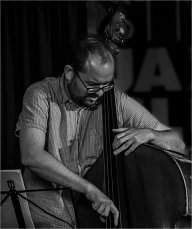
That is a really lovely bass version. Amazing. Hugely interesting for this audience (talkbass). However, I still think anyone wanting to experience the best performance of that music is still way better off consulting several versions by the great 'cellists.

I think Bach's music is some of the very best study material for any instrument and any musician. But it is really a dead end for performance on the double bass.


The bass needs it's own music. Even though I am not 100% in agreement I have always loved Stefano Scodanibbio's quote that his "Sei Studi" (1981/83) is "An Expression of the desire to help the instrument finally find it's own voice, after having only known the stammering of voices inappropriate to it or the sadistic violations of the so-called avant garde."
 
My opinion, which is that and nothing more, and which intends to offend no one:

3) The musical ideas they contain are simple, clear cut, and seemingly universal;...

I agree! I'm working on the first suite, Sarabande through Menuetto II and honestly, they have that sort of simple complexity that makes them really beautiful. If it were a force of nature, it would be rain. Something seemingly simple but with so much behind it that makes it something extraordinarily unique or profound in the universe.

They're very approachable, as well. Violinists to harpsichordists "get" the Suites.

4) Learning to play the suites offers any musician a multitude of learning opportunities, from technical to expressive. When played well, they are some of the most gorgeous music on earth; knowing what they can be when played well, it feels like an abomination to play them poorly. Perhaps because of this, they tend to make the person attempting them strive to focus and play to the best of his/her ability.

Agreed, I'm learning more from these three movements of the suite than I've learned from Dittersdorf. It's not necessarily about technical skill, I've found, but merging technical skill with expressiveness in your playing to make it beautiful. At least with Bach.
 
By the way, I recently finished this really wonderful book which uses the Bach Suites to cover the life of Bach and Pablo Casals (who had a lot to do with making them famous).

Amazon.com: The Cello Suites: J. S. Bach, Pablo Casals, and the Search for a Baroque Masterpiece (9780802145246): Eric Siblin: Books

Came into the book with a normal level of love for Bach's music and a recollection that my cellist grandmother worshiped Casals, finished it with an awe for the two as musicians, and a lot of neat stories in my head -- relevant to this thread, many cellists weren't so into the suites either.
 
As an Amazon Associate, TalkBass may receive commissions from qualifying purchases made via links on this site.
Another neat book is "The Great Pianists" by Harold Schonberg. He talks a lot about virtuosi/composers such as Bach, Mozart, and Beethoven being revered, especially, for their stunning ability to improvise amazingly complex music from snippets of music, a few suggested notes, etc.

Bach and Mozart are both talked about as being able to, spontaneously, improvise something in four voices, play it inverted and retrograde, maybe turn it into a fugue, etc.

Um...gotta go practice, now...:)

(It is always good for me to remember that Charlie Parker and Dizzy Gillespie were, reportedly, way into Bach. Maybe it helped them with their Bop playing (sic)...definitely gotta go practice, now...)
 
Another neat book is "The Great Pianists" by Harold Schonberg. He talks a lot about virtuosi/composers such as Bach, Mozart, and Beethoven being revered, especially, for their stunning ability to improvise amazingly complex music from snippets of music, a few suggested notes, etc.

Bach and Mozart are both talked about as being able to, spontaneously, improvise something in four voices, play it inverted and retrograde, maybe turn it into a fugue, etc.

Um...gotta go practice, now...:)

(It is always good for me to remember that Charlie Parker and Dizzy Gillespie were, reportedly, way into Bach. Maybe it helped them with their Bop playing (sic)...definitely gotta go practice, now...)


I think we hyper-inflate the abilities of some of these men.

True, they were musical geniuses, and men with more talent than anybody on these forums could claim to have.

But they were still men.
 
Interesting thought.

For me, it is their clear humanity that makes their accomplishments even more inspirational.

I don't presume to know what was going on, centuries ago; I can only rely on reports of reports.

That said, my point was about the expectations and their accomplishments; simply slaving away to learn somebody else's composition was not enough, apparently. Improvisation was seen as a key tool in the musician's toolbox. My point is that we struggle to simply play their music; they were composing it, playing it, and improvising freely.

I think that "classical" playing got off the mark when most of those musicians quit improvising as a matter of course. Thank goodness that other improvised forms have flourished.

My point is not to deify anyone. I am thinking more along the lines of what a human being can accomplish.

In my mind, their work stands for itself, as do eye-witness accounts of their routine performances. That is enough for me, to be inspired for my lifetime.
 
I think in general the suites sound much better on cello (as most cello transciptions do, not only Bach). But this year I saw a concert of Jeff Bradetich playing the Prelude from the first suite.
And he played it really nice. Very moving performance and great sound.

So it is all in the hands of the masters.
 
I am going to be devil's advocate to see where this thread takes us!

Why are the Cello Suites held in such high esteem and put on such a pedestal by bassists?They are often difficult (both for technique and expression), the movements of some of them are well known "party pieces" and some are even used as test pieces in auditions. But they weren't written for us!!

Perhaps one answer is that they are "solitary" in that you can sit playing alone in your garret, thinking how good (or bad) you are and stroking your ego as you swoop and soar through the phrases.

Perhaps, because there is so much slurring involved, you end up developing a high level of legato playing. This is entirely valid but is it a be-all and end-all?

There are so many other skills to develop with both hands that, for me, being able to play Bach "nicely" has only a small part in developing and maintaining technique and musicianship. In short, there is so much more music to play and enjoy out there!

Cheers,

DP
They are just a great exercise, of course they are just one of many exercises out there but very nice ones.
 
As a hopeful-bassist I have been playing quite a bit more Bach -I had a little phase (about a month or two) where I couldn't stand his pieces. They were almost machine-made perfect -no "handmade" work evident. But... Then I saw the genius.
Has anyone here also played the Viola da Gamba Sonata no. 2? I'm working on the 3rd Suite and the first two movements of the VdG no. 2 (along with several other things...) at the moment.
 
I've always found transcriptions or arrangements in which the melodic voice is taken down an octave but the accompaniment stays put to be extremely unsettling, and like you, I would be fine with studying them but loath to perform them. But by the same token, I can't understand for the life of me why most bassists want to play the cello suites at pitch. As an exercise, it makes perfect sense, but in general for solo melodic material where there can be no harmonic inversion issues why not just play it in the lower register of the instrument where it will resonate most? I've heard a few versions of bassists at cello pitch that are good - and damned impressive from a technical standpoint - but in that range I'd rather hear a good cellist play them.