

Enjoy the benefits of a premium membership!
Upgrade Account
-
TalkBass has been independent since 1998. Add your voice.
Create a free account to reply to discussions, view embedded media, and browse with fewer display ads.
Join free Log in
Want zero display ads or expanded classifieds tools? Compare plans.
You are using an out of date browser. It may not display this or other websites correctly.
You should upgrade or use an alternative browser.
You should upgrade or use an alternative browser.
What is "soft maple"?
- Thread starter Flux Jetson
- Start date
More options
Who Replied?
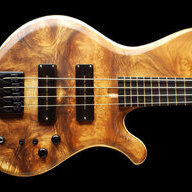
So is soft maple as bright as one of the harder body maples? I guess I'm asking how it compares tonally to other woods such as Alder, and Mahogany, and Ash, and even Basswood (does that rhyme with "Gas" or "Ace"? Y'know, is it Bass like the fish, or Bass like the guitar in the word Basswood?)
Bass...like the fish.
Here is what Sheldon Dingwall (http://www.dingwallguitars.com/) once said about various Maple varieties and tone:
I can't think of anyone who uses hard maple in a body. It's heavy, dense and short on warmth. This is I think the major reason why neck through instruments are described as generally not being as punchy as bolt-ons.
Silver maple is much lighter and more resonant, like a punchy alder.
Eastern soft is between the two, very solid and bright, but with some warmth.
Western maple is similar to Silver, but maybe a touch warmer and more resonant.
Northern Ash has solid lows and extended highs, with a slightly scooped mid. It's heavy but has a more vivid grain pattern than swamp.
Swamp Ash varies a lot, from almost Northern Ash like to extremely light and punchy with a nice airy quality. The lighter softer stuff doesn't support the B as well but works great on 4-strings.
Mahogany varies greatly as well, the light stuff scares me so I stay away from it. I'm not saying it's bad, it just didn't work with my designs. The heavier is very even overall, but does have strong mids or at least cuts well in the midrange.
Walnut is very similar to mid-range mahogany and is very consistant.
Alder is warm, resonant and punchy with good mids, but doesn't have the highs of ash so is smoother and less snappy. I find Alder a little dark for B-strings. Great for 4-strings, or in the case of our Prima series, great for treble strings.
I have no experience with Agathis.
All this being said it's difficult to compare one wood to another between different manufacturers since the design of the body has a lot to do with the final outcome (not to mention pickups, electronics, neck construction etc.). Thicker bodies are brighter than thinner bodies. Bodies with a larger face area are more resonant and responsive than smaller ones.
I hope this is of some help. Take care.

Soft maple is far more durable than basswood, etc. It just falls short of hard maple. It does not dent easily, it just dents more easily than hard.

And TapyTap that info from Sheldon is pretty cool.
Glad you liked it!

D
But what does Soft maple sound like in a instrument with decent construction? That is the question that hasn't really been answered. I've played a few Squier Vintage 70s Jazz Basses and each time was so put off by the shoddy construction and fretwork of the neck that I couldn't really notice the sound of the body. And its common knowledge that the pickups in Squiers are typically poor-sounding. But that isn't necessarily an indictment on the sound of the body wood.


s oft maple is west coast maple, i believe. quilted maple is not found in "hard maple", only "soft maple. again I think.
I think it is also called Big Leaf maple.
Has anyone seen lumber made form Japanese maple?
I think it is also called Big Leaf maple.
Has anyone seen lumber made form Japanese maple?

- Dec 20, 2004
- 4,267
- 2,481
- Disclosures
- Player-Builder-Founder: Honey Badger Pickups & Regenerate Guitar Works

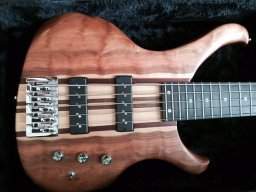
I recently got my first "Soft Maple" bodied bass (a pedulla rapture). Sounds very nice - is light, but not as light as swamp ash... and looks VERY cool.
I haven't, and I wouldn't expect to, since Acer palmatum grows with with fairly small, bunched stems, and even the upright "trunks" tend to be both crooked and not vertical. It is also not a fast grower, nor does it exist in large, mature stands in North America.Has anyone seen lumber made form Japanese maple?
Here in Michigan both hard and soft maple are native."soft"maple should really be called"slightly less but still hard maple",still a strong,hard very usable hardwood.

- Aug 21, 2003
- 11,584
- 18,593
- Disclosures
- A-Designs Mike Lull GK Tsunami Cables GHS Strings RMI Basswitch Nordstrand Pickups Darkglass


