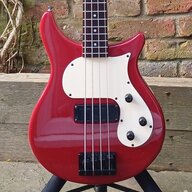
Never seen anything quite like this before.

TalkBass has been independent since 1998. Add your voice.
Create a free account to reply to discussions, view embedded media, and browse with fewer display ads.
Join free Log in
Want zero display ads or expanded classifieds tools? Compare plans.

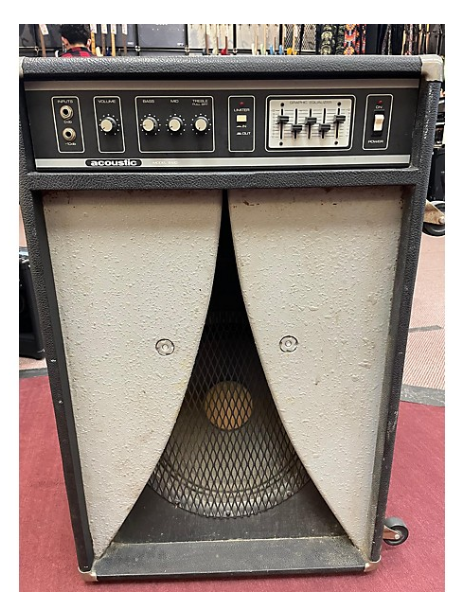
The badge says "Acoustic"It's a Karlson and from the 50s IIRC. Plenty of examples and analysis online.

I forgot about that one, didn't last long either.The badge says "Acoustic"
It reminds me of this oddball from Trace Elliot, the BLX 80.
View attachment 7000993
I forgot about that one, didn't last long either.
I came across one of those in Tel Aviv around '82. I thought it sounded good but there was no way I could move it with public transportation. Ended up with a Roland Spirit Bass 15 instead.
That was pre KMC era, introduced around 1989 before KMC (Kaman) owned the company. They didn't last long, though there may have been dead inventory sold for years after it was officially (or internally) discontinued.Those were really popular on my side of the Atlantic, and well reviewed. They were selling like hotcakes, and kind of did for the brand what the ELF has done in more recent years.
I'm sure they were in production for at least 5 years (I feel like it was longer, because I'm sure the original 80Watt version got a more powerful sibling a few years later - like the 80Watt was a single 10" speaker behind the slot, and the more power model used a 15" driver).
Those were really popular on my side of the Atlantic, and well reviewed. They were selling like hotcakes, and kind of did for the brand what the ELF has done in more recent years.
I'm sure they were in production for at least 5 years (I feel like it was longer, because I'm sure the original 80Watt version got a more powerful sibling a few years later - like the 80Watt was a single 10" speaker behind the slot, and the more power model used a 15" driver).
 ).
).
I had a BLX150 from new. It was rubbish. IMO, YMMV etc., etc.The badge says "Acoustic"
It reminds me of this oddball from Trace Elliot, the BLX 80.
View attachment 7000993
That was pre KMC era, introduced around 1989 before KMC (Kaman) owned the company. They didn't last long, though there may have been dead inventory sold for years after it was officially (or internally) discontinued.
I haven't seen well reviewed myself, and the one I heard (I had a the 110 that came through my shop decades ago) was pretty rough sounding so it's no surprise that it disappeared from the lineup. They may have sold better in the UK due to the location and the possibility of lower cost compared with export models. Pretty much all of their more mainstream models were much better sellers.
The 2 versions were the same speaker IIRC, the main difference was power - the 80W as in this thread could only power its internal speaker, the 150 had an external speaker out to use a bit more power - as per this from the 1998-99 catalogue:
Agedhorse's info re the pre Kaman start date means they were in production at least a decade, so not so much a flash in the pan (though, obviously, that's still short vis a vis say, the SVT
Cheers,
D.

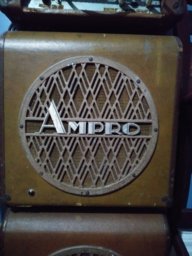


The Trace with the slot just looks like it would "chuff"
I owned one of those Trace slot-loaded combos in the early 90s. It was really good and portable. Did an amazing job for its size.The badge says "Acoustic"
It reminds me of this oddball from Trace Elliot, the BLX 80.
View attachment 7000993
That was pre KMC era, introduced around 1989 before KMC (Kaman) owned the company. They didn't last long, though there may have been dead inventory sold for years after it was officially (or internally) discontinued.
I haven't seen well reviewed myself, and the one I heard (I had a the 110 that came through my shop decades ago) was pretty rough sounding so it's no surprise that it disappeared from the lineup. They may have sold better in the UK due to the location and the possibility of lower cost compared with export models. Pretty much all of their more mainstream models were much better sellers.