
I've never bought an active or passive bass. I only bought basses that sounded right and I liked to play. Some had preamps and some didn't. Having a preamp was never a reason to buy a bass or not.

Enjoy the benefits of a premium membership!
Upgrade Account
-
TalkBass has been independent since 1998. Add your voice.
Create a free account to reply to discussions, view embedded media, and browse with fewer display ads.
Join free Log in
Want zero display ads or expanded classifieds tools? Compare plans.
You are using an out of date browser. It may not display this or other websites correctly.
You should upgrade or use an alternative browser.
You should upgrade or use an alternative browser.
what is your reason for using an onboard preamp
- Thread starter leavetheconnoli
- Start date
More options
Who Replied?

Yes. My previous post was only for magnetic pickups. Piezos have a high Zout.Because I have piezo pickups and need to buffer the output before sending the signal out.View attachment 4184274
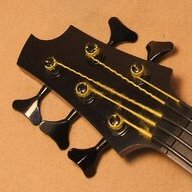
Yes I do have this one I built for myself with Alembic pickups and preamp. The filter EQ on these give a wide swath of colors. The biggest advantage of a preamp is buffering (even for passive pickups) to reduce issues with long cable runs.Yes. My previous post was only for magnetic pickups. Piezos have a high Zout.

Well said. I own both active and passives. The sound and playability is what makes them worth owning.I've never bought an active or passive bass. I only bought basses that sounded right and I liked to play. Some had preamps and some didn't. Having a preamp was never a reason to buy a bass or not.
Passive volume and tone controls have an even bigger loading effect, and of course interact with the cable C to effectively become a variable low pass filter.The biggest advantage of a preamp is buffering (even for passive pickups) to reduce issues with long cable runs.
I'm going to do my own version of the Alembic SVF in a retrofit to another bass soon. There'll be an external supply as well.Yes I do have this one I built for myself with Alembic pickups and preamp.
Haven't decided on the pickups yet, but the Alembic ones are too rich for my blood. I'd rather wind my own if need be.
I've owned 4 Series basses in the past.
Yes, it's great. Pity it's not really intuitive for most users or it would undoubtedly be in much wider use. With suitable pickups of course, and most on the market aren't.The filter EQ on these give a wide swath of colors.
I've done external power supply on my personal basses.There'll be an external supply as well.

I am new to the onboard preamp world and am not really up on the usefulness of it.
I get when I sit in, open jams.. nice to have control over the tone, but when I'm playing with my gear I get a sound and thats that.. stay passive. NO need for preamp into preamp..
How do you all use them?
My reason is because every bass I’ve ever owned has come with one from the factory.

I too some time have the same question. I asked the Fat Bass Tone guy and here is their answer:I am new to the onboard preamp world and am not really up on the usefulness of it.
I get when I sit in, open jams.. nice to have control over the tone, but when I'm playing with my gear I get a sound and thats that.. stay passive. NO need for preamp into preamp..
How do you all use them?
"Most of the time when we say on-board bass preamp what we are really talking about is an equalizer being built into the bass. This allows us to have bass, midrange and treble controls like you would find on an amplifier. The truth is nobody needs one. You could just use the equalizer built into your amp. That will work perfectly fine. It’s just that some of us bassists are so fussy that we just feel compelled to have our equalizer immediately under hand, and save the trip across the room to adjust the amp."
^^ They have completely ignore the impedance issues previously mentioned.
And whilst the above may be true for some people, it's not true for all of us; I hardly ever touch my EQ on stage or in a jam. Once set, I forget about it.
And whilst the above may be true for some people, it's not true for all of us; I hardly ever touch my EQ on stage or in a jam. Once set, I forget about it.

I find using onboard pre makes my life much easier. I don't want to have to turn around and deal with my amp in the dark, and pedals can be a pain to change on the fly as well. An onboard lets me make quick adjustments between songs typically. I don't go crazy, but I play covers, so I try to cop a bit of the original sound for each song.
^^ They have completely ignore the impedance issues previously mentioned.
And whilst the above may be true for some people, it's not true for all of us; I hardly ever touch my EQ on stage or in a jam. Once set, I forget about it.
Same.

I found this thread during a search for something else and reading it, I came across this, and had to add my 2c worth.
Simply not true at all. If anything the lower output impedance of an active pickup means it is less likely to need a preamp as the internal amplifier buffers the pickup coil from the loading that it would get from passive controls, so it is more consistent tonally. It should in fact be entirely independent of any subsequent passive VVT etc controls in circuit. The lower output impedance of an active pickup means it will drive the capacitance of cable better and the often too low input impedance of some pedals.
As for output levels, my EMGs are some of the highest output pickups I've ever used. We'll see how the SD ASB2-5s are when they arrive, but I suspect they'll be little different.
Just to clarify, I am only discussing active pickups here, ie those like an EMG with a preamp/buffer inside the pickup housing.
Right, but the EMGs probably need batteries for them to work. Active pickups themselves by design need some kind of boost. Alembics are the same. You can't run the pickups without a preamp of some sort. Granted seems like most pickups these days are passive with a preamp boost, not the actual "active" pickups I'm talking about.
Granted I'm not an expert and I'm basically regurgitating Rick Tuner's posts.
Correct, except for the few passive models they sell, eg the HZ range.Right, but the EMGs probably need batteries for them to work.
Not true, at least outside the pickup casing itself. All of the EMG active pickups I have could easily, and some do, just run with a "passive" VVT wiring loom out to an amp with plenty of level. Of course with a battery to power the amplification inside the pickup shell.Active pickups themselves by design need some kind of boost.
Alembic pickups are unique beasts because they are very low impedance, ie a low number of windings, to keep the frequency response as flat as possible and the resonant peak high. Consequently, they are very low output and need a preamp. I've owned 2 Series basses and have examined the electronics (I'm an EE) and have used the same type of filter they use both in MI and industrial engineering so I understand how the Alembic PU/pre system is designed to work. FTR Alembic pickups themselves are passive, ie no amplification within the pickup shell.Alembics are the same. You can't run the pickups without a preamp of some sort.
Like others have said, I've simply bought basses that I took a liking to, were great deals, or thought would work for me. Whether or not they had a preamp was never a deciding factor or a deal breaker.
Having said that, 5 of my current six came with preamps, and the passive one actually needed an aftermarket preamp to stay in the top spot.
It's interesting that I really like having the ability to tweak EQ on the bass, but never seem to go more than 3db or so from the center detent and never make adjustments during songs or even for specific songs. Once I get the amps just right, I get each bass where it needs to be when I soundcheck then vary my sounds with my hands.
I feel like I could also be happy in the passive bass world but would have to spend a lot of money trying a plethora of different strings to get to the same place.
Having said that, 5 of my current six came with preamps, and the passive one actually needed an aftermarket preamp to stay in the top spot.
It's interesting that I really like having the ability to tweak EQ on the bass, but never seem to go more than 3db or so from the center detent and never make adjustments during songs or even for specific songs. Once I get the amps just right, I get each bass where it needs to be when I soundcheck then vary my sounds with my hands.
I feel like I could also be happy in the passive bass world but would have to spend a lot of money trying a plethora of different strings to get to the same place.
Correct, except for the few passive models they sell, eg the HZ range.
Not true, at least outside the pickup casing itself. All of the EMG active pickups I have could easily, and some do, just run with a "passive" VVT wiring loom out to an amp with plenty of level. Of course with a battery to power the amplification inside the pickup shell.
Alembic pickups are unique beasts because they are very low impedance, ie a low number of windings, to keep the frequency response as flat as possible and the resonant peak high. Consequently, they are very low output and need a preamp. I've owned 2 Series basses and have examined the electronics (I'm an EE) and have used the same type of filter they use both in MI and industrial engineering so I understand how the Alembic PU/pre system is designed to work. FTR Alembic pickups themselves are passive, ie no amplification within the pickup shell.
I should've clarified, I didn't mean preamp per se, but needing a battery to power it, inside the shell being an option. I had a wonderful set of EMGs that worked that way. Leland Sklar, too, I think.


